
Title
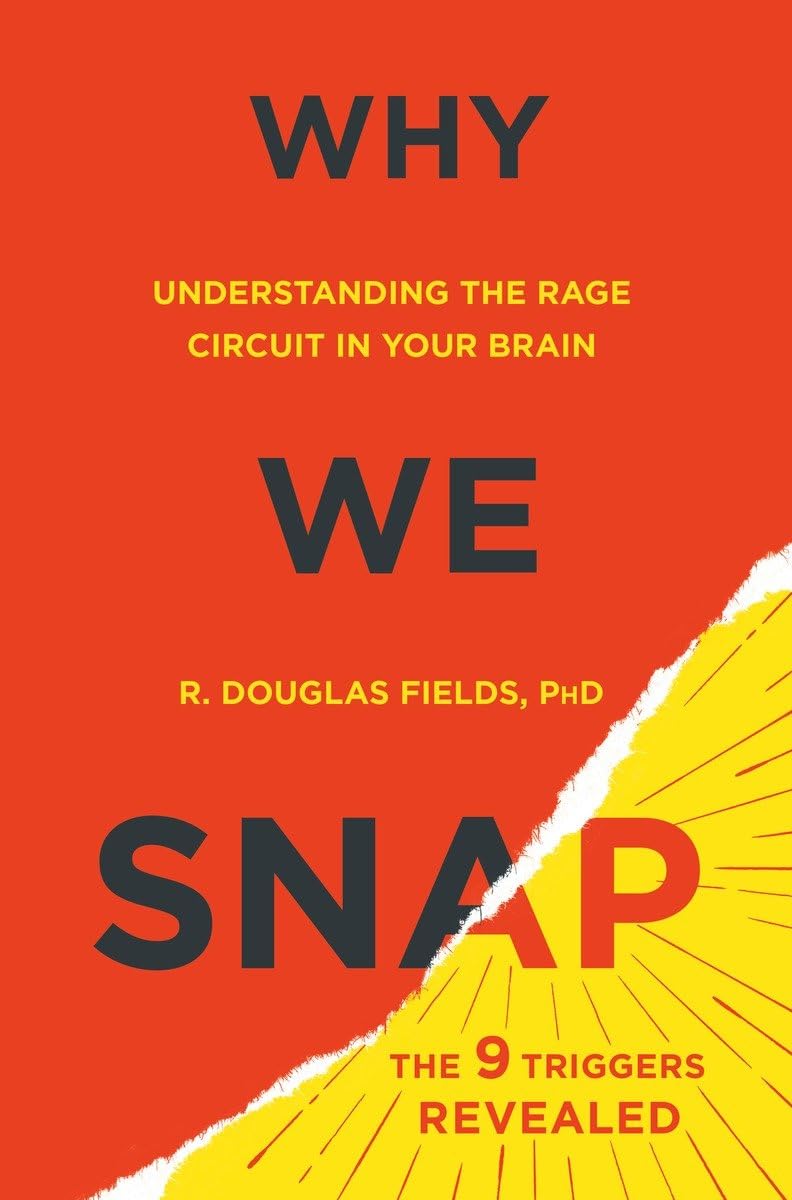
Why We Snap: Understanding the Rage Circuit in Your Brain,Used
Sold by Ergodebooks, an authorized reseller.
Returns accepted within 30 days | support@ergodebooks.com
Shipping Information
- Free Standard Shipping — United States only
- Processing Time: 3–5 business days
- Estimated Delivery: 6–10 business days after dispatch
- Double-boxed, fully insured & discreetly packaged
- Tracking number sent via email once dispatched
Returns & Refund
Returns accepted within 30 days of delivery.
Damaged or Defective Item
Free return shipping + replacement or full refund
Wrong Item Received
Free return shipping + replacement or full refund
Change of Mind
Return shipping at customer's expense · 25% restocking fee applies
Payment Option

The startling new science behind sudden acts of violence and the nine triggers this groundbreaking researcher has uncoveredWe all have a rage circuit we can&;t fully control once it is engaged as R. Douglas Fields, PhD, reveals in this essential book for our time. The daily headlines are filled with examples of otherwise rational people with no history of violence or mental illness suddenly snapping in a domestic dispute, an altercation with police, or road rage attack. We all wish to believe that we are in control of our actions, but the fact is, in certain circumstances we are not. The sad truth is that the right trigger in the right circumstance can unleash a fit of rage in almost anyone.But there is a twist: Essentially the same pathway in the brain that can result in a violent outburst can also enable us to act heroically and altruistically before our conscious brain knows what we are doing. Think of the stranger who dives into a frigid winter lake to save a drowning child.Dr. Fields is an internationally recognized neurobiologist and authority on the brain and the cellular mechanisms of memory. He has spent years trying to understand the biological basis of rage and anomalous violence, and he has concluded that our culture&;s understanding of the problem is based on an erroneous assumption: that rage attacks are the product of morally or mentally defective individuals, rather than a capacity that we all possess.Fields shows that violent behavior is the result of the clash between our evolutionary hardwiring and triggers in our contemporary world. Our personal space is more crowded than ever, we get less sleep, and we just aren't as fit as our ancestors. We need to understand how the hardwiring works and how to recognize the nine triggers. With a totally new perspective, engaging narrative, and practical advice, Why We Snap uncovers the biological roots of the rage response and how we can protect ourselves&;and others.
⚠️ WARNING (California Proposition 65):
This product may contain chemicals known to the State of California to cause cancer, birth defects, or other reproductive harm.
For more information, please visit www.P65Warnings.ca.gov.
- Q: What is the main focus of 'Why We Snap'? A: 'Why We Snap' explores the science behind sudden acts of violence and the nine triggers that can activate our rage response, emphasizing that this capacity exists within everyone.
- Q: Who is the author of the book? A: The book is authored by R. Douglas Fields, Ph.D., an internationally recognized neurobiologist and expert on the brain's mechanisms related to memory and behavior.
- Q: What is the publication date of 'Why We Snap'? A: 'Why We Snap' was published on January 1, 2016.
- Q: How many pages does the book contain? A: 'Why We Snap' has a total of 408 pages.
- Q: What is the binding type of the book? A: The book is available in hardcover binding, which provides durability and a premium feel.
- Q: What category does this book fall under? A: 'Why We Snap' is categorized under Cognitive Psychology, making it relevant for those interested in understanding human behavior.
- Q: What are some key features of the book? A: The book presents a new perspective on rage, engaging narratives, practical advice on recognizing triggers, and insights into the biological roots of the rage response.
- Q: Is this book suitable for readers with no background in psychology? A: Yes, 'Why We Snap' is written in an accessible manner, making it suitable for general readers interested in understanding the complexities of human behavior.
- Q: What makes this book different from other psychology books? A: 'Why We Snap' distinguishes itself by focusing on the biological mechanisms of rage and how they manifest in everyday situations, rather than solely exploring psychological theories.
- Q: Are there any practical applications suggested in the book? A: Yes, the book offers practical advice on how to recognize triggers for rage and strategies for protecting oneself and others from violent outbursts.