
Title
Wildlife Films,Used
Sold by Ergodebooks, an authorized reseller.
Returns accepted within 30 days | support@ergodebooks.com
Shipping Information
- Free Standard Shipping — United States only
- Processing Time: 3–5 business days
- Estimated Delivery: 6–10 business days after dispatch
- Double-boxed, fully insured & discreetly packaged
- Tracking number sent via email once dispatched
Returns & Refund
Returns accepted within 30 days of delivery.
Damaged or Defective Item
Free return shipping + replacement or full refund
Wrong Item Received
Free return shipping + replacement or full refund
Change of Mind
Return shipping at customer's expense · 25% restocking fee applies
Payment Option

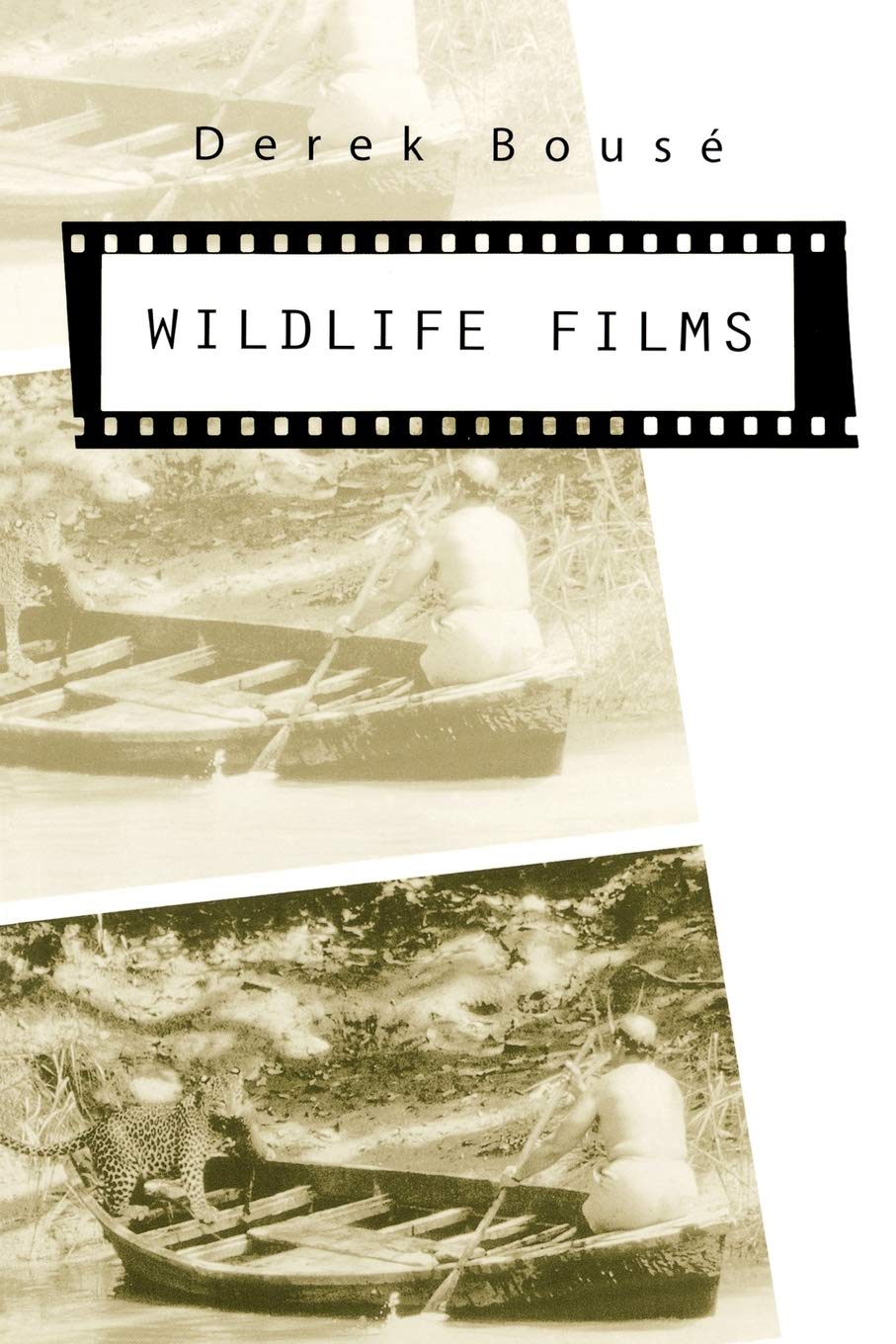
If, as many argue, movies and television have become Western culture's premier storytelling media, so too have they become, for most members of society, the primary source of encounters with the natural worldparticularly wild animals. The television fare offered nightly by national and cable networks such as PBS and the Discovery Channel provides millions of viewers with their only experience of the wilderness and its inhabitants.The very films that so many viewers take as accurate portrayals of wildlife, however, have evolved primarily as a form of entertainment, following the established codes and conventions of narrative exposition. The result has been not the representation of nature, but its wholesale reconstruction and reconfiguration according to film and television conventions, audience expectations, and the demands of competition in the media marketplace.Wildlife Films traces the genealogy of the nature film, from its origins as the 'animal locomotion' studies that mark the very beginnings of motion pictures themselves, to the founding of the Animal Planet cable channel that boasts 'all animals, all the time.' The narrative and thematic elements that unite wildlife films as a genre have their roots not in the documentary film tradition, but in the older traditions of oral and written animal fables as reflections of human society. Derek Bous contends that classic wildlife films often portray animal protagonists living in families modeled on an ideal of the human nuclear family and working in communities that resemble an ideal of bucolic human society. In these storiespresented as documentariesanimals are motivated by human emotions and conduct relationships according to human customs. This imposition of culturally satisfying narrative patterns upon the lives of animals has not only led to the misrepresentation of the natural world; it has promoted the notion that our values, our moral vision, our models of society and family structure derive from nature, rather than being cultural formations.
⚠️ WARNING (California Proposition 65):
This product may contain chemicals known to the State of California to cause cancer, birth defects, or other reproductive harm.
For more information, please visit www.P65Warnings.ca.gov.
- Q: How many pages does the book 'Wildlife Films' have? A: The book 'Wildlife Films' has two hundred ninety-six pages. It provides an in-depth exploration of the nature film genre.
- Q: What is the binding type of 'Wildlife Films'? A: The binding type of 'Wildlife Films' is paperback. This makes it lightweight and easy to carry.
- Q: What are the dimensions of 'Wildlife Films'? A: The dimensions of 'Wildlife Films' are six inches in length, zero point seventy-five inches in width, and nine point zero two inches in height. These measurements make it a convenient size for reading.
- Q: Who is the author of 'Wildlife Films'? A: The author of 'Wildlife Films' is Derek Bousé. He explores the intersection of wildlife films and societal values.
- Q: What is the main theme of 'Wildlife Films'? A: The main theme of 'Wildlife Films' examines how films reconstruct nature based on human narratives. It critiques the portrayal of wildlife in popular media.
- Q: Is 'Wildlife Films' suitable for children? A: Yes, 'Wildlife Films' is suitable for older children and teenagers. It provides educational insights into wildlife and environmental issues.
- Q: How can I take care of my copy of 'Wildlife Films'? A: To take care of your copy of 'Wildlife Films', store it in a dry, cool place and avoid exposure to direct sunlight. This will help maintain its condition.
- Q: Can I read 'Wildlife Films' in a classroom setting? A: Yes, 'Wildlife Films' can be used in a classroom setting. It serves as a valuable resource for discussions on media and nature.
- Q: What should I do if 'Wildlife Films' arrives damaged? A: If 'Wildlife Films' arrives damaged, you should contact the seller for a return or exchange. Most sellers have a customer service policy for such issues.
- Q: Is 'Wildlife Films' part of a series? A: No, 'Wildlife Films' is not part of a series. It stands alone as a comprehensive study of wildlife films.
- Q: What type of audience is 'Wildlife Films' intended for? A: The intended audience for 'Wildlife Films' includes students, educators, and anyone interested in film studies and wildlife. Its academic approach appeals to a broad range of readers.
- Q: Where can I purchase 'Wildlife Films'? A: You can purchase 'Wildlife Films' through online retailers and bookstores. It is distributed by the University of Pennsylvania Press.
- Q: Does 'Wildlife Films' contain illustrations? A: Yes, 'Wildlife Films' contains illustrations that enhance the text. These visuals support the exploration of the themes discussed in the book.
- Q: How often does 'Wildlife Films' reference specific wildlife species? A: Throughout the book, 'Wildlife Films' references numerous wildlife species as examples. This adds depth to the analysis of cultural portrayals.
- Q: Is there a glossary in 'Wildlife Films'? A: No, 'Wildlife Films' does not include a glossary. However, it provides clear explanations of key concepts within the text.
- Q: What makes 'Wildlife Films' a unique read? A: What makes 'Wildlife Films' unique is its critical perspective on how wildlife is represented in film. It combines film studies with ecological insights.