
Title
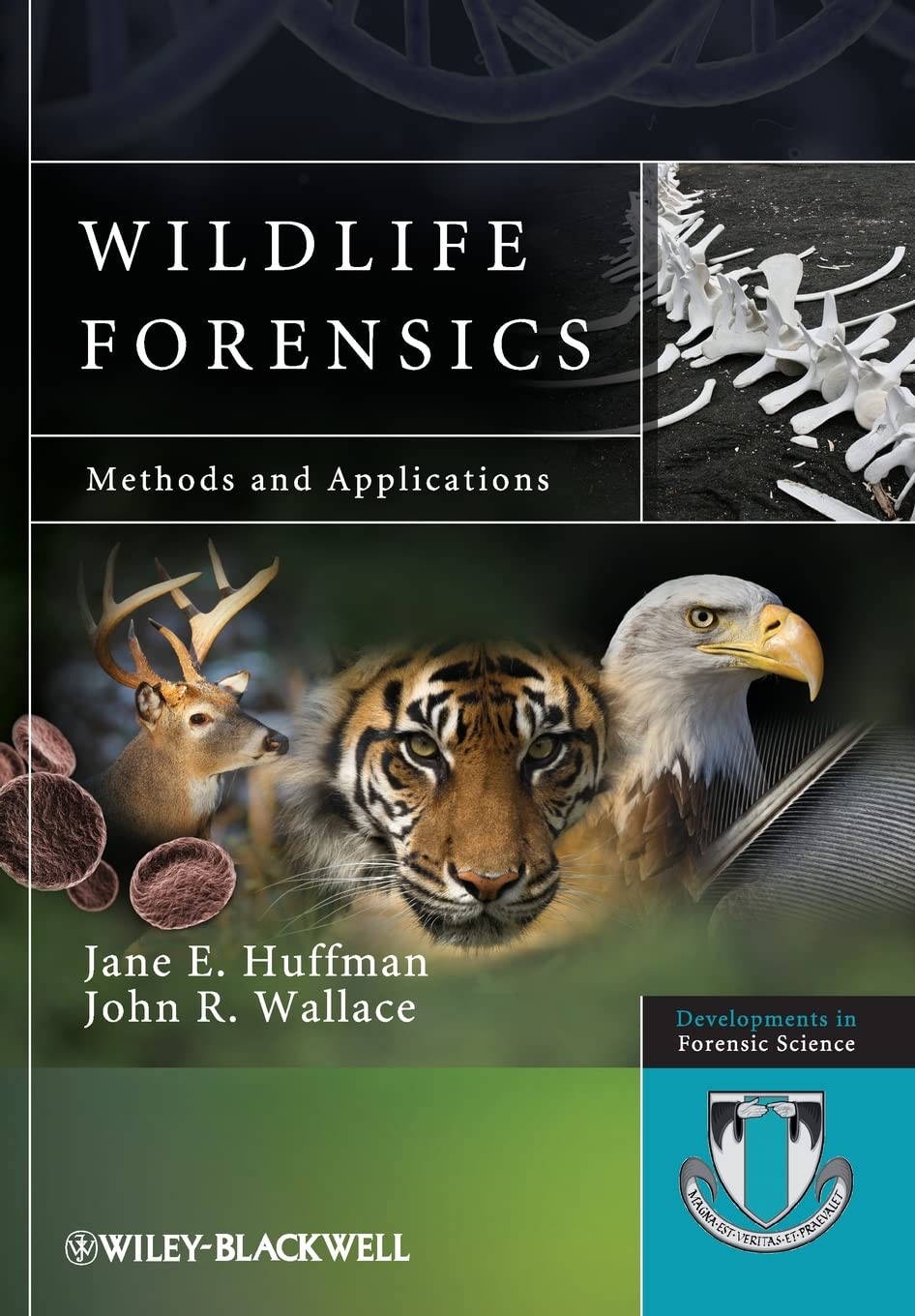
Wildlife Forensics: Methods and Applications,Used
Sold by Ergodebooks, an authorized reseller.
Returns accepted within 30 days | support@ergodebooks.com
Shipping Information
- Free Standard Shipping — United States only
- Processing Time: 3–5 business days
- Estimated Delivery: 6–10 business days after dispatch
- Double-boxed, fully insured & discreetly packaged
- Tracking number sent via email once dispatched
Returns & Refund
Returns accepted within 30 days of delivery.
Damaged or Defective Item
Free return shipping + replacement or full refund
Wrong Item Received
Free return shipping + replacement or full refund
Change of Mind
Return shipping at customer's expense · 25% restocking fee applies
Payment Option

Wildlife Forensics: Methods and Applications provides an accessible and practical approach to the key areas involved in this developing subject. The book contains case studies throughout the text that take the reader from the field, to the lab analysis to the court room, giving a complete insight into the path of forensic evidence and demonstrating how current techniques can be applied to wildlife forensics.The book contains approaches that wildlife forensic investigators and laboratory technicians can employ in investigations and provides the direction and practical advice required by legal and police professionals seeking to gain the evidence needed to prosecute wildlife crimes.The book will bring together in one text various aspects of wildlife forensics, including statistics, toxicology, pathology, entomology, morphological identification, and DNA analysis.This book will be an invaluable reference and will provide investigators, laboratory technicians and students in forensic Science/conservation biology classes with practical guidance and best methods for criminal investigations applied to wildlife crime. Includes practical techniques that wildlife forensic investigators and laboratory technicians can employ in investigations. Includes case studies to illustrate various key methods and applications. Brings together diverse areas of forensic science and demonstrates their application specifically to the field of wildlife crime. Contains methodology boxes to lead readers through the processes of individual techniques. Takes an applied approach to the subject to appeal to both students of the subject and practitioners in the field. Includes a broad introduction to what is meant by 'wildlife crime', how to approach a crime scene and collect evidence and includes chapters dedicated to the key techniques utilized in wildlife investigations. Includes chapters on wildlife forensic pathology; zooanthropological techniques; biological trace evidence analysis; the importance of bitemark evidence; plant and wildlife forensics; best practices and law enforcement.
⚠️ WARNING (California Proposition 65):
This product may contain chemicals known to the State of California to cause cancer, birth defects, or other reproductive harm.
For more information, please visit www.P65Warnings.ca.gov.
- Q: What topics are covered in 'Wildlife Forensics: Methods and Applications'? A: The book covers various topics within wildlife forensics, including statistics, toxicology, pathology, entomology, morphological identification, and DNA analysis.
- Q: Who is the author of this book? A: The author of 'Wildlife Forensics: Methods and Applications' is Jane E. Huffman.
- Q: How many pages does the book contain? A: The book contains a total of 400 pages.
- Q: What is the publication date of this book? A: The book was published on December 30, 2011.
- Q: Is this book suitable for students? A: Yes, the book is designed to be an invaluable reference for investigators, laboratory technicians, and students in forensic science or conservation biology classes.
- Q: What type of binding does this book have? A: The book is available in paperback binding.
- Q: Are there any practical techniques included in the book? A: Yes, the book includes practical techniques that wildlife forensic investigators and laboratory technicians can employ in their investigations.
- Q: Does the book provide case studies? A: Yes, the book contains case studies that illustrate various key methods and applications in wildlife forensics.
- Q: What is meant by 'wildlife crime' as discussed in the book? A: The book includes a broad introduction to 'wildlife crime', explaining how to approach crime scenes and collect evidence related to wildlife offenses.
- Q: What can legal and police professionals gain from this book? A: Legal and police professionals can find direction and practical advice in the book to help them gain the evidence needed to prosecute wildlife crimes.