
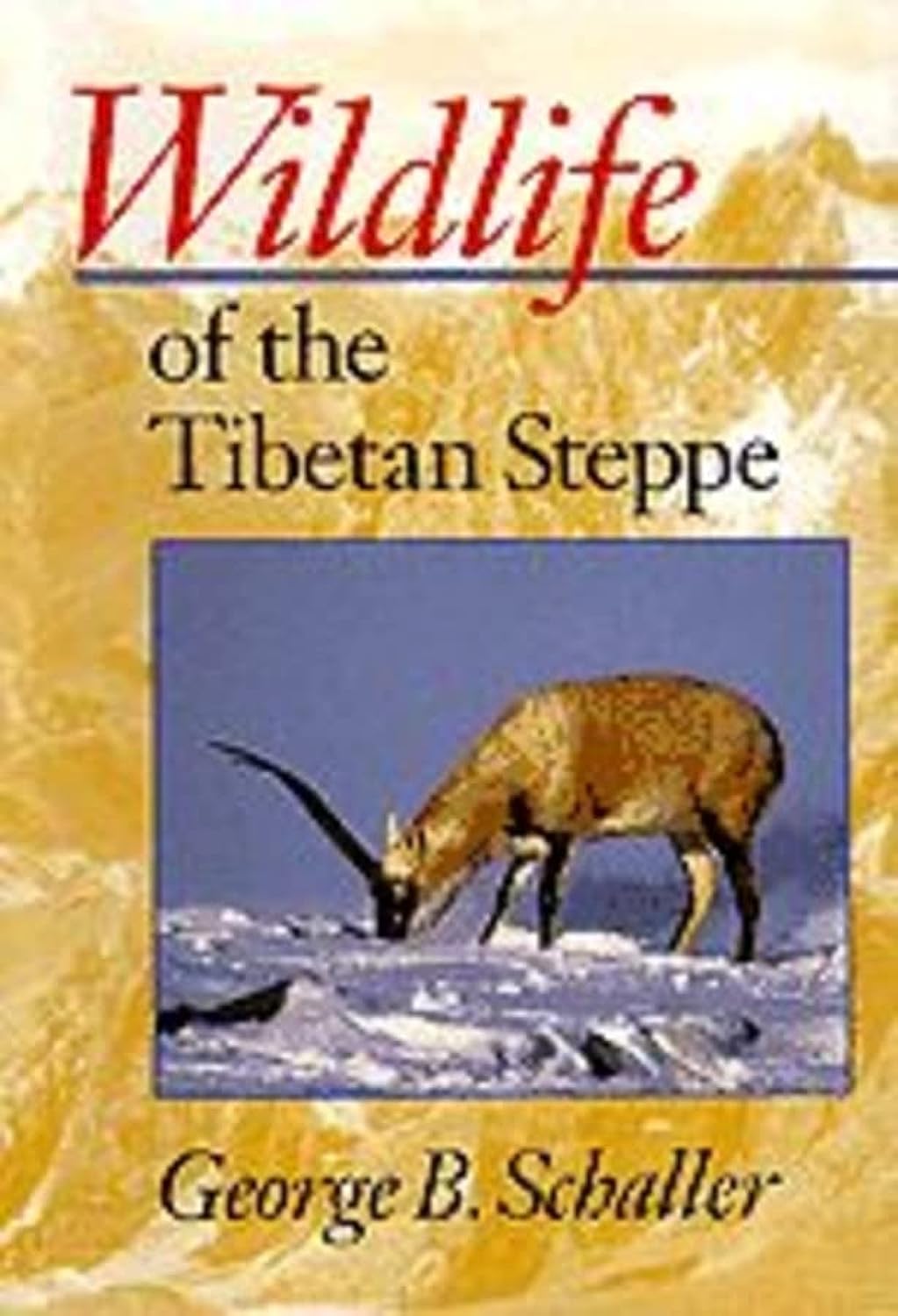
Title
Wildlife of the Tibetan Steppe,New
Sold by Ergodebooks, an authorized reseller.
Returns accepted within 30 days | support@ergodebooks.com
Shipping Information
- Free Standard Shipping — United States only
- Processing Time: 3–5 business days
- Estimated Delivery: 6–10 business days after dispatch
- Double-boxed, fully insured & discreetly packaged
- Tracking number sent via email once dispatched
Returns & Refund
Returns accepted within 30 days of delivery.
Damaged or Defective Item
Free return shipping + replacement or full refund
Wrong Item Received
Free return shipping + replacement or full refund
Change of Mind
Return shipping at customer's expense · 25% restocking fee applies
Payment Option

The Chang Tang, the vast, remote Tibetan steppe, is home to a unique assemblage of large mammals, including Tibetan antelope, gazelle, argali sheep, wild ass, wild yak, wolves, snow leopards, and others. Since 1985, George B. Schaller and his Chinese and Tibetan coworkers have surveyed the flora and fauna of the Chang Tang. Their research provides the first detailed look at the natural history of one of the world's least known ecosystems.The plains ungulates are the main focus of this bookespecially the Tibetan antelope, or chiru, whose migrations define this ecosystem much as those of the wildebeest define the Serengeti. Schaller's descriptions of mammal numbers and distribution, behavior, and ecology provide baseline information that may allow wildlife, grasslands, and pastoralists to continue to coexist harmoniously in this region.This project led to the creation of the 130,000squaremile Chang Tang Reserve by the Tibetan government in 1993, and Wildlife of the Tibetan Steppe should help promote future studies as well as conservation and management efforts.'Schaller makes significant contributions to an understanding of the origins and ecology of Tibetan wildlife that will thrill specialists. . . . Schaller's book is much more than an ecological synthesis. It is a quest for conservation, a case history by a very brave and capable man, driven by no small passion to prevent the tragedy of extinction that looms over Tibet's fauna. His book touches not only the mind but also the heart, and in the context of conservation and the future it raises questions to torture the soul. . . . Wildlife of the Tibetan Steppe will long remain a unique, important source of biological, but also sociological, insights and challenges. I found it well written and difficult to put down.'Valerius Geist, Nature'The topics in Wildlife of the Tibetan Steppe are at least as diverse as the topography; they range from geology and paleoecology to descriptions of ungulates and carnivores unknown to most of the nonChinese speaking world. Individual chapters focus on kiangs, Bactrian camels, yaks, chirus, blue sheep, and Tibetan argalis and gazelles. Not only is much of the biological information new, but subsumed within these chapters are current and past estimates of population sizes both in the Chang Tang Reserve and in protected and nonprotected areas of 'the' plateau. Insights are provided into social structure, and speculations about the evolution and adaptive bases of behavior are carefully offered. Subsequent chapters involve discussions of carnivore communities and interactions between people and wildlife, including the localized but devastating effects of poachers. . . . This book has something for all audiences. . . . [A]n exciting testimony to the past and present status of a biologically spectacular region.'Joel Berger, Conservation Biology
⚠️ WARNING (California Proposition 65):
This product may contain chemicals known to the State of California to cause cancer, birth defects, or other reproductive harm.
For more information, please visit www.P65Warnings.ca.gov.