
Title
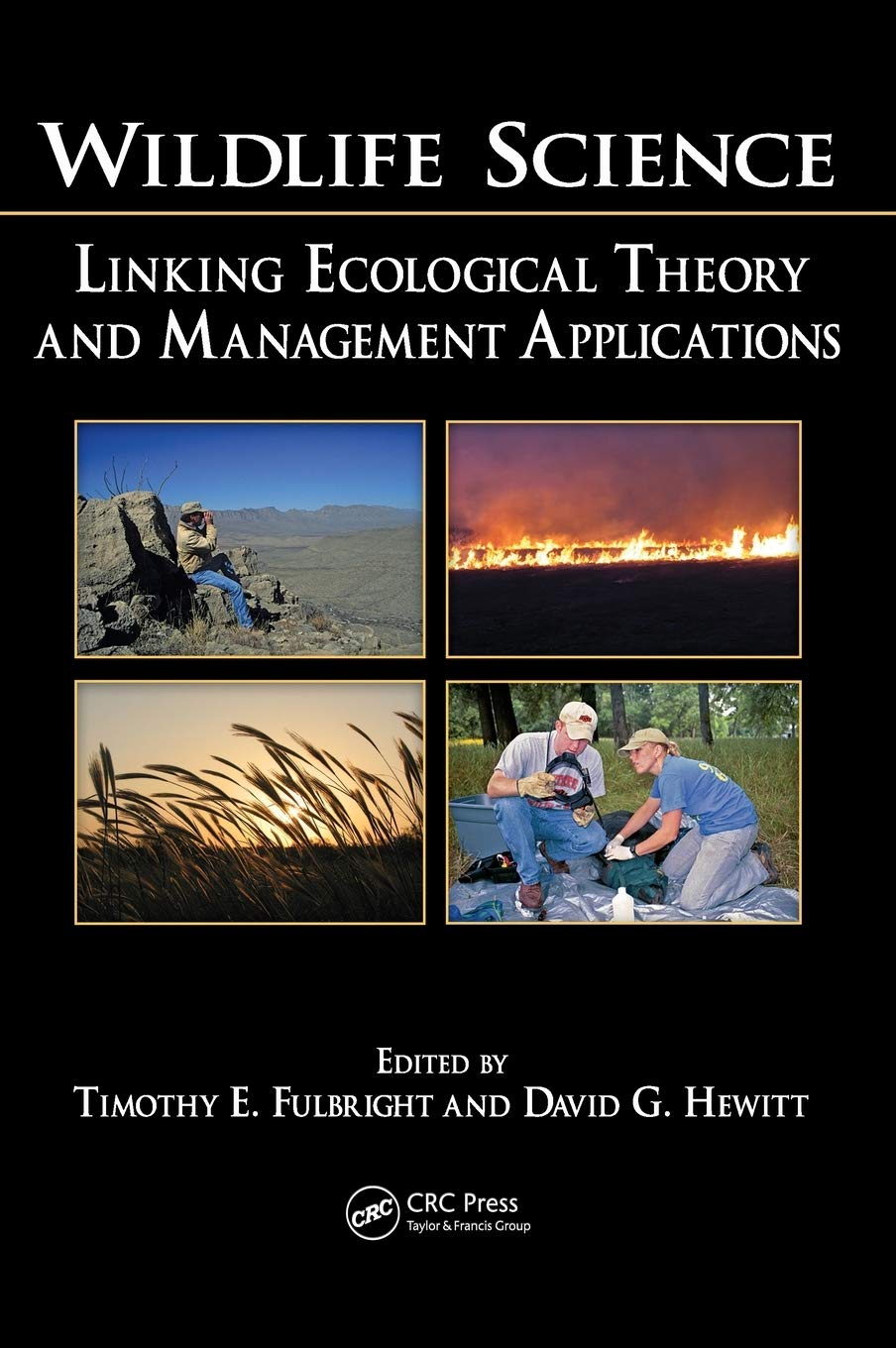
Wildlife Science: Linking Ecological Theory And Management Applications,Used
Sold by Ergodebooks, an authorized reseller.
Returns accepted within 30 days | support@ergodebooks.com
Shipping Information
- Free Standard Shipping — United States only
- Processing Time: 3–5 business days
- Estimated Delivery: 6–10 business days after dispatch
- Double-boxed, fully insured & discreetly packaged
- Tracking number sent via email once dispatched
Returns & Refund
Returns accepted within 30 days of delivery.
Damaged or Defective Item
Free return shipping + replacement or full refund
Wrong Item Received
Free return shipping + replacement or full refund
Change of Mind
Return shipping at customer's expense · 25% restocking fee applies
Payment Option

Consciously or not, wildlife managers generally act from a theoretical basis, although they may not be fully versed in the details or ramifications of that theory. In practice, the predictions of the practitioners sometimes prove more accurate than those of the theoreticians. Practitioners and theoreticians need to work together, but this proves difficult when new management ideas and cuttingedge ecological theory are often published in separate scientific outlets with distinctly different readerships.A compilation of the scientific papers presented at the Caesar Kleberg Wildlife Research Institute's 25th Anniversary Conference of April 2006, Wildlife Science: Linking Ecological Theory and Management Applications brings together these two often separate approaches to elucidate the theoretical underpinnings of wildlife management and to apply evolving ecological concepts to changes and adaptations in management practices. Gathering many of the best and greatest minds in wildlife science, this volume addresses the critically important theme of linking ecological theory and management applications. Divided into five parts, the first two parts deal with the landscape ecology of birds and mammals respectively, demonstrating the need for applied theory in gamebird management and the preservation of the cougar. Part three highlights the role of climate when applying ecological theory to habitat management and discusses the emergence of ecosystem management in managing wildlife at the ecosystem scale. Part four considers the management of wildlife disease and reveals the increasing importance of genetics in conservation and ecology. Finally, the economic and social issues affecting wildlife science round out the coverage in part five.Applying emerging ecological theory for the advancement of wildlife management, Wildlife Science: Linking Ecological Theory and Management Applications provides a long awaited cooperative look at the future of ecosystem manage
⚠️ WARNING (California Proposition 65):
This product may contain chemicals known to the State of California to cause cancer, birth defects, or other reproductive harm.
For more information, please visit www.P65Warnings.ca.gov.