
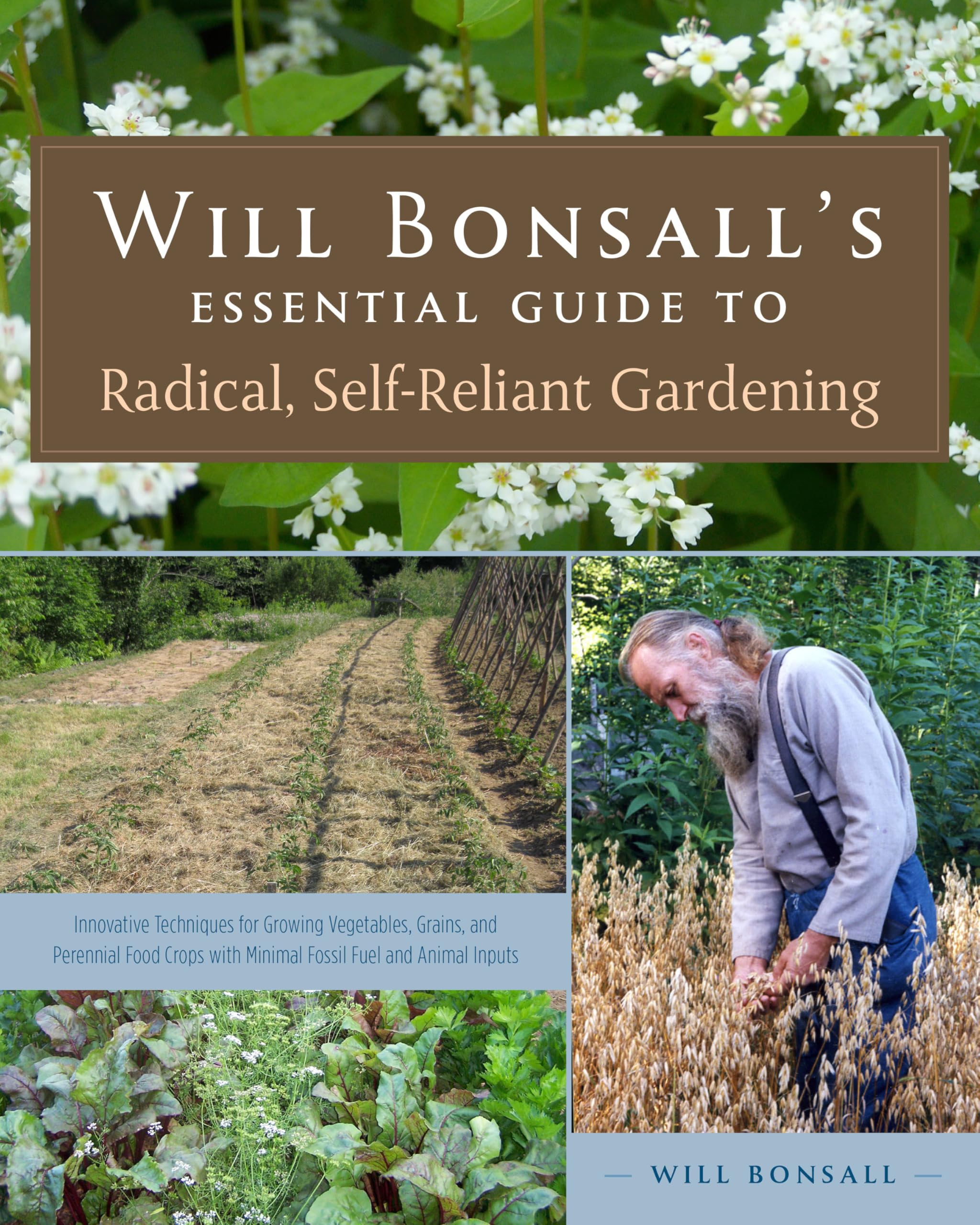
Title
Will Bonsall'S Essential Guide To Radical, Selfreliant Gardening: Innovative Techniques For Growing Vegetables, Grains, And Per
Sold by Ergodebooks, an authorized reseller.
Returns accepted within 30 days | support@ergodebooks.com
Shipping Information
- Free Standard Shipping — United States only
- Processing Time: 3–5 business days
- Estimated Delivery: 6–10 business days after dispatch
- Double-boxed, fully insured & discreetly packaged
- Tracking number sent via email once dispatched
Returns & Refund
Returns accepted within 30 days of delivery.
Damaged or Defective Item
Free return shipping + replacement or full refund
Wrong Item Received
Free return shipping + replacement or full refund
Change of Mind
Return shipping at customer's expense · 25% restocking fee applies
Payment Option

If You Wish To Live Well And Eat Well No Matter What Is Going On In The Rest Of The World, This Book Is For You. . . . Will Bonsall Will Help You Enjoy The Good Life Under Any And All Conditions.Eliot Coleman, Author Of The New Organic GrowerSociety Does Not Generally Expect Its Farmers To Be Visionaries. Perhaps Not, But Longtime Maine Farmer And Homesteader Will Bonsall Does Possess A Unique Clarity Of Vision That Extends All The Way From The Finer Points Of Soil Fertility And Seed Saving To Exploring How We Can Transform Civilization And Make Our World A Better, More Resilient Place.In Will Bonsall'S Essential Guide To Radical, Selfreliant Gardening, Bonsall Maintains That To Achieve Real Wealth We First Need To Understand The Economy Of The Land, To Realize That Things That Might Make Sense Economically Don'T Always Make Sense Ecologically, And Vice Versa. The Marketplace Distorts Our Values, And Our Modern Dependence On Petroleum In Particular Presents A Serious Barrier To Creating A Truly Sustainable Agriculture.For Him The Solution Is, First And Foremost, Greater Selfreliance, Especially In The Areas Of Food And Energy. By Avoiding Any Offfarm Inputs (Fertilizers, Minerals, And Animal Manures), Bonsall Has Learned How To Practice A Purely Veganic, Or Plantbased, Agriculturenot From A Strictly Moralistic Or Philosophical Perspective, But Because It Makes Good Business Sense: Spend Less Instead Of Making More.What This Means In Practical Terms Is That Bonsall Draws Upon The Fertility Of Onfarm Plant Materials: Compost, Green Manures, Perennial Grasses, And Forest Products Like Leaves And Ramial Wood Chips. And He Grows And Harvests A Diversity Of Crops From Both Cultivated And Perennial Plants: Vegetables, Grains, Pulses, Oilseeds, Fruits And Nutseven Uncommon But Useful Permaculture Plants Like Groundnut (Apios).Inside Will Bonsall'S Essential Guide To Radical, Selfreliant Gardening You'Ll Also Find: Milling, Baking And Sprouting Freezing And Vermentation Best Practices To Handle Plant Disease And Animal Pests Collecting And Storing Seeds And So Much More!In A Friendly, Almost Conversational Way, Bonsall Imparts A Wealth Of Knowledge Drawn From His More Than Forty Years Of Farming Experience.My Goal, He Writes, Is Not To Feed The World, But To Feed Myself And Let Others Feed Themselves. If We All Did That, It Might Be A Good Beginning.
⚠️ WARNING (California Proposition 65):
This product may contain chemicals known to the State of California to cause cancer, birth defects, or other reproductive harm.
For more information, please visit www.P65Warnings.ca.gov.
- Q: What is the page count of this book? A: The book contains four hundred pages. This extensive length offers in-depth coverage of radical gardening techniques.
- Q: What are the dimensions of the book? A: The book measures eight point zero three inches in length, zero point eighty-three inches in thickness, and nine point nine seven inches in height.
- Q: What type of binding does this book have? A: This book is published in a paperback binding. This makes it lightweight and easy to handle for reading.
- Q: How can I practice self-reliant gardening? A: You can practice self-reliant gardening by utilizing natural methods like composting and planting diverse crops. The book provides detailed techniques for achieving this.
- Q: Is this book suitable for beginners? A: Yes, this book is suitable for beginners. It offers clear instructions and foundational knowledge for those new to gardening.
- Q: What gardening techniques are covered in the book? A: The book covers techniques like milling, baking, sprouting, and handling plant diseases. These methods enhance your gardening skills.
- Q: How should I store this book? A: Store the book in a cool, dry place to prevent damage. Avoid exposure to moisture to keep the pages in good condition.
- Q: Can I clean the book if it gets dirty? A: Yes, you can clean the book with a dry cloth. Avoid using water or cleaning solutions to prevent damage to the cover.
- Q: Is this book safe for children? A: Yes, the book is suitable for children, but parental guidance is recommended for younger readers. The content promotes sustainable gardening practices.
- Q: What makes this book different from other gardening books? A: This book focuses on veganic gardening techniques, emphasizing self-reliance and sustainability. It offers unique insights from Will Bonsall's extensive experience.
- Q: What if my book arrives damaged? A: If your book arrives damaged, contact customer support for assistance. They will guide you through the return or exchange process.
- Q: Is there a warranty on the book? A: No, books typically do not come with a warranty. However, you can return it if it arrives defective.
- Q: What is the author's background? A: The author, Will Bonsall, is a longtime Maine farmer with over forty years of experience in sustainable agriculture and gardening.
- Q: Can I use this book for organic gardening? A: Yes, this book is ideal for organic gardening. It emphasizes using plant-based inputs for sustainable practices.
- Q: What specific crops does the book recommend? A: The book recommends growing a variety of crops, including vegetables, grains, fruits, and permaculture plants like groundnut.