If you have any questions, you are always welcome to contact us. We'll get back to you as soon as possible, withing 24 hours on weekdays.
Customer service
All questions about your order, return and delivery must be sent to our customer service team by e-mail at yourstore@yourdomain.com
Sale & Press
If you are interested in selling our products, need more information about our brand or wish to make a collaboration, please contact us at press@yourdomain.com
Help
If you have any questions, you are always welcome to contact us. We'll get back to you as soon as possible, withing 24 hours on weekdays.
Customer service
All questions about your order, return and delivery must be sent to our customer service team by e-mail at yourstore@yourdomain.com
Sale & Press
If you are interested in selling our products, need more information about our brand or wish to make a collaboration, please contact us at press@yourdomain.com
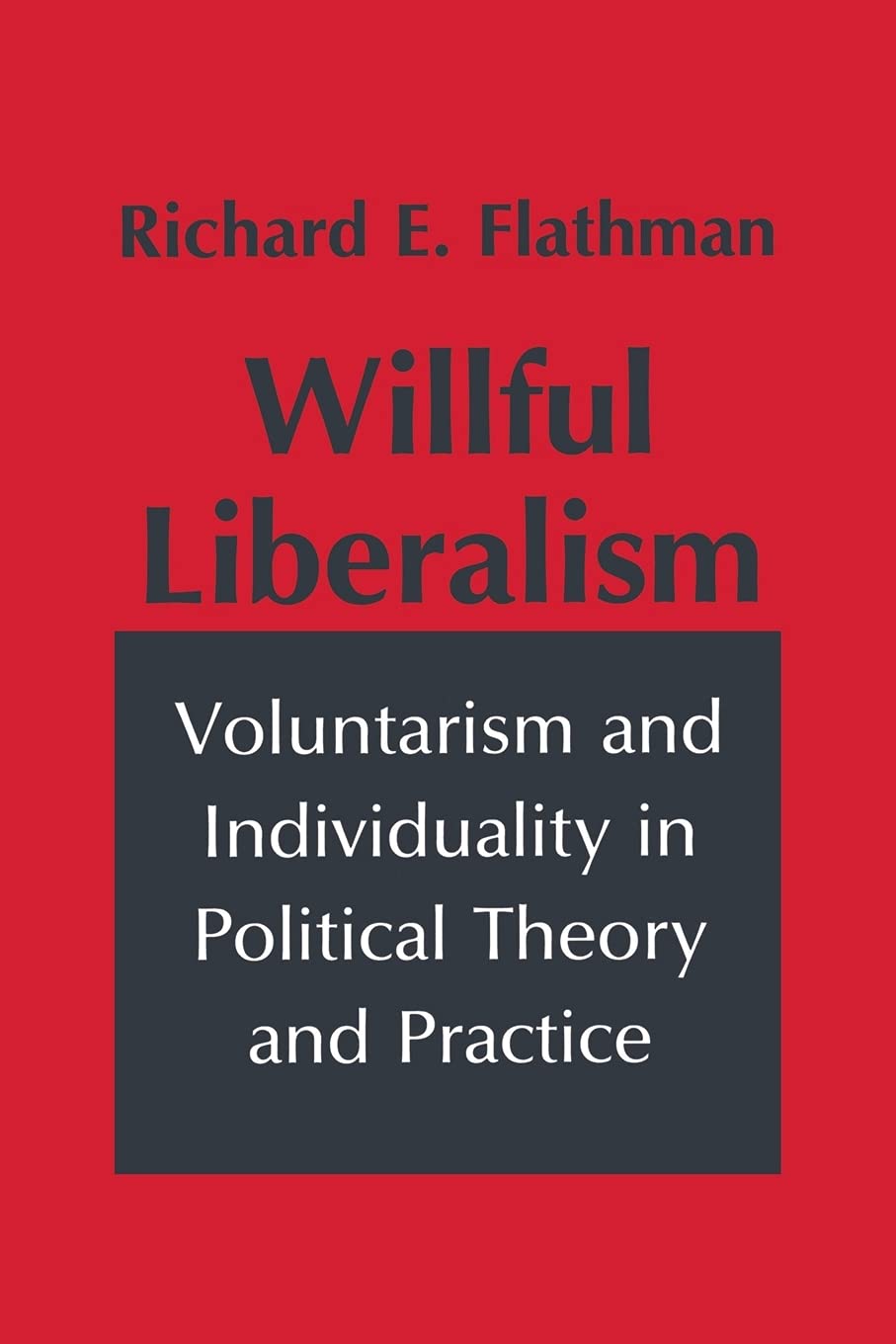
In this book Richard E. Flathman argues vigorously for a new understanding of the proper place of voluntarism, individuality, and plurality in the political and moral theory of liberalism. Giving close and sympathetic attention to thinkers who are seldom considered in debates about liberalism, he draws upon thinking within and outside the liberal canon to articulate a refashioned liberalism that gives a more secure prominence to plurality and a robust individuality.Flathman focuses on political philosophers whose work deals with willfulness and the will in human practice. He is concerned with the thinking of such nominalist medieval theologians as John Duns Scotus and William of Ockham; of Hobbes; and of Arthur Schopenhauer, Friedrich Nietzsche, and William James. He also explores the writings of such contemporary philosophical psychologists as Brian O'Shaughnessy and, in particular, Wittgenstein, and of such twentiethcentury political theorists as Isaiah Berlin, John Rawls, Hannah Arendt, and especially Michael Oakeshott. Appropriating ideas from widely disapproved thinkers and from theological sources commonly thought to be incompatible with liberalism, he formulates what is in many ways a strongly personal statement, one that is unorthodox and potentially disturbing.Sharply controversial, Willful Liberalism is certain to enliven and invigorate political and moral debate, and it may well help to revive liberalism as the dominant public philosophy of our culture, setting it on a new and better course.
⚠️ WARNING (California Proposition 65):
This product may contain chemicals known to the State of California to cause cancer,
birth defects, or other reproductive harm.
For MAP (Minimum Advertised Price) violations and Intellectual Property (IP) or Trademark concerns, please contact:
support@ergodebooks.com
⚠️ California Proposition 65 Warning: Some products sold on this website may expose you to chemicals known to the State of California to cause cancer, birth defects, or other reproductive harm. For more information, visit www.P65Warnings.ca.gov.