
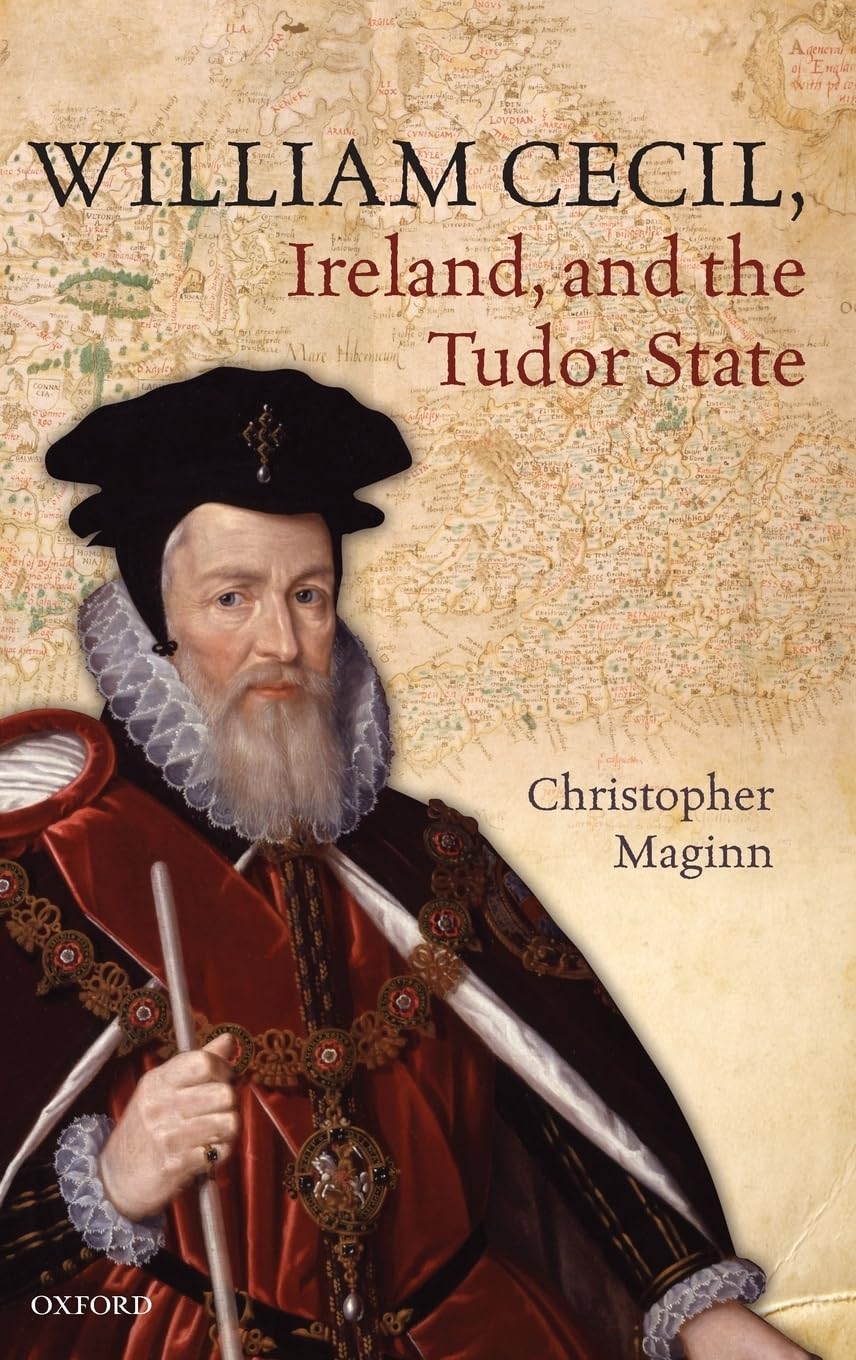
Title
William Cecil, Ireland, and the Tudor State,Used
Sold by Ergodebooks, an authorized reseller.
Returns accepted within 30 days | support@ergodebooks.com
Shipping Information
- Free Standard Shipping — United States only
- Processing Time: 3–5 business days
- Estimated Delivery: 6–10 business days after dispatch
- Double-boxed, fully insured & discreetly packaged
- Tracking number sent via email once dispatched
Returns & Refund
Returns accepted within 30 days of delivery.
Damaged or Defective Item
Free return shipping + replacement or full refund
Wrong Item Received
Free return shipping + replacement or full refund
Change of Mind
Return shipping at customer's expense · 25% restocking fee applies
Payment Option

William Cecil, Ireland, and the Tudor State explores the complex relationship which existed between England and Ireland in the Tudor period, using the long association of William Cecil (15201598) with Ireland as a vehicle for historical enquiry. That Cecil, Queen Elizabeth's most trusted advisor and the most important figure in England after the queen herself, consistently devoted his attention and considerable energies to the kingdom of Ireland is a seldomexplored aspect of his life and his place in the Tudor age. Yet amid his handling of a broad assortment of matters relating to England and Wales, the kingdom of Scotland, continental Europe, and beyond, William Cecil's thoughts regularly turned to the kingdom of Ireland. He personally compiled genealogies of Ireland's Irish and English families and poured over dozens of national and regional maps of Ireland. Cecil served as chancellor of Ireland's first university and, most importantly for the historian, penned, received, and studied thousands of papers on subjects relating to Ireland and the crown's political, economic, social, and religious policies there. Cecil would have understood all of this broadly as 'Ireland matters', a subject which he came to know in greater depth and detail than anyone at the court of Queen Elizabeth I.Maginn's extended analysis of Cecil's long relationship with Ireland helps to make sense of AngloIrish interaction in Tudor times, and shows that this relationship was characterized by more than the basic binary features of conquest and resistance. At another level, he demonstrates that the second half of the sixteenth century witnessed the political, social, and cultural integration of Ireland into the multinational Tudor state, and that it was William Cecil who, more than any other figure, consciously worked to achieve that integration.
⚠️ WARNING (California Proposition 65):
This product may contain chemicals known to the State of California to cause cancer, birth defects, or other reproductive harm.
For more information, please visit www.P65Warnings.ca.gov.