
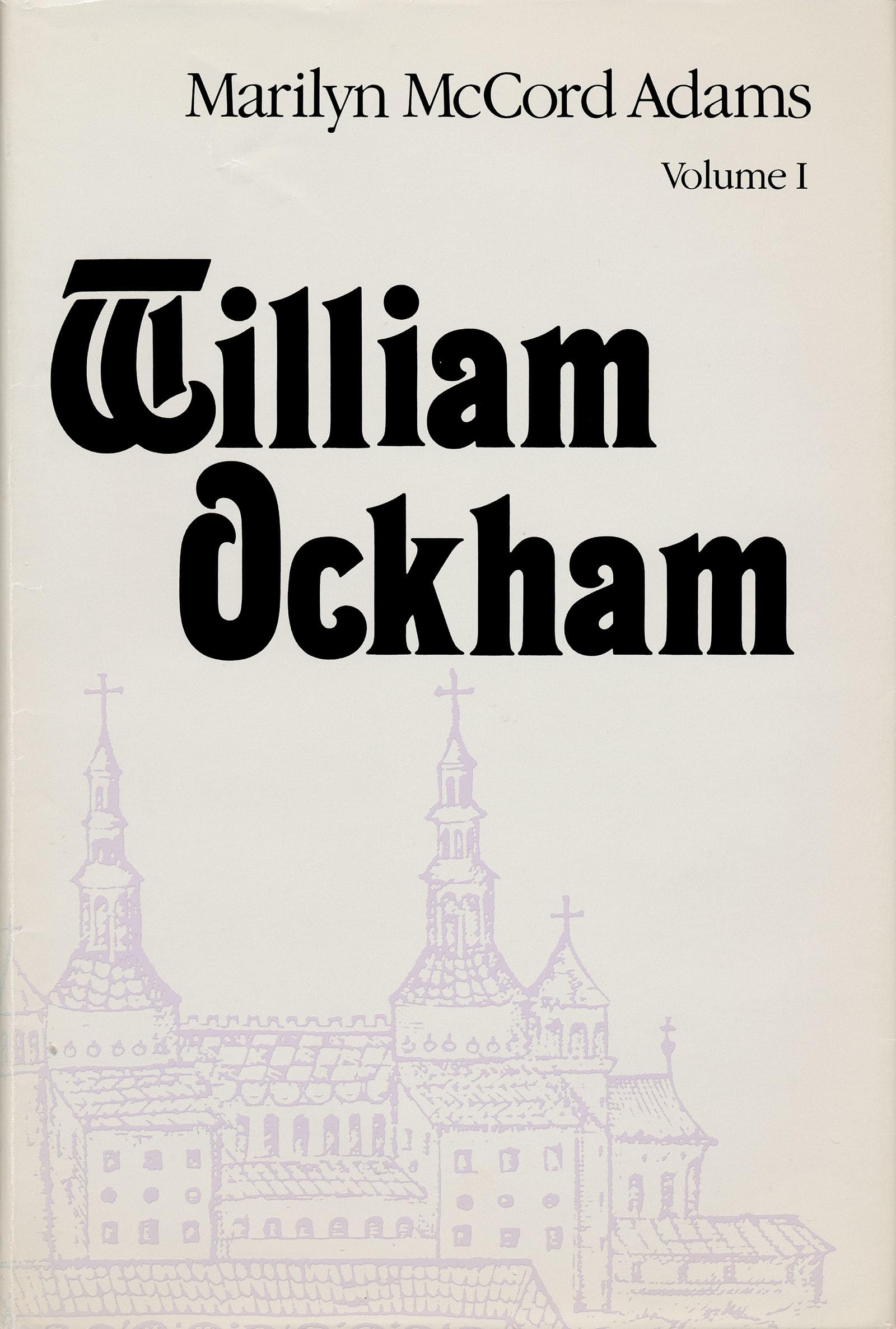
Title
William Ockham 2 Vol. Set (Publications in Medieval Studies),Used
Sold by Ergodebooks, an authorized reseller.
Returns accepted within 30 days | support@ergodebooks.com
Shipping Information
- Free Standard Shipping — United States only
- Processing Time: 3–5 business days
- Estimated Delivery: 6–10 business days after dispatch
- Double-boxed, fully insured & discreetly packaged
- Tracking number sent via email once dispatched
Returns & Refund
Returns accepted within 30 days of delivery.
Damaged or Defective Item
Free return shipping + replacement or full refund
Wrong Item Received
Free return shipping + replacement or full refund
Change of Mind
Return shipping at customer's expense · 25% restocking fee applies
Payment Option

William Ockham is probably the most notorious and most widely misunderstood philosopher of the later Middle Ages. Accused by John Lutterell, the former chancellor of Oxford University, of teaching heretical doctrines, Ockham was summoned to Avignon by Pope John XXII and eventually lived under the protection of Louis of Bavaria. Yet, with Aquinas and Scotus, he remains among the three greatest philosophers of the period.This landmark book, split into two volumes, offers a clear and concise account of Ockham's philosophical positions (his ontology, logic, epistemology, and natural philosophy), along with the arguments for them. It then shows how Ockham's theological disagreements with his most eminent predecessors are a logical consequence of underlying philosophical differences. According to Marilyn McCord Adams, Ockham emerges as a Franciscan Aristotelian, much more philosophically and religiously conservative than commonly supposed. Adams challenges the notions that Ockham's nominalism and ontological reductions lead to subjectivism in metaphysics, his epistemology to skepticism, his theory of causality to Humean constant conjunction or to occasionalism. Likewise, Adams rejects the notion that Ockham's philosophical doctrines lead to heretical views in theology, or that his insistence on divine freedom leads to arbitrariness and caprice in ethics. Although her primary focus is on Ockham, McAdams compares and contrasts his positions with those of Aquinas, Scotus, Henry of Ghent, among others. William Ockham constitutes an excellent initiation for philosophers into the problems and theoretical framework of the late thirteenth and early fourteenth centuries.
⚠️ WARNING (California Proposition 65):
This product may contain chemicals known to the State of California to cause cancer, birth defects, or other reproductive harm.
For more information, please visit www.P65Warnings.ca.gov.