
Title
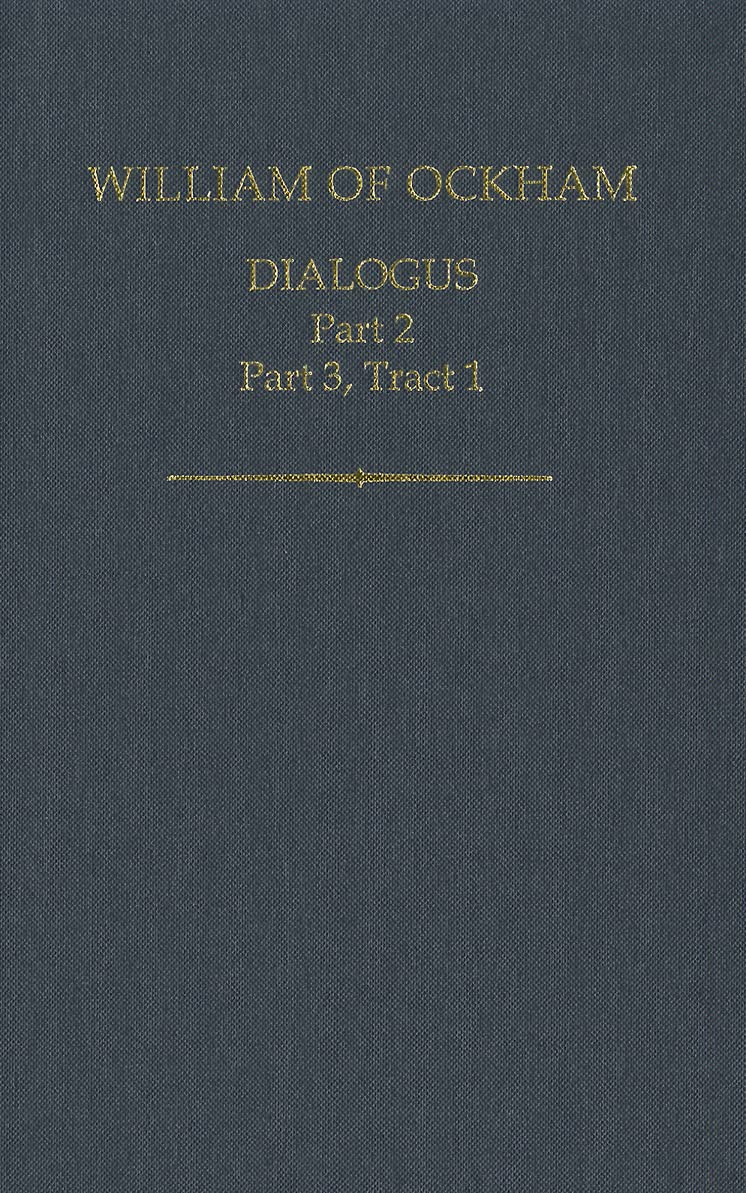
William of Ockham: Dialogus: Part 2; Part 3, Tract 1 (Auctores Britannici Medii Aevi),Used
Sold by Ergodebooks, an authorized reseller.
Returns accepted within 30 days | support@ergodebooks.com
Shipping Information
- Free Standard Shipping — United States only
- Processing Time: 3–5 business days
- Estimated Delivery: 6–10 business days after dispatch
- Double-boxed, fully insured & discreetly packaged
- Tracking number sent via email once dispatched
Returns & Refund
Returns accepted within 30 days of delivery.
Damaged or Defective Item
Free return shipping + replacement or full refund
Wrong Item Received
Free return shipping + replacement or full refund
Change of Mind
Return shipping at customer's expense · 25% restocking fee applies
Payment Option

William of Ockham was a medieval English philosopher and theologian (he was born about 1285, perhaps as late as 1288, and died in 1347 or 1348). In 1328 Ockham turned away from 'pure' philosophy and theology to polemic. From that year until the end of his life he worked to overthrow what he saw as the tyranny of Pope John XXII (13161334) and of his successors Popes Benedict XII (13341342) and Clement VI (13421352). This campaign led him into questions of ecclesiology (the study of the nature and structure of the Christian Church, e.g. of the functions and powers of the pope) and political philosophy.The Dialogus purports to be a transcript made by a mature student of lengthy discussions between himself and a university master about the various opinions of the learned on the matters disputed between John XXII and the dissident Franciscans. The student is usually the initiator; he chooses the topics, asks most of the questions and decides when he has heard enough. The master is, so to speak, an expert witness whom the student examines.This volume publishes an edition of two elements of the Dialogus. Part 2 of the Dialogus is not in dialogue form and may not to be the work of Ockham himself. Part 3 is divided into two tracts. Tract 1, which is reproduced in this volume, is on the power of the Pope and clergy.Liberal thinking in modern times builds on certain earlier ancient and medieval political ideas, which Ockham reasserted, defended and helped to perpetuate. Thus there are elements in his ecclesiology and political philosophy that anticipate the views of Locke, Mill, and other modern liberals.
⚠️ WARNING (California Proposition 65):
This product may contain chemicals known to the State of California to cause cancer, birth defects, or other reproductive harm.
For more information, please visit www.P65Warnings.ca.gov.