If you have any questions, you are always welcome to contact us. We'll get back to you as soon as possible, withing 24 hours on weekdays.
Customer service
All questions about your order, return and delivery must be sent to our customer service team by e-mail at yourstore@yourdomain.com
Sale & Press
If you are interested in selling our products, need more information about our brand or wish to make a collaboration, please contact us at press@yourdomain.com
Help
If you have any questions, you are always welcome to contact us. We'll get back to you as soon as possible, withing 24 hours on weekdays.
Customer service
All questions about your order, return and delivery must be sent to our customer service team by e-mail at yourstore@yourdomain.com
Sale & Press
If you are interested in selling our products, need more information about our brand or wish to make a collaboration, please contact us at press@yourdomain.com
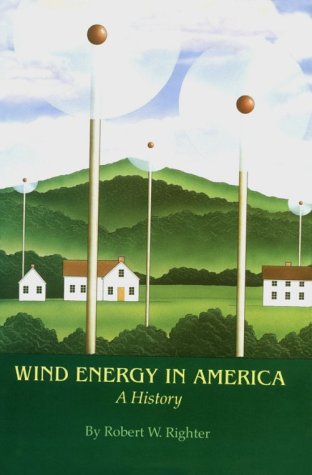
This compelling saga is the history of the effort to capture the power of the wind for electricity. Environmental historian Robert W. Righter has included in his narrative the first European windmills, the nineteenthcentury electric experiments that empowered rural America, and finally, the immense, acreswide wind farms that feed the power grid in latetwentiethcentury California and elsewhere.Righter tells lively tales not only of eccentric inventors and technical innovations but also of the politics of the power industry, past and present. From his thorough research in a variety of archival sources, he describes how individuals and small businesses have contributed the most to windenergy development, concluding that for rural America at least, an individual, decentralized power system is a reasonable alternative.Wind Energy in America, however, does not end in the past. Well over onethird of the narrative focuses on the contemporary development of wind energy and the international race for dominance in the windturbine business. Righter is courageous enough to take a stand regarding federal government research efforts (SERI, NRAL) and the crucial role of public and private power companies. He also explores the arguments of people and organizations opposed to the spread of wind generators paradoxically, often the same environmental groups that hailed wind energy as a savior in the late 1970s.
⚠️ WARNING (California Proposition 65):
This product may contain chemicals known to the State of California to cause cancer,
birth defects, or other reproductive harm.
For MAP (Minimum Advertised Price) violations and Intellectual Property (IP) or Trademark concerns, please contact:
support@ergodebooks.com
⚠️ California Proposition 65 Warning: Some products sold on this website may expose you to chemicals known to the State of California to cause cancer, birth defects, or other reproductive harm. For more information, visit www.P65Warnings.ca.gov.