
Title
Wireless Location in CDMA Cellular Radio Systems (The Springer International Series in Engineering and Computer Science, 535),Used
Sold by Ergodebooks, an authorized reseller.
Returns accepted within 30 days | support@ergodebooks.com
Shipping Information
- Free Standard Shipping — United States only
- Processing Time: 3–5 business days
- Estimated Delivery: 6–10 business days after dispatch
- Double-boxed, fully insured & discreetly packaged
- Tracking number sent via email once dispatched
Returns & Refund
Returns accepted within 30 days of delivery.
Damaged or Defective Item
Free return shipping + replacement or full refund
Wrong Item Received
Free return shipping + replacement or full refund
Change of Mind
Return shipping at customer's expense · 25% restocking fee applies
Payment Option

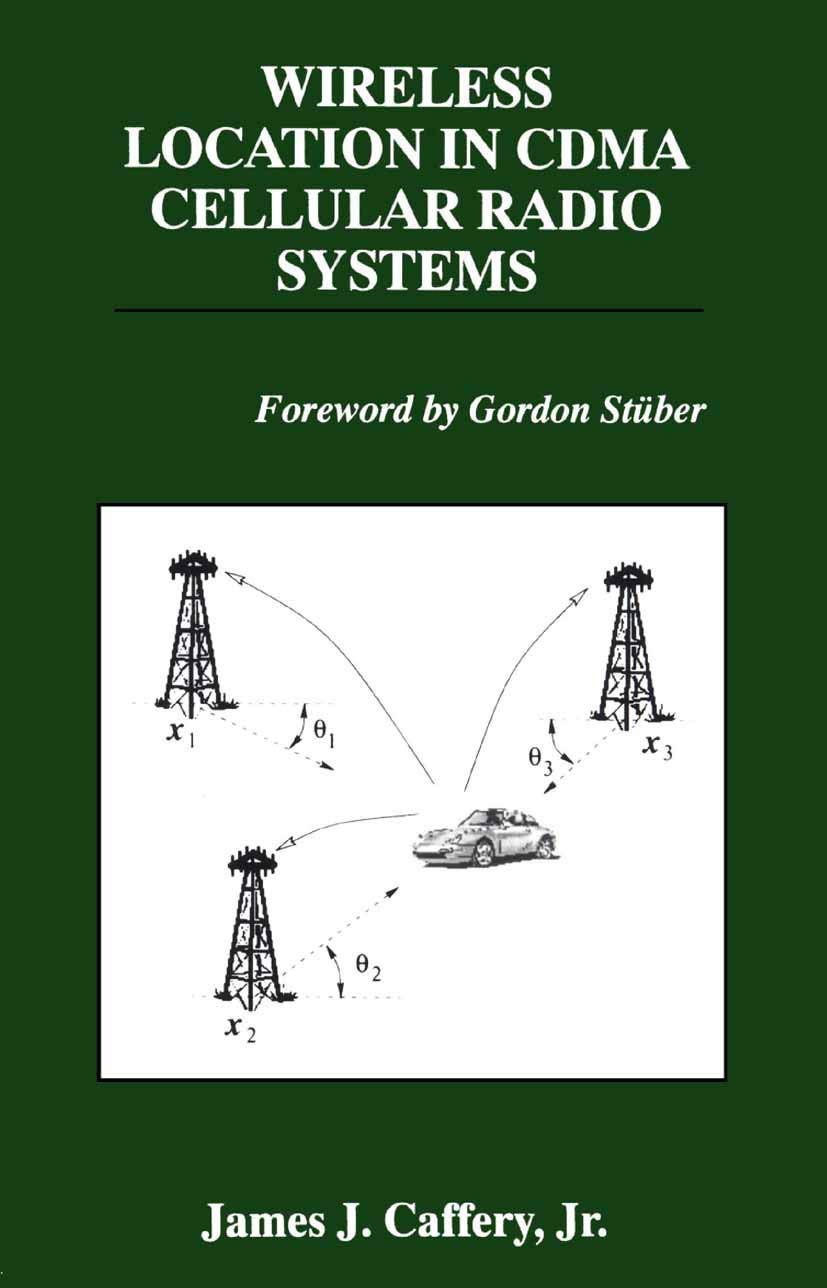
With the increasing market penetration of cellular telephones, the number of E911 calls placed by cellular telephones has grown cons erably. This growth in E911 calls led to a 1996 FCC ruling requiring that all cellular, PCS, and SMR licensees provide location information for the support of E911 safety services. The provision of such location information is to be implemented in two phases. Phase I, whose deadline has already been passed, requires that wireless carriers relay the callers telephone number along with location of the cell site and/or sector se ing the call, to a designated Public Safety Answering Point (PSAP). This information allows the PSAP to return the call if disconnected. Phase II, to be completed by October 1, 2001, is much more stringent and requires that the location of an E911 caller be determined and reported with an rms location accuracy of 125 m in 67% of the cases. The applications of wireless location technology extend well beyond E911 services. Location information can be used by cellular telephone operators themselves for more effective management of their radio sources, so as to achieve greater spectral efficiencies. Resource m agement algorithms such as handoffs between cell sites, channel assi ments, and others can all benefit from subscriber location information. Location information obtained from vehicular based cellular telephones can be used as an input to Intelligent Transportation Systems (ITS), and in particular traffic management and traveler information systems.
⚠️ WARNING (California Proposition 65):
This product may contain chemicals known to the State of California to cause cancer, birth defects, or other reproductive harm.
For more information, please visit www.P65Warnings.ca.gov.