If you have any questions, you are always welcome to contact us. We'll get back to you as soon as possible, withing 24 hours on weekdays.
Customer service
All questions about your order, return and delivery must be sent to our customer service team by e-mail at yourstore@yourdomain.com
Sale & Press
If you are interested in selling our products, need more information about our brand or wish to make a collaboration, please contact us at press@yourdomain.com
Help
If you have any questions, you are always welcome to contact us. We'll get back to you as soon as possible, withing 24 hours on weekdays.
Customer service
All questions about your order, return and delivery must be sent to our customer service team by e-mail at yourstore@yourdomain.com
Sale & Press
If you are interested in selling our products, need more information about our brand or wish to make a collaboration, please contact us at press@yourdomain.com
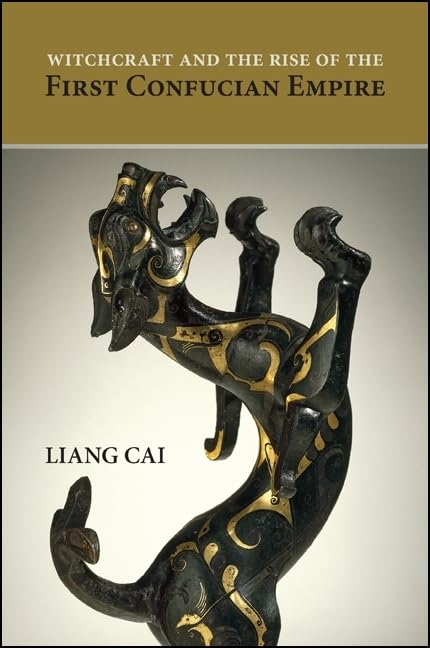
Finalist for the 2015 Best First Book in the History of Religions presented by the American Academy of ReligionWinner of the 2014 Academic Award for Excellence presented by Chinese Historians in the United StatesWhen did Confucianism become the reigning political ideology of imperial China? A pervasive narrative holds it was during the reign of Emperor Wu of the Han dynasty (14187 BCE). In this book, Liang Cai maintains that such a date would have been too early and provides a new account of this transformation. A hidden narrative in Sima Qian's The Grand Scribe's Records (Shi ji) shows that Confucians were a powerless minority in the political realm of this period. Cai argues that the notorious witchcraft scandal of 9187 BCE reshuffled the power structure of the Western Han bureaucracy and provided Confucians an opportune moment to seize power, evolve into a new elite class, and set the tenor of political discourse for centuries to come.
⚠️ WARNING (California Proposition 65):
This product may contain chemicals known to the State of California to cause cancer,
birth defects, or other reproductive harm.
For MAP (Minimum Advertised Price) violations and Intellectual Property (IP) or Trademark concerns, please contact:
support@ergodebooks.com
⚠️ California Proposition 65 Warning: Some products sold on this website may expose you to chemicals known to the State of California to cause cancer, birth defects, or other reproductive harm. For more information, visit www.P65Warnings.ca.gov.