
Title
Witches, Wife Beaters, and Whores: Common Law and Common Folk in Early America,Used
Sold by Ergodebooks, an authorized reseller.
Returns accepted within 30 days | support@ergodebooks.com
Shipping Information
- Free Standard Shipping — United States only
- Processing Time: 3–5 business days
- Estimated Delivery: 6–10 business days after dispatch
- Double-boxed, fully insured & discreetly packaged
- Tracking number sent via email once dispatched
Returns & Refund
Returns accepted within 30 days of delivery.
Damaged or Defective Item
Free return shipping + replacement or full refund
Wrong Item Received
Free return shipping + replacement or full refund
Change of Mind
Return shipping at customer's expense · 25% restocking fee applies
Payment Option

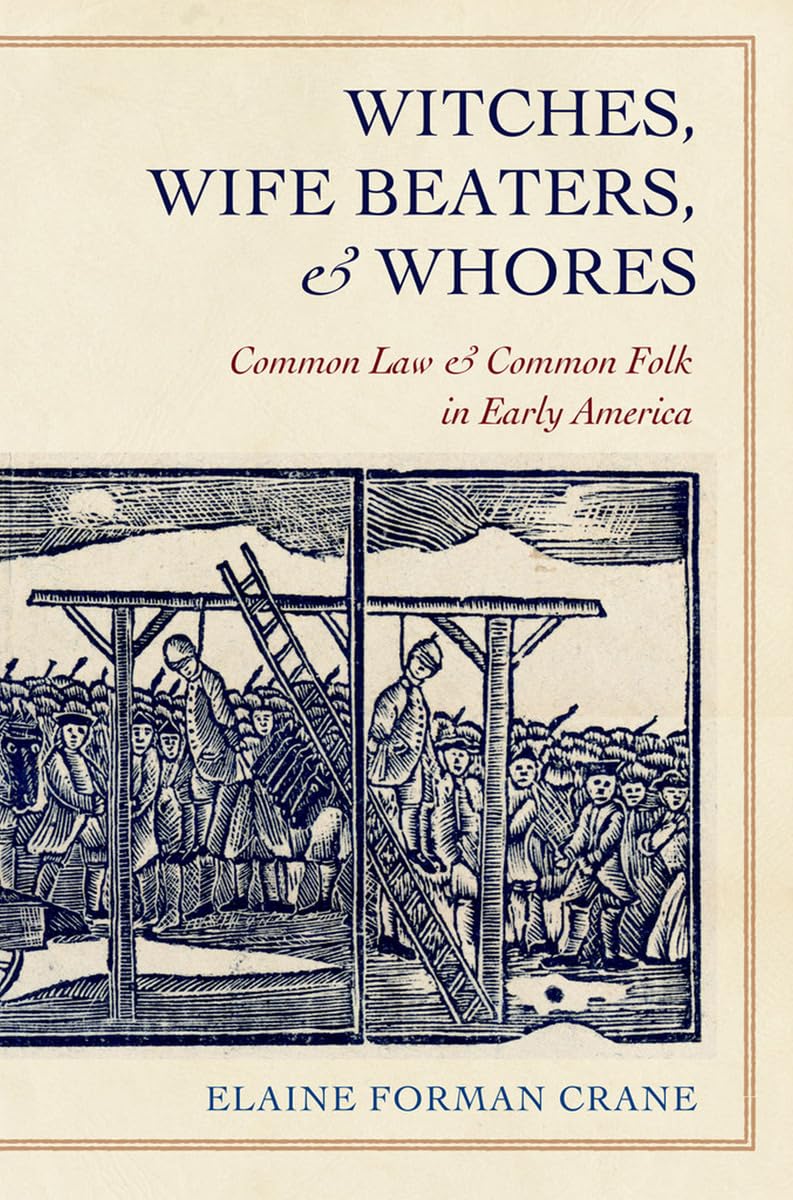
The early American legal system permeated the lives of colonists and reflected their sense of what was right and wrong, honorable and dishonorable, moral and immoral. In a compelling book full of the extraordinary stories of ordinary people, Elaine Forman Crane reveals the ways in which early Americans clashed with or conformed to the social norms established by the law. As trials throughout the country reveal, alleged malefactors such as witches, wife beaters, and whores, as well as debtors, rapists, and fornicators, were as much a part of the social landscape as farmers, merchants, and ministers. Ordinary people 'made' law by establishing and enforcing informal rules of conduct. Codified by a handshake or over a mug of ale, such agreements became custom and custom became 'law.' Furthermore, by submitting to formal laws initiated from above, common folk legitimized a government that depended on popular consent to rule with authority.In this book we meet Marretie Joris, a New Amsterdam entrepreneur who sues Gabriel de Haes for calling her a whore; peer cautiously at Christian Stevenson, a Bermudian witch as bad 'as any in the world;' and learn that Hannah Dyre feared to be alone with her husbandand subsequently died after a beating. We travel with Comfort Taylor as she crosses Narragansett Bay with Cuff, an enslaved ferry captain, whom she accuses of attempted rape, and watch as Samuel Banister pulls the trigger of a gun that kills the sheriffs deputy who tried to evict Banister from his home. And finally, we consider the promiscuous Marylanders Thomas Harris and Ann Goldsborough, who parented four illegitimate children, ran afoul of inheritance laws, and resolved matters only with the assistance of a ghost. Through the six trials she skillfully reconstructs here, Crane offers a surprising new look at how early American society defined and punished aberrant behavior, even as it defined itself through its legal system.
⚠️ WARNING (California Proposition 65):
This product may contain chemicals known to the State of California to cause cancer, birth defects, or other reproductive harm.
For more information, please visit www.P65Warnings.ca.gov.