
Title
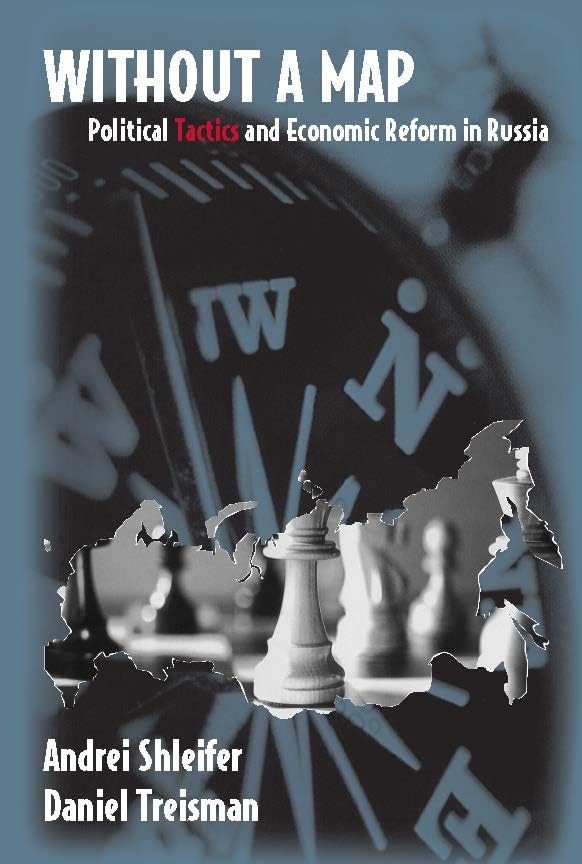
Without a Map: Political Tactics and Economic Reform in Russia,Used
Sold by Ergodebooks, an authorized reseller.
Returns accepted within 30 days | support@ergodebooks.com
Shipping Information
- Free Standard Shipping — United States only
- Processing Time: 3–5 business days
- Estimated Delivery: 6–10 business days after dispatch
- Double-boxed, fully insured & discreetly packaged
- Tracking number sent via email once dispatched
Returns & Refund
Returns accepted within 30 days of delivery.
Damaged or Defective Item
Free return shipping + replacement or full refund
Wrong Item Received
Free return shipping + replacement or full refund
Change of Mind
Return shipping at customer's expense · 25% restocking fee applies
Payment Option

A balanced look at Russia's attempts to build capitalism on the ruins of Soviet central planning.Recent commentators on Russia's economic reforms have almost uniformly declared them a disappointing and avoidablefailure. In this book, two American scholars take a new and more balanced look at the country's attempts to build capitalism on the ruins of Soviet central planning. They show how and why the Russian reforms achieved remarkable breakthroughs in some areas but came undone in others. Unlike Eastern European countries such as Poland or the Czech Republic, to which it is often compared, Russia is a federal, ethnically diverse, industrial giant with an economy heavily oriented toward raw materials extraction. The political obstacles it faced in designing reforms were incomparably greater. Shleifer and Treisman tell how Russia's leaders, navigating in uncharted economic terrain, managed to find a path around some of these obstacles. In successful episodes, central reformers devised a strategy to win over some key opponents, while dividing and marginalizing others. Such political tactics made possible the rapid privatization of 14,000 state enterprises in 19921994 and the defeat of inflation in 1995. But failure to outmaneuver the new oligarchs and regional governors after 1996 undermined reformers' attempts to collect taxes and clean up the bureaucracy that has stifled business growth.Renewing a strain of analysis that runs from Machiavelli to Hirschman, the authors reach conclusions about political strategies that have important implications for other reformers. They draw on their extensive knowledge of the country and recent experience as advisors to Russian policymakers. Written in an accessible style, the book should appeal to economists, political scientists, policymakers, businesspeople, and all those interested in Russian politics or economics.
⚠️ WARNING (California Proposition 65):
This product may contain chemicals known to the State of California to cause cancer, birth defects, or other reproductive harm.
For more information, please visit www.P65Warnings.ca.gov.