
Title
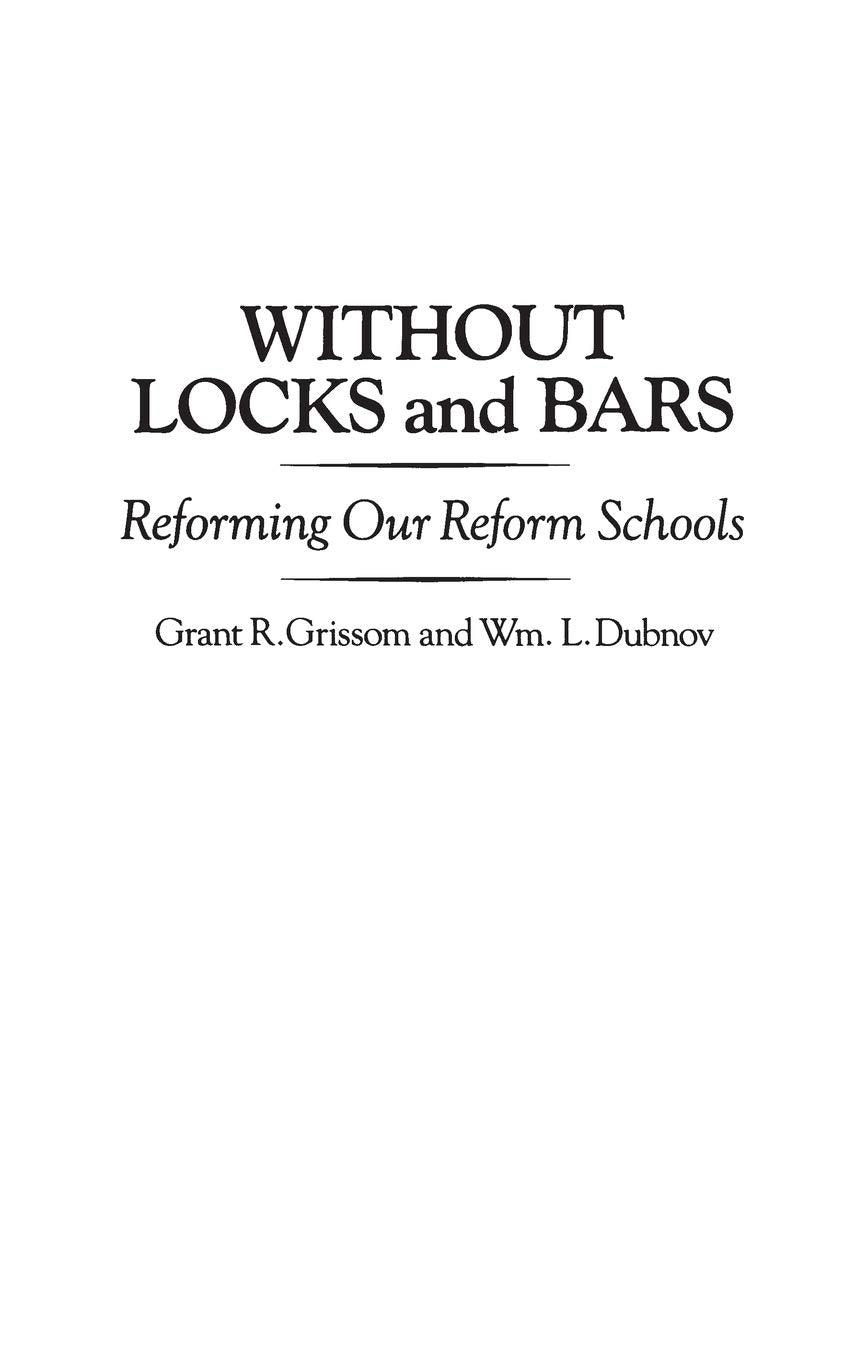
Without Locks and Bars: Reforming Our Reform Schools,Used
Sold by Ergodebooks, an authorized reseller.
Returns accepted within 30 days | support@ergodebooks.com
Shipping Information
- Free Standard Shipping — United States only
- Processing Time: 3–5 business days
- Estimated Delivery: 6–10 business days after dispatch
- Double-boxed, fully insured & discreetly packaged
- Tracking number sent via email once dispatched
Returns & Refund
Returns accepted within 30 days of delivery.
Damaged or Defective Item
Free return shipping + replacement or full refund
Wrong Item Received
Free return shipping + replacement or full refund
Change of Mind
Return shipping at customer's expense · 25% restocking fee applies
Payment Option

A pioneering contribution to the field of juvenile corrections and organizational development, this volume documents the organizational change process which transformed Glen Mills Schools, America's oldest juvenile correctional institution, from a physically deteriorating, ineffective institution into one of the most successful residential programs for delinquents in the nation. Of particular interest to practitioners, policymakers, researchers and students of juvenile justice, the volume provides both a theoretical model and practical guidelines for the effective reform of juvenile facilities. Documentation of Glen Mills' success includes the most extensive recidivism study ever conducted on an American correctional institution.Without Locks and Bars demonstrates that the normative culture residential treatment approach for juvenile offenders can and does work at costs below most traditional programs. The authors describe the theory, beliefs, and values which underlie the formal treatment system at the Glen Mills Schools and the process through which the psychosocial environment (normative culture) is shaped into a potent treatment tool. Especially helpful for practitioners at similar facilities is a detailed discussion of the major steps that must be taken to replicate the Glen Mills model. Based upon the observed effects of the Glen Mills experience, the authors challenge some widely held assumptions in the field. They conclude that most delinquents have far greater potential for positive behavioral change and educational achievement than is generally believed; that most, including serious and repeat offenders, can be treated in an institution where physical security is not necessary and that, if properly managed, large residential facilities may be the placement of choice for most institutionalized delinquent offenders.
⚠️ WARNING (California Proposition 65):
This product may contain chemicals known to the State of California to cause cancer, birth defects, or other reproductive harm.
For more information, please visit www.P65Warnings.ca.gov.