
Title
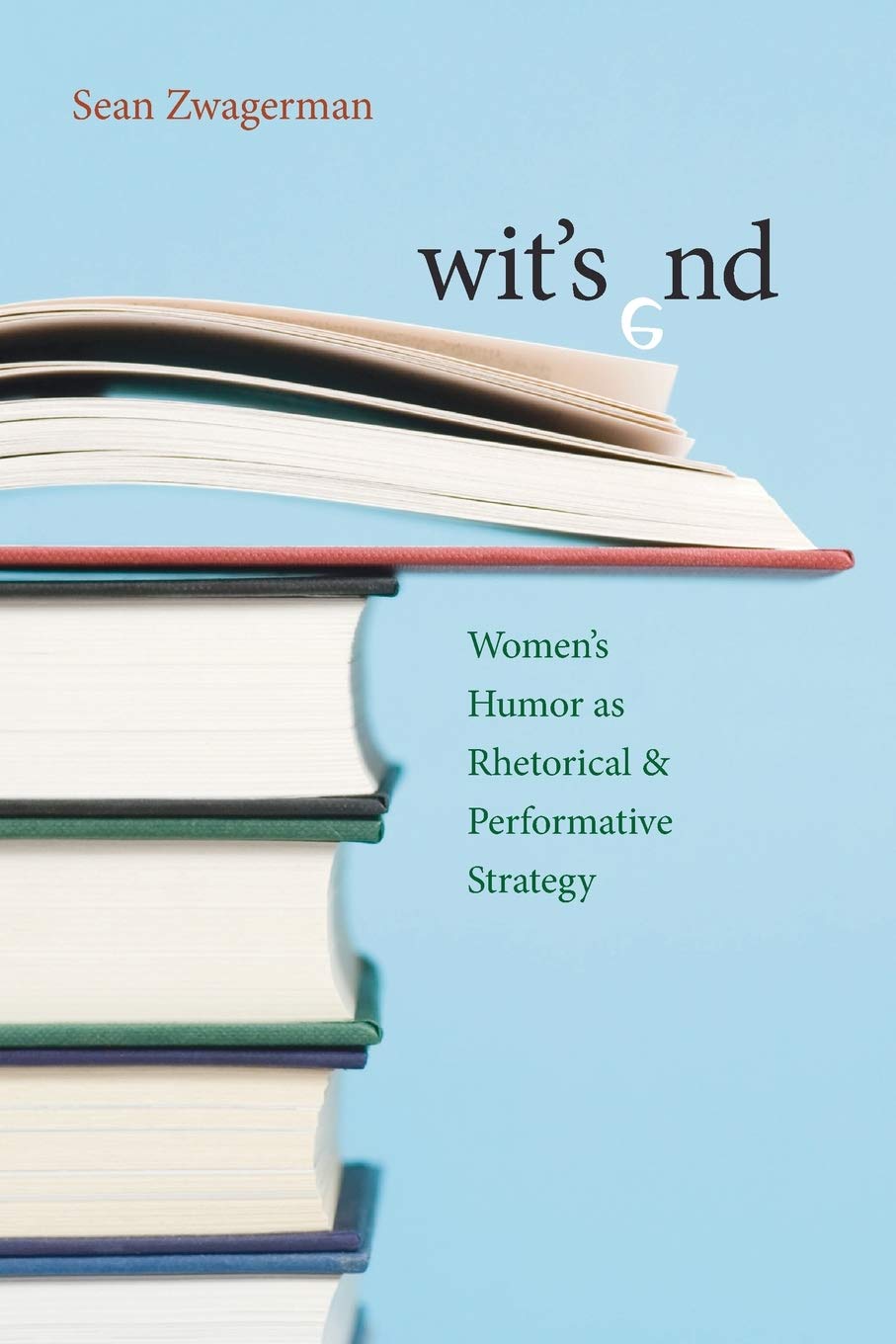
Wit's End: Womens Humor as Rhetorical and Performative Strategy (Composition, Literacy, and Culture),New
Sold by Ergodebooks, an authorized reseller.
Returns accepted within 30 days | support@ergodebooks.com
Shipping Information
- Free Standard Shipping — United States only
- Processing Time: 3–5 business days
- Estimated Delivery: 6–10 business days after dispatch
- Double-boxed, fully insured & discreetly packaged
- Tracking number sent via email once dispatched
Returns & Refund
Returns accepted within 30 days of delivery.
Damaged or Defective Item
Free return shipping + replacement or full refund
Wrong Item Received
Free return shipping + replacement or full refund
Change of Mind
Return shipping at customer's expense · 25% restocking fee applies
Payment Option

In Wits End, Sean Zwagerman offers an original perspective on womens use of humor as a performative strategy as seen in works of twentiethcentury American literature. He argues that women whose direct, explicit performative speech has been traditionally denied, or not taken seriously, have often turned to humor as a means of communicating with men.The book examines both the potential and limits of womens humor as a rhetorical strategy in the writings of James Thurber, Zora Neale Hurston, Dorothy Parker, Edward Albee, Louise Erdrich, and others. For Zwagerman, these texts talk back to important arguments in humor studies and speechact theory. He deconstructs the use of humor in select passages by employing the theories of J. L. Austin, John Searle, Jacques Derrida, Shoshana Felman, J. Hillis Miller, and Eve Kosofsky Sedgwick. Zwagerman offers arguments both for and against these approaches while advancing new thinking on humor as the endboth the goal and limitof performative strategy, and as a means of expressing a full range of serious purposes.Zwagerman contends that womens humor is not solely a subversive act, but instead it should be viewed in the total speech situation through context, motives, and intended audience. Not strictly a transgressive influence, womens humor is seen as both a social corrective and a reinforcement of established ideologies. Humor has become an epistemology, an attitude or slant on ones relation to society.Zwagerman seeks to broaden the scope of performativity theory beyond the logical pragmatism of deconstruction and looks to the use of humor in literature as a deliberate stylization of experiences found in realworld social structures, and as a tool for change.
⚠️ WARNING (California Proposition 65):
This product may contain chemicals known to the State of California to cause cancer, birth defects, or other reproductive harm.
For more information, please visit www.P65Warnings.ca.gov.