
Title
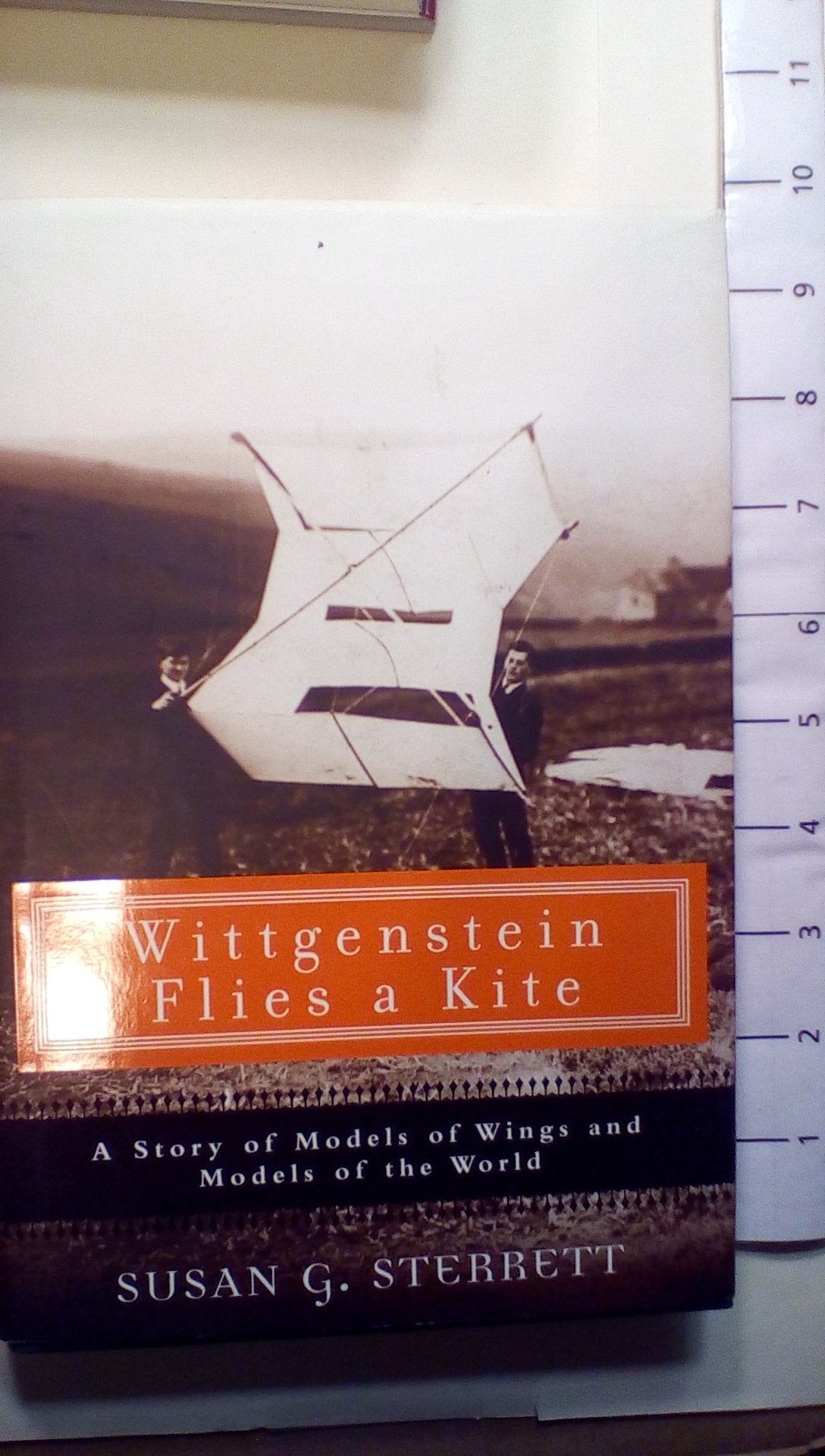
Wittgenstein Flies A Kite: A Story Of Models Of Wings And Models Of The World,New
Sold by Ergodebooks, an authorized reseller.
Returns accepted within 30 days | support@ergodebooks.com
Shipping Information
- Free Standard Shipping — United States only
- Processing Time: 3–5 business days
- Estimated Delivery: 6–10 business days after dispatch
- Double-boxed, fully insured & discreetly packaged
- Tracking number sent via email once dispatched
Returns & Refund
Returns accepted within 30 days of delivery.
Damaged or Defective Item
Free return shipping + replacement or full refund
Wrong Item Received
Free return shipping + replacement or full refund
Change of Mind
Return shipping at customer's expense · 25% restocking fee applies
Payment Option

In This Elegant Historical Narrative Of Ideas, Duke Professor Of Philosophy Susan Sterrett Reveals A Story At The Beginning Of Our Modern Fascination With The Nature Of Language. The Philosophy Of Language And Experimental Research In Aeronautics Made Great Leaps At About The Same Time In The Early Twentieth Century. Strange As It May Sound, This Was No Coincidence. Sterrett Shows What Wittgenstein'S Glimpse Of A Solution To The Problem Of Language In 1914 Had To Do With Experimental Models Which Had Been So Crucial To The Wright Brothers' Solving The Problem Of Flight. On The Ever Of World War I In Europe, Wittgenstein, After Having Left Aeronautical Research To Study Philosophy, Was Deeply Dissatisfied With Bertrand Russell'S Solution To The Paradoxes Of Logic: The Theory Of Types. Meanwhile, Across The Atlantic Ocean, A Physicist Called Upon To Help Set Up U.S. Aeronautical Research Capability Was Pondering How The Logic Of Empirical Equations Held The Key To Identifying Physically Similar Situations, Which In Turn Explain The Success Of The Wright Brothers' Research On Their Apparatus Constructed Of Cardboard Cartons And Bicycle Parts. His Conclusion Had A Twist: What Mattered Was The Mere Existence Of An Equation That Would Work For Any Units One Chose To Use. This Highly Abstract Explanation Held An Answer To Wittgenstein'S Problems About The Logic Of Propositions. In A Moment Of Insight, He Became Convinced That Thinking About A Proposition A Model Or Picture Would Solve The Problems Of Philosophy. The Result Was The Strikingly Different View Of Language Presented In The Tractates Logicophilosophicus That Has Commanded Attention Ever Since.
⚠️ WARNING (California Proposition 65):
This product may contain chemicals known to the State of California to cause cancer, birth defects, or other reproductive harm.
For more information, please visit www.P65Warnings.ca.gov.
- Q: What are the dimensions of the book? A: The book measures six point twenty-six inches in length, one point twenty-two inches in width, and nine point thirty-three inches in height.
- Q: How many pages does this book have? A: The book contains three hundred fifty-two pages, providing an in-depth exploration of its themes.
- Q: What type of binding does the book have? A: The book is bound in hardcover, ensuring durability and longevity for readers.
- Q: Who is the author of this book? A: The author of the book is Susan G. Sterrett, a Duke professor of philosophy.
- Q: What genre does this book belong to? A: This book is categorized under History and Philosophy, exploring the intersection of these fields.
- Q: What is the main theme of the book? A: The main theme revolves around language philosophy and its connection to aeronautics in the early twentieth century.
- Q: Is this book suitable for beginners? A: Yes, the book provides a thoughtful introduction to complex ideas in philosophy and language, making it accessible to beginners.
- Q: What can I expect from the writing style? A: The writing style is elegant and narrative-driven, making complex ideas engaging and understandable.
- Q: Is there a reading age recommendation for this book? A: This book is generally suitable for adults and mature readers interested in philosophy and history.
- Q: How should I store this book to keep it in good condition? A: Store the book upright in a cool, dry place away from direct sunlight to avoid damage.
- Q: Can I clean the book if it gets dirty? A: Yes, gently wipe the cover with a soft, dry cloth to remove dust or smudges without damaging the surface.
- Q: What if I receive a damaged copy of the book? A: If you receive a damaged copy, you should contact the seller for a return or exchange.
- Q: What is the book's publishing company? A: The book is published by Pi Press, known for its quality academic publications.
- Q: Does the book include illustrations or diagrams? A: No, the book does not include illustrations or diagrams; it focuses on textual content.
- Q: Are there any notable references in the book? A: Yes, the book references key figures like Ludwig Wittgenstein and Bertrand Russell, linking philosophy and aeronautics.