If you have any questions, you are always welcome to contact us. We'll get back to you as soon as possible, withing 24 hours on weekdays.
Customer service
All questions about your order, return and delivery must be sent to our customer service team by e-mail at yourstore@yourdomain.com
Sale & Press
If you are interested in selling our products, need more information about our brand or wish to make a collaboration, please contact us at press@yourdomain.com
Help
If you have any questions, you are always welcome to contact us. We'll get back to you as soon as possible, withing 24 hours on weekdays.
Customer service
All questions about your order, return and delivery must be sent to our customer service team by e-mail at yourstore@yourdomain.com
Sale & Press
If you are interested in selling our products, need more information about our brand or wish to make a collaboration, please contact us at press@yourdomain.com
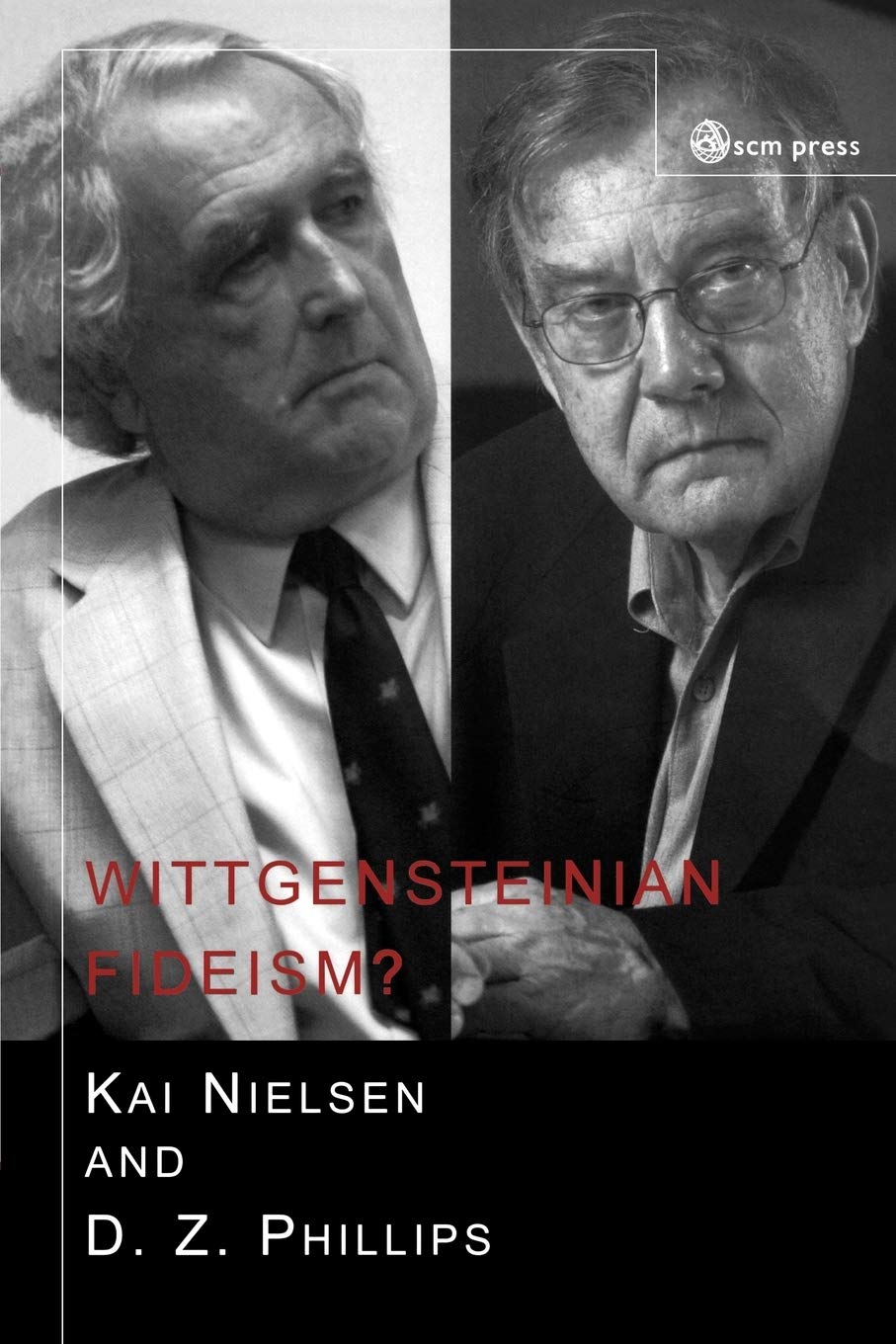
This is an extended discussion of this timeless argument of faith and reason. In 1965 D Z Phillips published The Concept of Prayer, one of his first books, and the first time that the influence of Wittgenstein's thought in the philosophy of religion was truly exposed. Two years later, in 1967, Kai Nielsen published his famous article 'Wittgensteinian Fideism' in the journal Philosophy. Their respective philosophical work has developed over the years, with Phillips becoming known as the leading proponent of Wittgensteinian philosophy of religion, (Wittgenstein's philosophy was that language had only limited meaning unless one understood the rules of the game in order to decipher the structure underlying language. D Z Phillips relates this to theology and religious faith.) and with Nielsen returning to renew his investigation of what he believes is the fideistic implications of this mode of philosophizing. (Nielsen's point being that by applying such reason to religious faith, one does away with the relevance of the faith. If God can be proven, why bother with a faith?) For Phillips the term 'Wittgensteinian Fideism' (the belief that faith and reason are separate and faith can only be achieved by the denial of certain rational truths) does more harm than good, since for him it misrepresents and deflects us from the main logical issues concerning language and reality in Wittgenstein's work. For Nielsen, Wittgensteinian Fideism constitutes the most powerful contemporary challenge to secular naturalism. Wherever readers stand in the dispute, there is much to learn from the exchanges within it.
⚠️ WARNING (California Proposition 65):
This product may contain chemicals known to the State of California to cause cancer,
birth defects, or other reproductive harm.
For MAP (Minimum Advertised Price) violations and Intellectual Property (IP) or Trademark concerns, please contact:
support@ergodebooks.com
⚠️ California Proposition 65 Warning: Some products sold on this website may expose you to chemicals known to the State of California to cause cancer, birth defects, or other reproductive harm. For more information, visit www.P65Warnings.ca.gov.