
Title
Wives And Husbands: Gender And Age In Southern Arapaho History (Volume 4) (New Directions In Native American Studies Series),Used
Sold by Ergodebooks, an authorized reseller.
Returns accepted within 30 days | support@ergodebooks.com
Shipping Information
- Free Standard Shipping — United States only
- Processing Time: 3–5 business days
- Estimated Delivery: 6–10 business days after dispatch
- Double-boxed, fully insured & discreetly packaged
- Tracking number sent via email once dispatched
Returns & Refund
Returns accepted within 30 days of delivery.
Damaged or Defective Item
Free return shipping + replacement or full refund
Wrong Item Received
Free return shipping + replacement or full refund
Change of Mind
Return shipping at customer's expense · 25% restocking fee applies
Payment Option

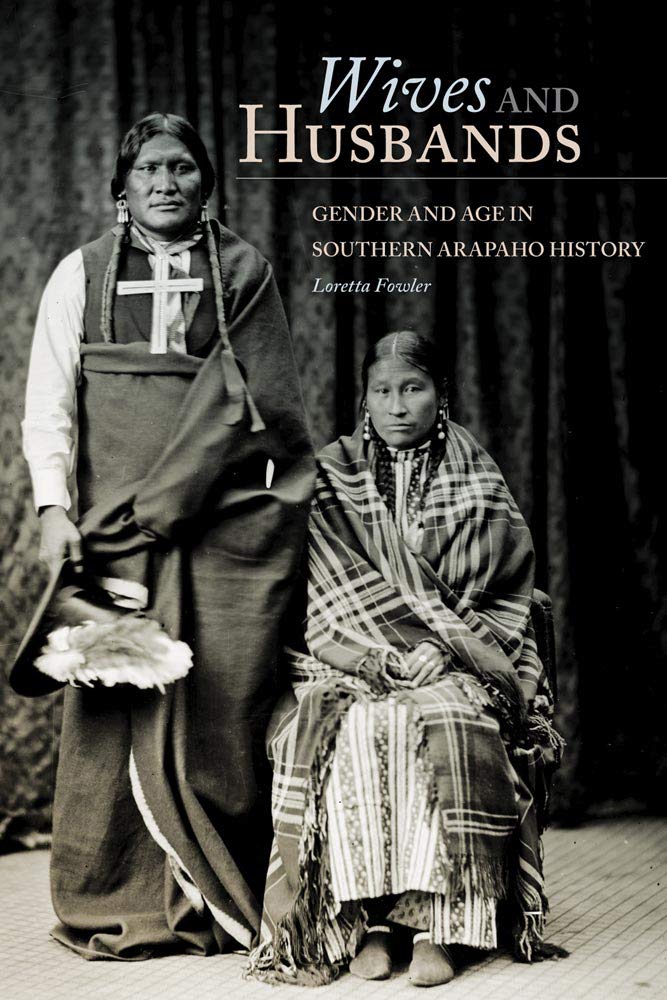
In Wives and Husbands, distinguished anthropologist Loretta Fowler deepens readers understanding of the gendered dimension of cultural encounters by exploring how the Arapaho gender system affected and was affected by the encounter with Americans as government officials, troops, missionaries, and settlers moved west into Arapaho country. Fowler examines Arapaho history from 1805 to 1936 through the lens of five cohorts, groups of women and men born during different year spans. Through the life stories of individual Arapahos, she vividly illustrates the experiences and actions of each cohort during a time when Americans tried to impose gender asymmetry and to undermine the Arapahos hierarchical age relations.Fowler examines the Arapaho gender system and its transformations by considering the partnerships between, rather than focusing on comparisons of, women and men. She argues that in particular cohorts, partnerships between women and men both in households and in the community shaped Arapahos social and cultural transformations while they struggled with American domination.Over time Arapahos both reinforced and challenged Arapaho hierarchies while accommodating and resisting American dominance. Fowler shows how, in the process of reconfiguring their world, Arapahos confronted Americans by uniting behind strategies of conciliation in the early nineteenth century, of civilization in the late nineteenth century, and of confrontation in the early twentieth century. At the same time, women and men in particular cohorts were revamping Arapaho politicoreligious ideas and organizations. Gender played a part in these transformations, giving shape to new leadership traditions and other adaptations.
⚠️ WARNING (California Proposition 65):
This product may contain chemicals known to the State of California to cause cancer, birth defects, or other reproductive harm.
For more information, please visit www.P65Warnings.ca.gov.
- Q: What is the page count of this book? A: This book contains four hundred pages. It provides an in-depth analysis of gender and age in Southern Arapaho history.
- Q: What is the binding type of this book? A: This book is a hardcover edition. Hardcover bindings are known for their durability and long-lasting quality.
- Q: What are the dimensions of this book? A: The dimensions are six inches in length, one point two inches in width, and nine point zero two inches in height. These measurements make it a standard-sized book.
- Q: Who is the author of this book? A: The author is Loretta Fowler, a distinguished anthropologist. She brings a wealth of knowledge to the subject of Arapaho history.
- Q: What is the main subject of this book? A: The main subject is the gendered dimension of cultural encounters in Southern Arapaho history. It explores how gender roles influenced social dynamics during American colonization.
- Q: What is the target audience for this book? A: The target audience includes scholars and readers interested in Native American studies. It is suitable for both academic and general audiences.
- Q: Is this book suitable for educational purposes? A: Yes, this book is suitable for educational purposes. It provides detailed historical insights that can be beneficial for students and researchers alike.
- Q: What themes are explored in the book? A: The book explores themes of gender, cultural encounters, and social transformations. It highlights the impact of American dominance on Arapaho culture.
- Q: How should I store this book? A: Store this book in a cool, dry place to maintain its condition. Keeping it upright on a shelf can prevent damage to the spine.
- Q: Can this book be used as a reference? A: Yes, this book can be used as a reference. Its thorough documentation makes it a valuable resource for research.
- Q: What if I receive a damaged copy of this book? A: If you receive a damaged copy, contact the seller for a return or exchange. Most sellers have policies in place for such situations.
- Q: Does this book include illustrations or photographs? A: No, this book does not include illustrations or photographs. It focuses on textual analysis and historical narratives.
- Q: Is this book part of a series? A: Yes, this book is part of the New Directions in Native American Studies series. It contributes to ongoing discussions in the field.
- Q: What kind of research methodology does the author use? A: The author uses anthropological research methodology. This approach allows for a detailed examination of cultural and social dynamics.
- Q: Is this book available in digital format? A: Availability in digital format may vary by retailer. Check with your preferred bookseller for eBook options.
- Q: How does this book address gender roles in Arapaho society? A: This book examines gender roles through partnerships between men and women in Arapaho society. It highlights how these roles evolved in response to external pressures.