If you have any questions, you are always welcome to contact us. We'll get back to you as soon as possible, withing 24 hours on weekdays.
Customer service
All questions about your order, return and delivery must be sent to our customer service team by e-mail at yourstore@yourdomain.com
Sale & Press
If you are interested in selling our products, need more information about our brand or wish to make a collaboration, please contact us at press@yourdomain.com
Help
If you have any questions, you are always welcome to contact us. We'll get back to you as soon as possible, withing 24 hours on weekdays.
Customer service
All questions about your order, return and delivery must be sent to our customer service team by e-mail at yourstore@yourdomain.com
Sale & Press
If you are interested in selling our products, need more information about our brand or wish to make a collaboration, please contact us at press@yourdomain.com
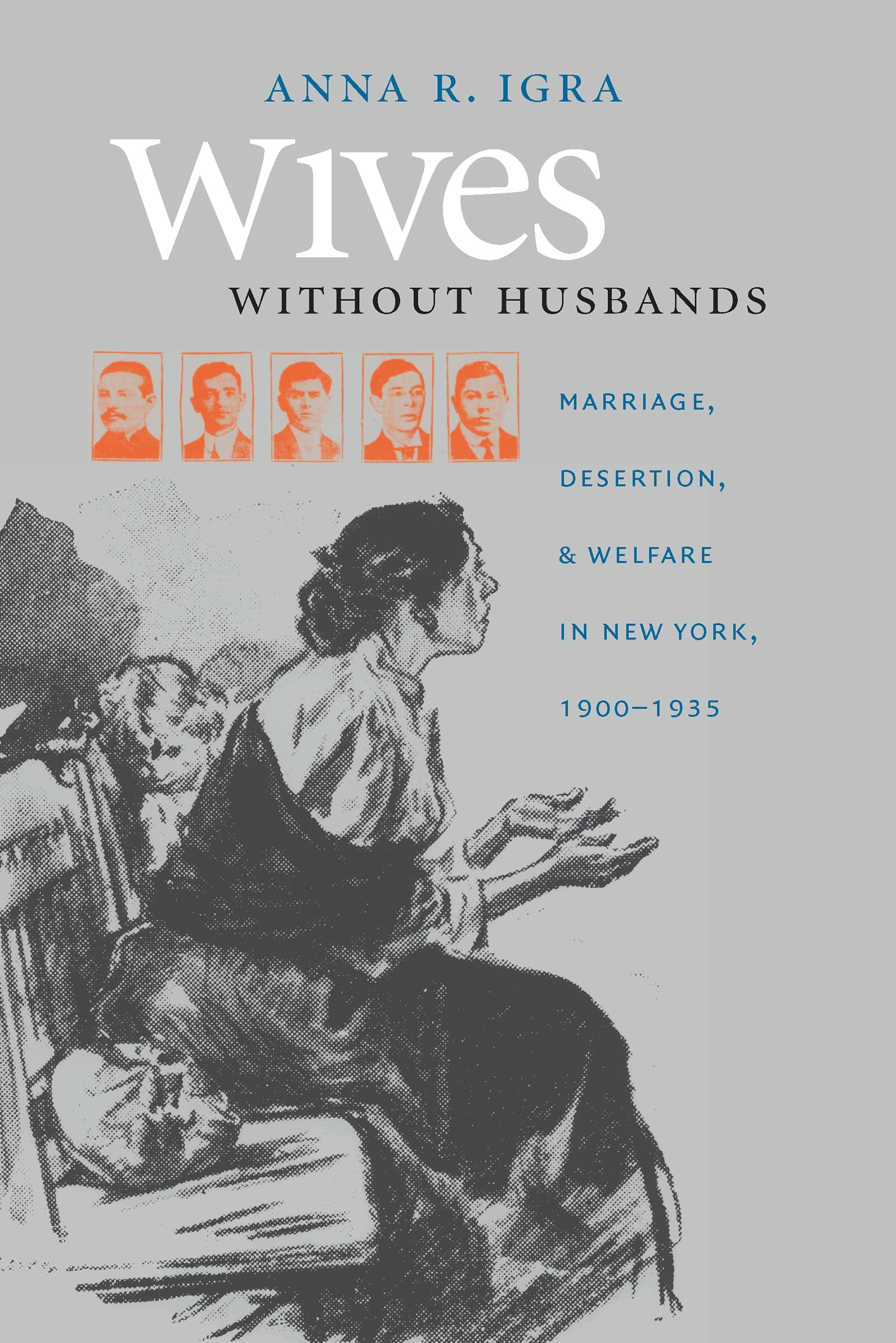
Shedding new light on contemporary campaigns to encourage marriage among welfare recipients and to prosecute 'deadbeat dads,' Wives without Husbands traces the efforts of Progressive reformers to make 'runaway husbands' support their families. Anna R. Igra investigates the interrelated histories of marriage and welfare policy in the early 1900s, revealing how reformers sought to make marriage the solution to women's and children's poverty.Igra taps a rich trove of case files from the National Desertion Bureau, a Jewish husbandlocation agency, and follows hundreds of deserted women through the welfare and legal systems of early twentiethcentury New York City. She integrates a broad range of topics, including Americanization as a gendered process, breadwinning as a measure of manhood, the relationship between consumer culture and social policy formation, the class dimensions of family law, and the Jewish community as a source of welfare policy innovation. Igra analyzes the history of antidesertion reform from its emergence in social policy debates, through the establishment of domestic relations courts, to Depression relief programs. She shows that early twentiethcentury reformers, by attempting to make instrumental use of poor people's intimate relations, anticipated welfare policies in our own time that promote marriage as an answer to poverty.
⚠️ WARNING (California Proposition 65):
This product may contain chemicals known to the State of California to cause cancer,
birth defects, or other reproductive harm.
For MAP (Minimum Advertised Price) violations and Intellectual Property (IP) or Trademark concerns, please contact:
support@ergodebooks.com
⚠️ California Proposition 65 Warning: Some products sold on this website may expose you to chemicals known to the State of California to cause cancer, birth defects, or other reproductive harm. For more information, visit www.P65Warnings.ca.gov.