If you have any questions, you are always welcome to contact us. We'll get back to you as soon as possible, withing 24 hours on weekdays.
Customer service
All questions about your order, return and delivery must be sent to our customer service team by e-mail at yourstore@yourdomain.com
Sale & Press
If you are interested in selling our products, need more information about our brand or wish to make a collaboration, please contact us at press@yourdomain.com
Help
If you have any questions, you are always welcome to contact us. We'll get back to you as soon as possible, withing 24 hours on weekdays.
Customer service
All questions about your order, return and delivery must be sent to our customer service team by e-mail at yourstore@yourdomain.com
Sale & Press
If you are interested in selling our products, need more information about our brand or wish to make a collaboration, please contact us at press@yourdomain.com
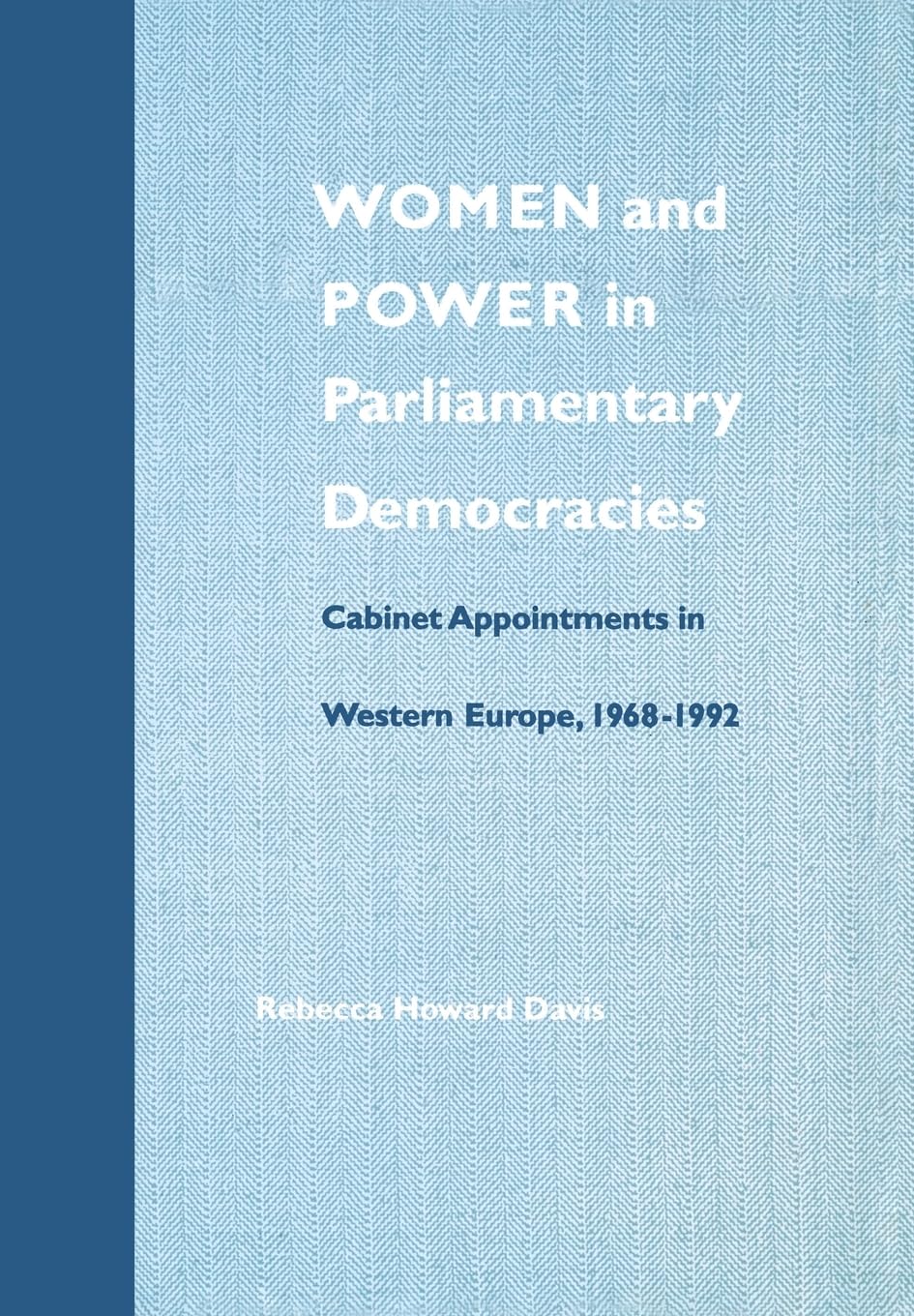
Margaret Thatcher, Mary Robinson, Gro Harlem Brundtland, Edith Cresson, and Simone Veilthese contemporary world leaders are as noteworthy for their gender as they are for the political directions they have provided. Indeed, female government leaders are so rare as to be almost an intellectual curiosity.Why is this the case? Why do women, who make up more than half of the worlds population, occupy so few positions at the highest levels of political power? Why are women making inroads in government in some countries while not in others? And what difference does womens presenceor absencemake in terms of policy outcomes?Davis addresses these questions by examining womens access to power through appointive channels in Western European parliamentary and parliamentarytype systems. Tracing womens participation from 1968 to 1992 in fifteen countries, she accounts for the variation from high levels of womens representation in Norway and Sweden to low levels in Italy and Britain.Little research on women and elections extends beyond the United States and Britain. Even less exists on womens access to power through appointive channels. By comparatively examining the elite recruitment of women through appointments, this work fills a critical gap.
⚠️ WARNING (California Proposition 65):
This product may contain chemicals known to the State of California to cause cancer,
birth defects, or other reproductive harm.
For MAP (Minimum Advertised Price) violations and Intellectual Property (IP) or Trademark concerns, please contact:
support@ergodebooks.com
⚠️ California Proposition 65 Warning: Some products sold on this website may expose you to chemicals known to the State of California to cause cancer, birth defects, or other reproductive harm. For more information, visit www.P65Warnings.ca.gov.