
Title
Women And Property In China, 9601949,Used
Sold by Ergodebooks, an authorized reseller.
Returns accepted within 30 days | support@ergodebooks.com
Shipping Information
- Free Standard Shipping — United States only
- Processing Time: 3–5 business days
- Estimated Delivery: 6–10 business days after dispatch
- Double-boxed, fully insured & discreetly packaged
- Tracking number sent via email once dispatched
Returns & Refund
Returns accepted within 30 days of delivery.
Damaged or Defective Item
Free return shipping + replacement or full refund
Wrong Item Received
Free return shipping + replacement or full refund
Change of Mind
Return shipping at customer's expense · 25% restocking fee applies
Payment Option

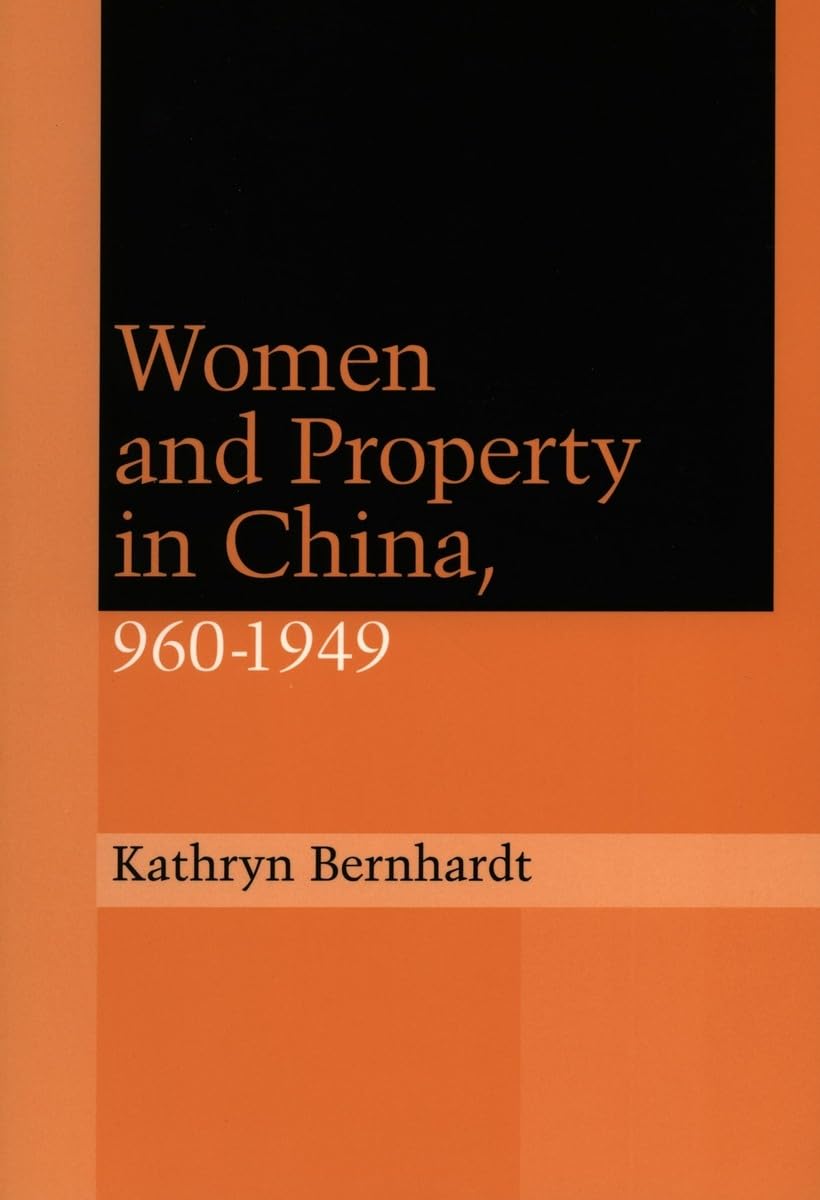
Previous scholarship has presented a static picture of property inheritance in China, mainly because it has focused primarily on men, whose rights changed little throughout the Imperial and Republican periods. However, when our focus shifts to women, a very different and dynamic picture emerges.Drawing on newly available archival case records, this book demonstrates that womens rights to property changed substantially from the Song through the Qing dynasties, and even more dramatically under the Republican Civil Code of 192930. The consolidation in law of patrilineal succession in the Ming and Qing dynasties curtailed womens claims, but the adoption of the Civil Code and the gradual dismantling of patrilineal succession in the twentieth century greatly strengthened womens rights to inherit property.Through an examination of the changes in womens claims, the author argues that we can discern larger changes in property rights in general. Previous scholarship assumed that patrilineal succession and household division were but different sides of the same coinsons divided their fathers property equally as his patrilineal heirs. The focus on women, however, reveals that patrilineal succession and household division were, in fact, two separate processual and conceptual complexes with their own distinct histories. While household division changed little, patrilineal succession changed greatly. Imperial and Republican laws of inheritance, finally, were based on two radically different property logics, the full implications of which cannot be truly appreciated unless the two are examined in tandem.
⚠️ WARNING (California Proposition 65):
This product may contain chemicals known to the State of California to cause cancer, birth defects, or other reproductive harm.
For more information, please visit www.P65Warnings.ca.gov.