If you have any questions, you are always welcome to contact us. We'll get back to you as soon as possible, withing 24 hours on weekdays.
Customer service
All questions about your order, return and delivery must be sent to our customer service team by e-mail at yourstore@yourdomain.com
Sale & Press
If you are interested in selling our products, need more information about our brand or wish to make a collaboration, please contact us at press@yourdomain.com
Help
If you have any questions, you are always welcome to contact us. We'll get back to you as soon as possible, withing 24 hours on weekdays.
Customer service
All questions about your order, return and delivery must be sent to our customer service team by e-mail at yourstore@yourdomain.com
Sale & Press
If you are interested in selling our products, need more information about our brand or wish to make a collaboration, please contact us at press@yourdomain.com
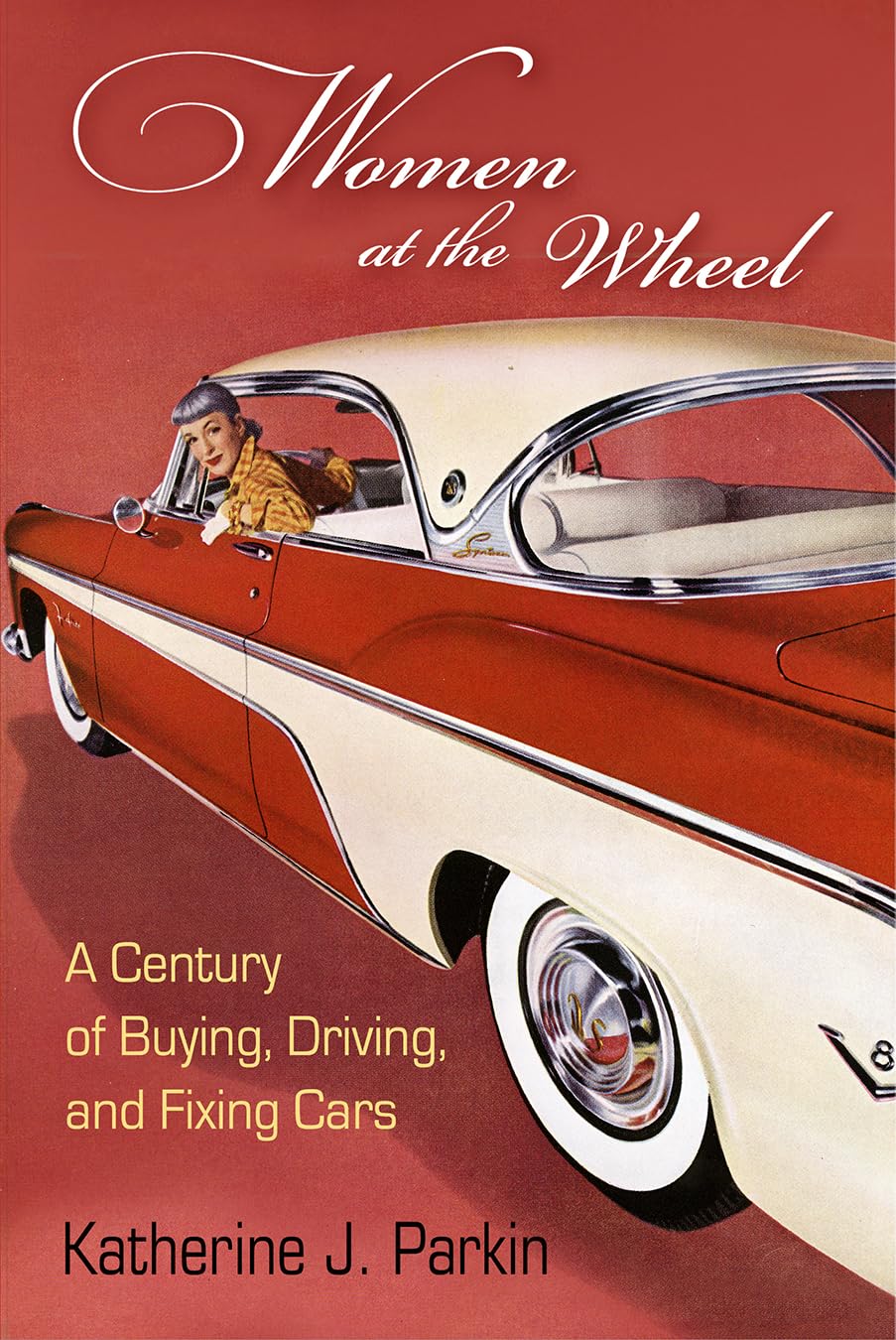
Ever since the Ford Model T became a vehicle for the masses, the automobile has served as a symbol of masculinity. The freedom of the open road, the muscle car's horsepower, the technical knowhow for tinkering: all of these experiences have largely been understood from the perspective of the male driver. Women, in contrast, were relegated to the passenger seat and have been the target of stereotypes that portray them as uninterested in automobiles and, more perniciously, as poor drivers.In Women at the Wheel, Katherine J. Parkin illuminates the social implications of these stereotypes and shows how they have little basis in historical reality. With chapters on early driver's education and licensing programs, and on buying, driving, and caring for cars, she describes a rich cast of characters, from Mary Landon, the first woman ever to drive in 1899, to Dorothy Levitt, author of the first automotive handbook for women in 1909, to Margie Seals, who opened her garage, 'My Favorite Mechanic . . . Is a Woman,' in 1992.Although women drove and had responsibility for their family's car maintenance, twentiethcentury popular culture was replete with humorous comments and judgmental critiques that effectively denied women pride in their driving abilities and carrelated expertise. Parkin contends that, despite women's long history with cars, these stereotypes persist.
⚠️ WARNING (California Proposition 65):
This product may contain chemicals known to the State of California to cause cancer,
birth defects, or other reproductive harm.
For MAP (Minimum Advertised Price) violations and Intellectual Property (IP) or Trademark concerns, please contact:
support@ergodebooks.com
⚠️ California Proposition 65 Warning: Some products sold on this website may expose you to chemicals known to the State of California to cause cancer, birth defects, or other reproductive harm. For more information, visit www.P65Warnings.ca.gov.