If you have any questions, you are always welcome to contact us. We'll get back to you as soon as possible, withing 24 hours on weekdays.
Customer service
All questions about your order, return and delivery must be sent to our customer service team by e-mail at yourstore@yourdomain.com
Sale & Press
If you are interested in selling our products, need more information about our brand or wish to make a collaboration, please contact us at press@yourdomain.com
Help
If you have any questions, you are always welcome to contact us. We'll get back to you as soon as possible, withing 24 hours on weekdays.
Customer service
All questions about your order, return and delivery must be sent to our customer service team by e-mail at yourstore@yourdomain.com
Sale & Press
If you are interested in selling our products, need more information about our brand or wish to make a collaboration, please contact us at press@yourdomain.com
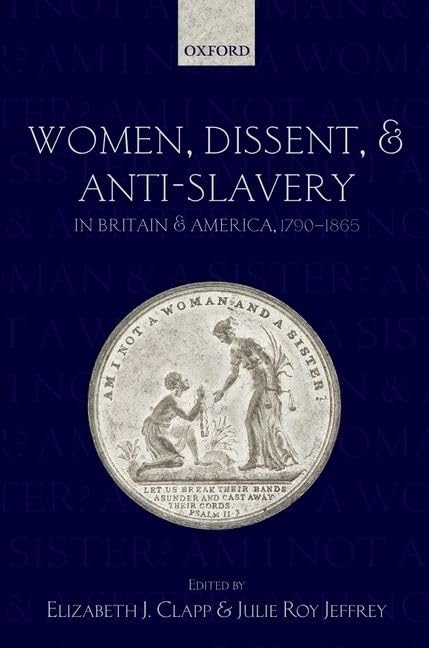
As historians have gradually come to recognize, the involvement of women was central to the antislavery cause in both Britain and the United States. Like their male counterparts, women abolitionists did not all speak with one voice. Among the major differences between women were their religious affiliations, an aspect of their commitment that has not been studied in detail. Yet it is clear that the desire to live out and practice their religious beliefs inspired many of the women who participated in antislavery activities in the late eighteenth and early nineteenth centuries.This book examines the part that the traditions, practices, and beliefs of English Protestant dissent and the American Puritan and evangelical traditions played in women's antislavery activism. Focusing particularly on Baptist, Congregational, Presbyterian and Unitarian women, the essays in this volume move from accounts of individual women's participation in the movement as printers and writers, to assessments of the negotiations and the occasional conflicts between different denominational groups and their antislavery impulses. Together the essays in this volume explore how the tradition of English Protestant Dissent shaped the American abolitionist movement, and the various ways in which women belonging to the different denominations on both sides of the Atlantic drew on their religious beliefs to influence the direction of their antislavery movements. The collection provides a nuanced understanding of why these women felt compelled to fight for the end of slavery in their respective countries.
⚠️ WARNING (California Proposition 65):
This product may contain chemicals known to the State of California to cause cancer,
birth defects, or other reproductive harm.
For MAP (Minimum Advertised Price) violations and Intellectual Property (IP) or Trademark concerns, please contact:
support@ergodebooks.com
⚠️ California Proposition 65 Warning: Some products sold on this website may expose you to chemicals known to the State of California to cause cancer, birth defects, or other reproductive harm. For more information, visit www.P65Warnings.ca.gov.