If you have any questions, you are always welcome to contact us. We'll get back to you as soon as possible, withing 24 hours on weekdays.
Customer service
All questions about your order, return and delivery must be sent to our customer service team by e-mail at yourstore@yourdomain.com
Sale & Press
If you are interested in selling our products, need more information about our brand or wish to make a collaboration, please contact us at press@yourdomain.com
Help
If you have any questions, you are always welcome to contact us. We'll get back to you as soon as possible, withing 24 hours on weekdays.
Customer service
All questions about your order, return and delivery must be sent to our customer service team by e-mail at yourstore@yourdomain.com
Sale & Press
If you are interested in selling our products, need more information about our brand or wish to make a collaboration, please contact us at press@yourdomain.com
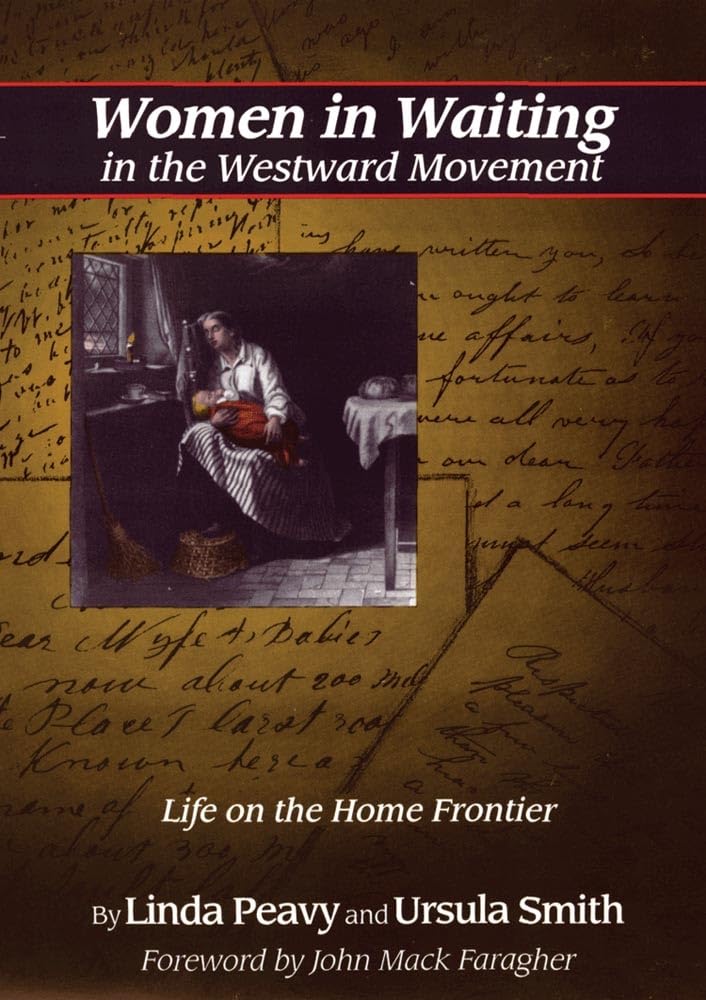
During the last half of the nineteenth century, thousands of men went west in search of gold, land, or adventureleaving their wives to handle family, farm, and business affairs on their own. The experiences of these westering men have long been a part of the lore of the American frontier, but the stories of their wives have rarely been told. Ten years of research into public and private documentsincluding letters of couples separated during the westward movementhas enabled Linda Peavy and Ursula Smith to tell the forgotten stories of 'women in waiting.'Though these wives were left more or less in limbo by the departure of their adventuring husbands, they were hardly women in waiting in any other sense. Children had to be fed, clothed, housed, and educated; farms and businesses had to be managed; creditors had to be paid or pacified and, in some cases, hardearned butterandegg money had to be sent west in response to letters from broke and disillusioned husbands.This raises some unsettling questions: How does the idea of an 'allowance' from home square with our longstanding image of the frontiersman as rugged individualist? To what extent was the westward movement supported by the paid and unpaid labor of women back east? And how do we measure the heroics of husbands out west against the heroics of wives back home?
⚠️ WARNING (California Proposition 65):
This product may contain chemicals known to the State of California to cause cancer,
birth defects, or other reproductive harm.
For MAP (Minimum Advertised Price) violations and Intellectual Property (IP) or Trademark concerns, please contact:
support@ergodebooks.com
⚠️ California Proposition 65 Warning: Some products sold on this website may expose you to chemicals known to the State of California to cause cancer, birth defects, or other reproductive harm. For more information, visit www.P65Warnings.ca.gov.