
Title
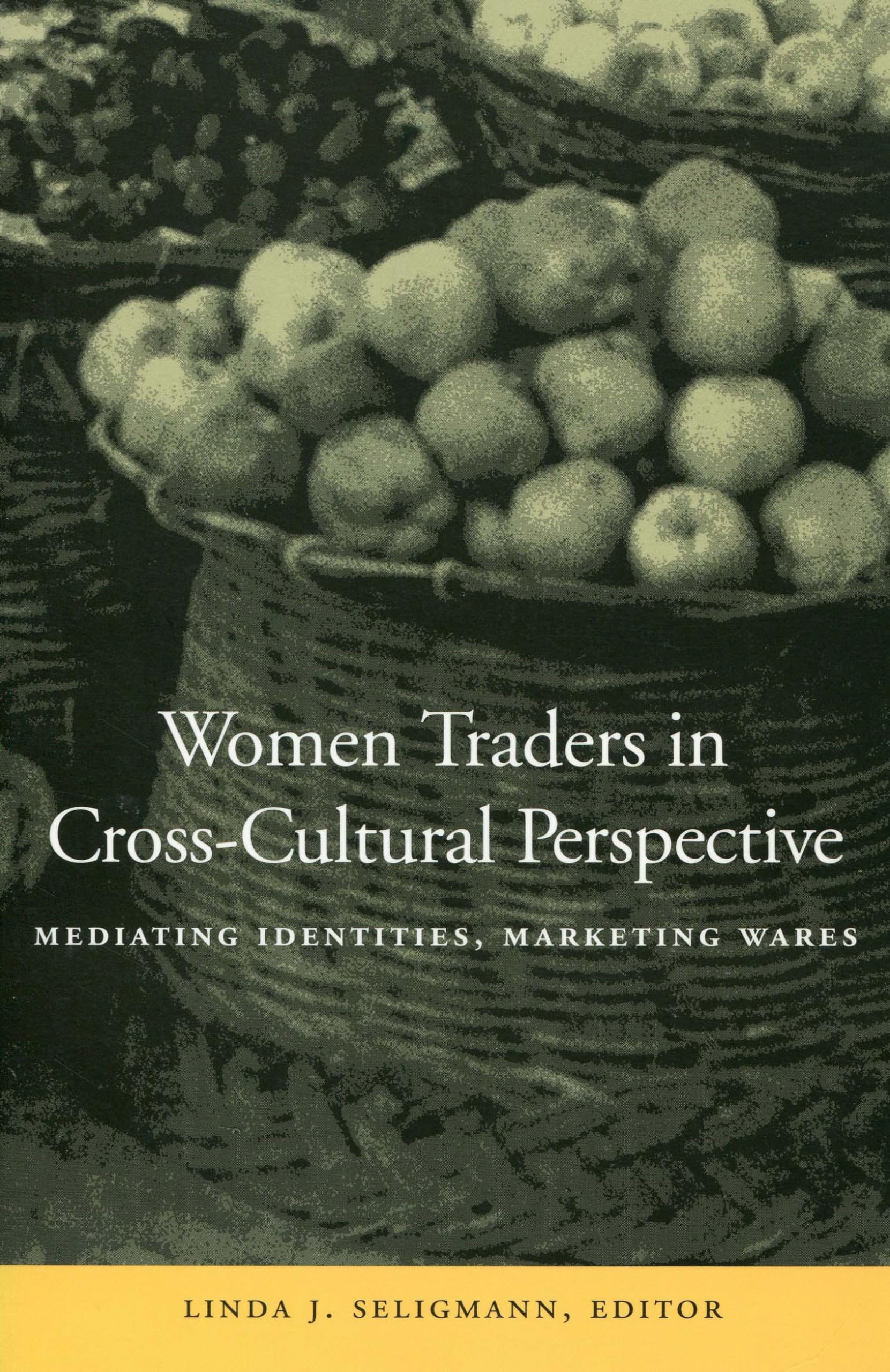
Women Traders In Crosscultural Perspective: Mediating Identities, Marketing Wares (Cultural Memory In The Present),Used
Sold by Ergodebooks, an authorized reseller.
Returns accepted within 30 days | support@ergodebooks.com
Shipping Information
- Free Standard Shipping — United States only
- Processing Time: 3–5 business days
- Estimated Delivery: 6–10 business days after dispatch
- Double-boxed, fully insured & discreetly packaged
- Tracking number sent via email once dispatched
Returns & Refund
Returns accepted within 30 days of delivery.
Damaged or Defective Item
Free return shipping + replacement or full refund
Wrong Item Received
Free return shipping + replacement or full refund
Change of Mind
Return shipping at customer's expense · 25% restocking fee applies
Payment Option

This innovative volume studies women as economic, political, and cultural mediators of space, gender, value, and language in informal markets. Drawing on diverse methodologiesmultisited fieldwork, linguistic analysis, and archival researchthe contributors demonstrate how women move between and knit together household and marketplace activities. This knitting together pivots on how household practices and economies are translated and transferred to the market, as well as how market practices and economic principles become integral to the nature and construction of the household.Exploring the cultural identities and economic practices of women traders in ten diverse localesBolivia, Ghana, Hungary, India, Indonesia, Mexico, Morocco, Nicaragua, Peru, and the Philippinesthe authors pay special attention to the effects of global forces, national economic policies, and nongovernmental organizations on womens participation in the market and the domestic sector. The authors also consider the impact that womens economic and political activitiesin social movements, public protests, and more hidden kinds of subversive behaviorhave on state policy, on the attitudes of different sectors of society toward female traders, and on the dynamics of the market itself.A final theme focuses on the cultural dimension of mediation. Many women traders straddle cultural spheres and move back and forth between them. Does this affect their participation in the market and their identities? How do ties of ethnicity or acts of reciprocity affect the nature of commodity exchanges? Do they create exchanges that are neither purely commodified nor wholly without calculation? Or is it more often the case that ethnic commonalities and reciprocity merely mask the commodification of social and economic exchanges? Does this straddling lead to the emergence of new kinds of hybrid identities and practices? In considering these questions, the authors specify the ways in which consumers contribute to identity formation among market women.
⚠️ WARNING (California Proposition 65):
This product may contain chemicals known to the State of California to cause cancer, birth defects, or other reproductive harm.
For more information, please visit www.P65Warnings.ca.gov.