If you have any questions, you are always welcome to contact us. We'll get back to you as soon as possible, withing 24 hours on weekdays.
Customer service
All questions about your order, return and delivery must be sent to our customer service team by e-mail at yourstore@yourdomain.com
Sale & Press
If you are interested in selling our products, need more information about our brand or wish to make a collaboration, please contact us at press@yourdomain.com
Help
If you have any questions, you are always welcome to contact us. We'll get back to you as soon as possible, withing 24 hours on weekdays.
Customer service
All questions about your order, return and delivery must be sent to our customer service team by e-mail at yourstore@yourdomain.com
Sale & Press
If you are interested in selling our products, need more information about our brand or wish to make a collaboration, please contact us at press@yourdomain.com
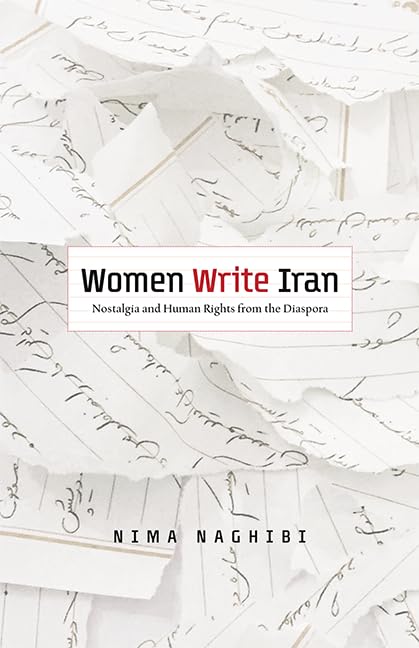
Women Write Iran is the first fulllength study on life narratives by Iranian women in the diaspora. Nima Naghibi investigates auto/biographical narratives across genresincluding memoirs, documentary films, prison testimonials, and graphic novelsand finds that they are tied together by the experience of the 1979 Iranian revolution as a traumatic event and by a powerful nostalgia for an idealized past.Naghibi is particularly interested in writing as both an expression of memory and an assertion of human rights. She discovers that writing life narratives contributes to the larger enterprise of righting historical injustices. By drawing on the empathy of the reader/spectator/witness, Naghibi contends, life narratives offer the possibilities of connecting to others and responding with an increased commitment to social justice.The book opens with an examination of how the widely circulated video footage of the death of Neda AghaSoltan on the streets of Tehran in June 2009 triggered the articulation of life narratives by diasporic Iranians. It concludes with a discussion of the prominent place of the 1979 revolution in these narratives. Throughout, the focus is on works that have become popular in the West, such as Marjane Satrapis bestselling graphic novel Persepolis. Naghibi addresses the significant questions raised by these works: How do we engage with human rights and social justice as readers in the West? How do these narratives draw our attention and elicit our empathic reactions? And what is our responsibility as witnesses to trauma, atrocity, and human suffering?
⚠️ WARNING (California Proposition 65):
This product may contain chemicals known to the State of California to cause cancer,
birth defects, or other reproductive harm.
For MAP (Minimum Advertised Price) violations and Intellectual Property (IP) or Trademark concerns, please contact:
support@ergodebooks.com
⚠️ California Proposition 65 Warning: Some products sold on this website may expose you to chemicals known to the State of California to cause cancer, birth defects, or other reproductive harm. For more information, visit www.P65Warnings.ca.gov.