
Title
Women's Identities at War: Gender, Motherhood, and Politics in Britain and France during the First World War,Used
Sold by Ergodebooks, an authorized reseller.
Returns accepted within 30 days | support@ergodebooks.com
Shipping Information
- Free Standard Shipping — United States only
- Processing Time: 3–5 business days
- Estimated Delivery: 6–10 business days after dispatch
- Double-boxed, fully insured & discreetly packaged
- Tracking number sent via email once dispatched
Returns & Refund
Returns accepted within 30 days of delivery.
Damaged or Defective Item
Free return shipping + replacement or full refund
Wrong Item Received
Free return shipping + replacement or full refund
Change of Mind
Return shipping at customer's expense · 25% restocking fee applies
Payment Option

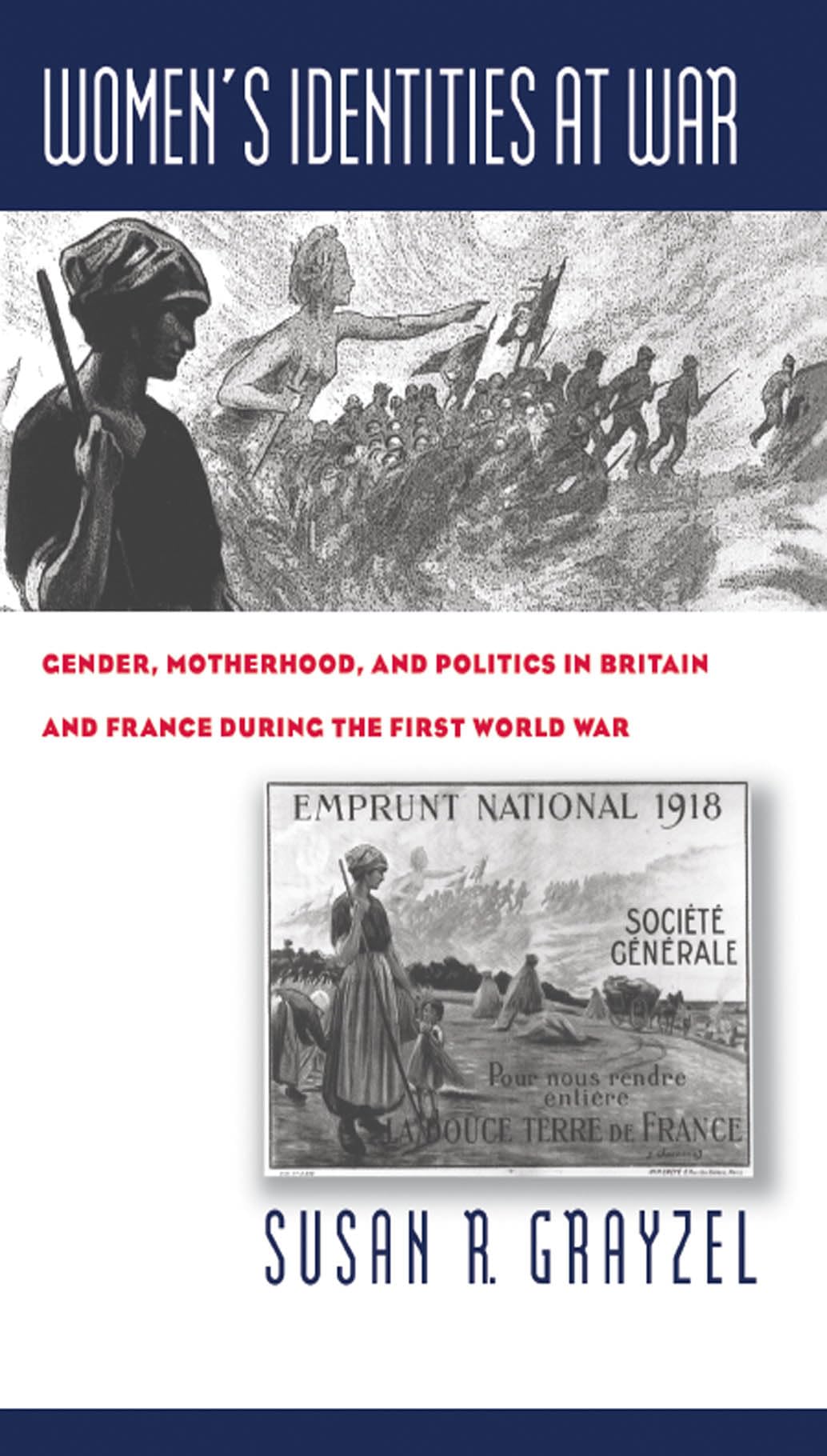
There are few moments in history when the division between the sexes seems as 'natural' as during wartime: men go off to the 'war front,' while women stay behind on the 'home front.' But the very notion of the home front was an invention of the First World War, when, for the first time, 'home' and 'domestic' became adjectives that modified the military term 'front.' Such an innovation acknowledged the significant and presumably new contributions of civilians, especially women, to the war effort.Yet, as Susan Grayzel argues, throughout the war, traditional notions of masculinity and femininity survived, primarily through the maintenance ofand indeed reemphasis onsoldiering and mothering as the core of gender and national identities. Drawing on sources that range from popular fiction and war memorials to newspapers and legislative debates, Grayzel analyzes the effects of World War I on ideas about civic participation, national service, morality, sexuality, and identity in wartime Britain and France. Despite the appearance of enormous challenges to gender roles due to the upheavals of war, the forces of stability prevailed, she says, demonstrating the Western European gender system's remarkable resilience.
⚠️ WARNING (California Proposition 65):
This product may contain chemicals known to the State of California to cause cancer, birth defects, or other reproductive harm.
For more information, please visit www.P65Warnings.ca.gov.
- Q: What is the page count of the book? A: The book has three hundred sixty pages. This length provides an in-depth exploration of gender roles during World War I.
- Q: What are the dimensions of this book? A: The book measures six point twelve inches in length, zero point eight inches in width, and nine point twenty-five inches in height. These dimensions make it a suitable size for reading and shelf storage.
- Q: What type of binding does the book have? A: This book has a paperback binding. Paperback books are generally more flexible and lightweight compared to hardcover editions.
- Q: Who is the author of this book? A: The author is Susan R. Grayzel. She provides a scholarly perspective on women's roles in wartime contexts.
- Q: What is the genre of the book? A: The book falls under the World War I genre. It specifically examines gender, motherhood, and politics during this historical period.
- Q: What is the main theme of the book? A: The main theme revolves around the impact of World War I on gender identities. It explores how traditional roles were challenged yet maintained.
- Q: Is this book suitable for academic use? A: Yes, this book is suitable for academic use. It draws on diverse sources and analyses, making it a valuable resource for studies on gender and history.
- Q: What type of reader would benefit from this book? A: Readers interested in gender studies or World War I history would benefit from this book. It offers insights into the societal changes during the war.
- Q: Does the book contain illustrations? A: Yes, the book features sixteen illustrations. These visuals complement the text and enhance understanding of the historical context.
- Q: How should the book be stored? A: The book should be stored in a cool, dry place to prevent damage. Keeping it upright on a shelf will help maintain its shape.
- Q: Can this book be used for research purposes? A: Yes, this book can be used for research purposes. It includes various sources and analyses relevant to gender and national identities.
- Q: Is the book safe for all ages? A: Yes, the book is generally safe for all ages. However, it discusses complex themes that may be more suitable for older teens and adults.
- Q: What kind of writing style is used in the book? A: The writing style is academic yet accessible. It balances scholarly analysis with engaging narrative elements.
- Q: Is this book part of a series? A: No, this book is not part of a series. It stands alone as a comprehensive examination of its topic.
- Q: What is the publication date of the book? A: The publication date is not provided in the details. Checking the publisher's website may offer more information.