
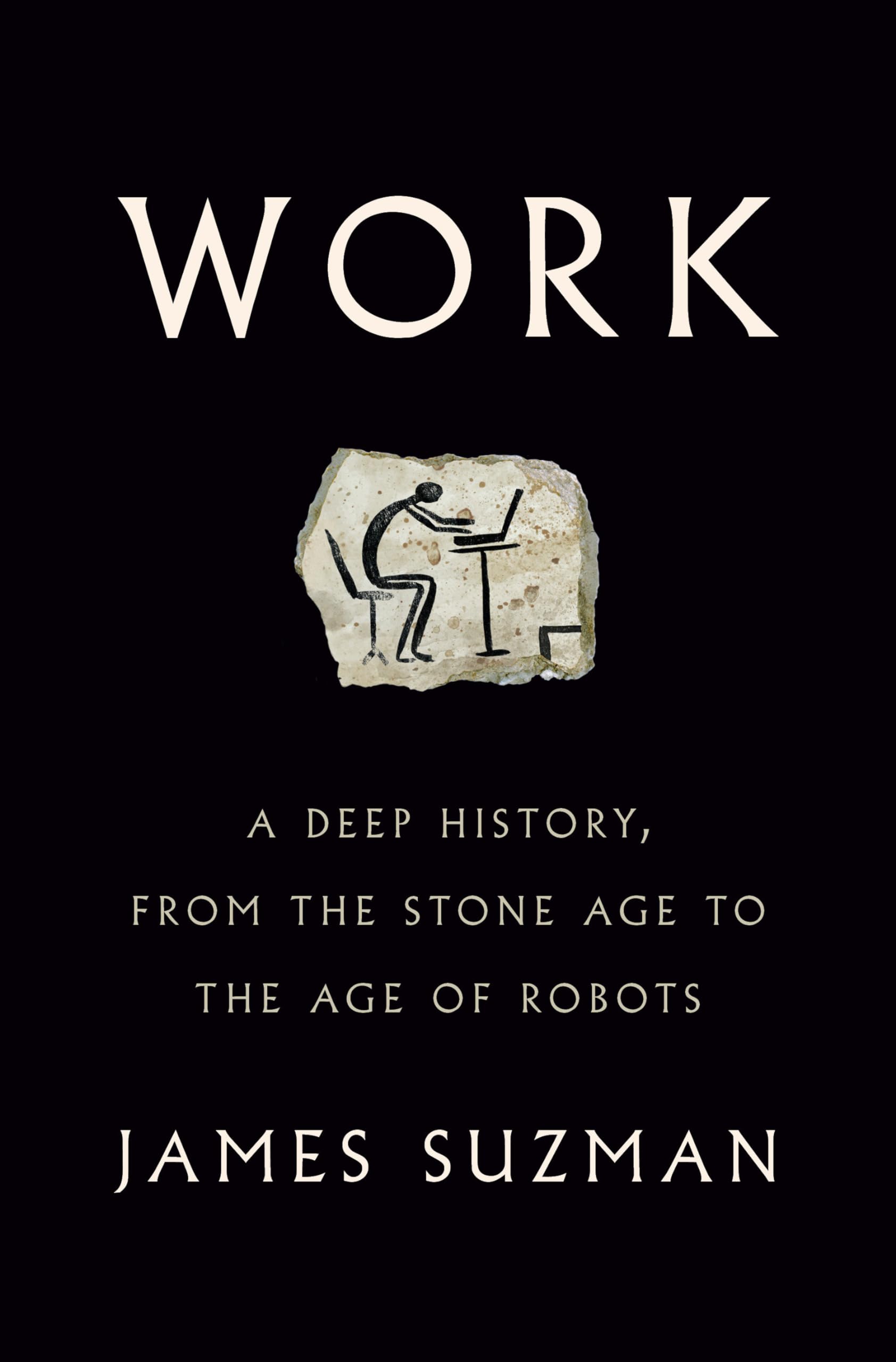
Title
Work: A Deep History, from the Stone Age to the Age of Robots,Used
Sold by Ergodebooks, an authorized reseller.
Returns accepted within 30 days | support@ergodebooks.com
Shipping Information
- Free Standard Shipping — United States only
- Processing Time: 3–5 business days
- Estimated Delivery: 6–10 business days after dispatch
- Double-boxed, fully insured & discreetly packaged
- Tracking number sent via email once dispatched
Returns & Refund
Returns accepted within 30 days of delivery.
Damaged or Defective Item
Free return shipping + replacement or full refund
Wrong Item Received
Free return shipping + replacement or full refund
Change of Mind
Return shipping at customer's expense · 25% restocking fee applies
Payment Option

This book is a tour de force.' Adam Grant, New York Times bestselling author of Give and TakeA revolutionary new history of humankind through the prism of work by leading anthropologist James SuzmanWork defines who we are. It determines our status, and dictates how, where, and with whom we spend most of our time. It mediates our selfworth and molds our values. But are we hardwired to work as hard as we do? Did our Stone Age ancestors also live to work and work to live? And what might a world where work plays a far less important role look like?To answer these questions, James Suzman charts a grand history of 'work' from the origins of life on Earth to our ever more automated present, challenging some of our deepest assumptions about who we are. Drawing insights from anthropology, archaeology, evolutionary biology, zoology, physics, and economics, he shows that while we have evolved to find joy meaning and purpose in work, for most of human history our ancestors worked far less and thought very differently about work than we do now. He demonstrates how our contemporary culture of work has its roots in the agricultural revolution ten thousand years ago. Our sense of what it is to be human was transformed by the transition from foraging to food production, and, later, our migration to cities. Since then, our relationships with one another and with our environments, and even our sense of the passage of time, have not been the same.Arguing that we are in the midst of a similarly transformative point in history, Suzman shows how automation might revolutionize our relationship with work and in doing so usher in a more sustainable and equitable future for our world and ourselves.
⚠️ WARNING (California Proposition 65):
This product may contain chemicals known to the State of California to cause cancer, birth defects, or other reproductive harm.
For more information, please visit www.P65Warnings.ca.gov.
- Q: What is the main theme of 'Work: A Deep History, from the Stone Age to the Age of Robots'? A: The main theme of the book explores the history of work and its profound impact on human identity, status, and societal values from the Stone Age to the present, particularly in the context of automation.
- Q: Who is the author of this book? A: The author of 'Work: A Deep History, from the Stone Age to the Age of Robots' is James Suzman, a leading anthropologist.
- Q: When was this book published? A: This book was published on January 19, 2021.
- Q: What insights does James Suzman provide in this book? A: James Suzman provides insights from various fields including anthropology, archaeology, and evolutionary biology to challenge assumptions about work and its role in human evolution.
- Q: How many pages does the book contain? A: The book contains 464 pages.
- Q: What type of binding does this book have? A: This book is available in hardcover binding.
- Q: Is the book suitable for readers interested in cultural studies? A: Yes, the book is categorized under 'Civilization & Culture', making it suitable for readers interested in cultural studies and the history of work.
- Q: What is the condition of the book? A: The book is in new condition.
- Q: What does the author argue about the future of work? A: The author argues that we are at a transformative point in history where automation could redefine our relationship with work, potentially leading to a more sustainable and equitable future.
- Q: Can this book help me understand the evolution of work practices? A: Yes, the book offers a comprehensive look at the evolution of work practices throughout history, helping readers understand how past practices influence contemporary work.