
Title
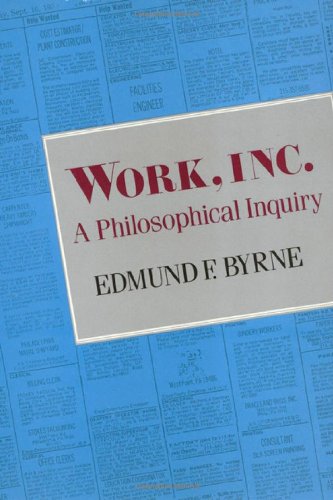
Work Inc.: A Philosophical Inquiry,Used
Sold by Ergodebooks, an authorized reseller.
Returns accepted within 30 days | support@ergodebooks.com
Shipping Information
- Free Standard Shipping — United States only
- Processing Time: 3–5 business days
- Estimated Delivery: 6–10 business days after dispatch
- Double-boxed, fully insured & discreetly packaged
- Tracking number sent via email once dispatched
Returns & Refund
Returns accepted within 30 days of delivery.
Damaged or Defective Item
Free return shipping + replacement or full refund
Wrong Item Received
Free return shipping + replacement or full refund
Change of Mind
Return shipping at customer's expense · 25% restocking fee applies
Payment Option

Many workers today feel that the longstanding social contract between government, business, and labor has been broken. This book examines legal and philosophical problems that must be addressed if there is to be a new social contract that is fair to workers. Drawing on a wide variety of sources, from the popular press to technical philosophy, Edmund F. Byrne brings into focus ethical issues involved in corporate decisions to reorganize, relocate, or automate. In assessing the human costs of these decisions, he shows why, to a worker, "corporations are not reducible to their assets and liabilities any more than a government is merely its annual budget. That they are organizations, that these organizations do things, and that they are socially responsible for what they do."In support of this assignment of responsibility, Byrne seeks to demythologize corporate hegemony by confronting a variety of intellectual "dragons" that guard the gates of the status quo. These include legal assumptions about corporate personhood and commodification, private property and eminent domain; management ideas about the autonomous employee and profit without payrolls; technocratic dreams of a dehumanized workplace: ideological belief in progress and competition; and philosophical arguments for libertarian freedom, liberal welfare, and global justice.Because of these and other mainstream perspectives, workers today are widely perceived, in law and in common parlance, to be isolated atoms. But, Byrne emphasizes, work. including work done for a transnational corporation, is done in a community. Since corporate leaders make decisions that have an impact on peoples lives and on communities, involvement in such decisions must be not only corporate or governmental but communitybased as well.
⚠️ WARNING (California Proposition 65):
This product may contain chemicals known to the State of California to cause cancer, birth defects, or other reproductive harm.
For more information, please visit www.P65Warnings.ca.gov.