
Title
Work Without Wages: Russia's NonPayment Crisis,Used
Sold by Ergodebooks, an authorized reseller.
Returns accepted within 30 days | support@ergodebooks.com
Shipping Information
- Free Standard Shipping — United States only
- Processing Time: 3–5 business days
- Estimated Delivery: 6–10 business days after dispatch
- Double-boxed, fully insured & discreetly packaged
- Tracking number sent via email once dispatched
Returns & Refund
Returns accepted within 30 days of delivery.
Damaged or Defective Item
Free return shipping + replacement or full refund
Wrong Item Received
Free return shipping + replacement or full refund
Change of Mind
Return shipping at customer's expense · 25% restocking fee applies
Payment Option

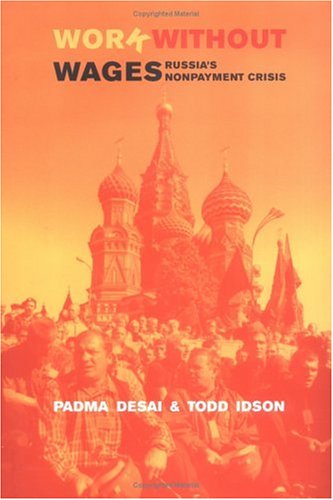
Focusing on the roots and scale of wage nonpayment, the book is an indispensable guide to understanding Russia's economic restructuring and of the social costs of the transition born by the general population.The seventyyearold Soviet tradition of wages without work soon turned into work without wages when the planned economy began switching to a market system in 1992. Lack of budget discipline, the breakdown of contractual obligations at all levels, and the failure of state agencies to enforce laws among businesses led to pervasive wage nonpayment to workers in both the public and private sectors. In this book Padma Desai and Todd Idson combine econometric rigor, policy analysis, and empirical evidence to analyze wage nonpayment patterns across demographic groups defined by gender, age, and education, and in various occupations, industries, and regions of Russia. They also examine wage nonpayment to Russia's military personnel, in the wider context of a disintegrating military. Focusing on the roots and scale of wage nonpayment, the book is an indispensable guide to understanding Russia's economic restructuring and of the social costs of the transition born by the general population. Among the questions addressed are: How did Russia's factory managers decide who, among various categories of workers, would not get paid? Did wage denial push people below the poverty line? How did families survive when denied wages? Did strikes lead to reduced wage arrears? The authors describe a variety of survival strategies on the part of Russian families, including informal paid activity, the selling of family assets, home production for consumption and sale, and the receiving of cash from relatives.
⚠️ WARNING (California Proposition 65):
This product may contain chemicals known to the State of California to cause cancer, birth defects, or other reproductive harm.
For more information, please visit www.P65Warnings.ca.gov.