
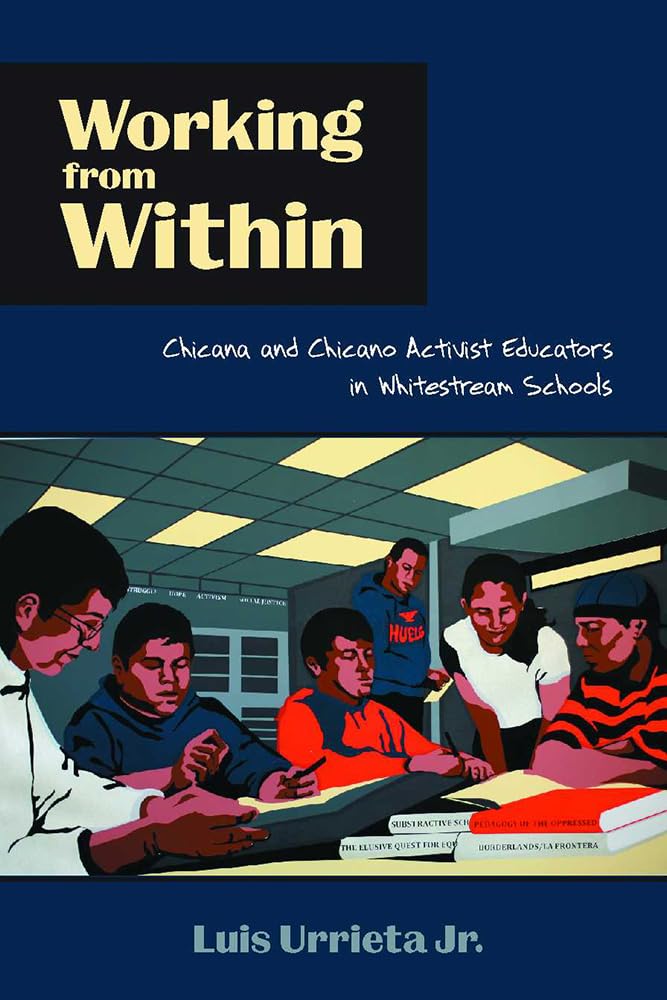
Title
Working From Within: Chicana And Chicano Activist Educators In Whitestream Schools,New
Sold by Ergodebooks, an authorized reseller.
Returns accepted within 30 days | support@ergodebooks.com
Shipping Information
- Free Standard Shipping — United States only
- Processing Time: 3–5 business days
- Estimated Delivery: 6–10 business days after dispatch
- Double-boxed, fully insured & discreetly packaged
- Tracking number sent via email once dispatched
Returns & Refund
Returns accepted within 30 days of delivery.
Damaged or Defective Item
Free return shipping + replacement or full refund
Wrong Item Received
Free return shipping + replacement or full refund
Change of Mind
Return shipping at customer's expense · 25% restocking fee applies
Payment Option

Combining approaches from anthropology and cultural studies, Working from Within examines how issues of identity, agency, and social movements shape the lives of Chicana and Chicano activist educators in U.S. schools. Luis Urrieta Jr. skillfully utilizes the cultural concepts of positioning, figured worlds, and selfauthorship, along with Chicano Studies and Chicana feminist frameworks, to tell the story of twentyfour Mexican Americans who have successfully navigated school systems as students and later as activist educators.Working from Within is one of the first books to show how identity is linked to agencyindividually and collectivelyfor Chicanas and Chicanos in education. Urrieta set out to answer linked questions: How do Chicanas and Chicanos negotiate identity, ideology, and activism within educational institutions that are often socially, culturally, linguistically, emotionally, and psychologically alienating? Analyzing indepth interviews with twentyfour educators, Urrieta offers vivid narratives that show how activist identities are culturally produced through daily negotiations.Urrietas work details the struggles of activist Chicana and Chicano educators to raise consciousness in a wide range of educational settings, from elementary schools to colleges. Overall, Urrieta addresses important questions about what it means to work for social justice from within institutions, and he explores the dialogic spaces between the alternatives of reproduction and resistance. In doing so, he highlights the continuity of Chicana and Chicano social movement, the relevance of gender, and the importance of autochthonous frameworks in understanding contemporary activism. Finally, he shows that it is possible for minority activist educators to thrive in a variety of institutional settings while maintaining strong ties to their communities.
⚠️ WARNING (California Proposition 65):
This product may contain chemicals known to the State of California to cause cancer, birth defects, or other reproductive harm.
For more information, please visit www.P65Warnings.ca.gov.