
Title
Working Out Egypt: Effendi Masculinity And Subject Formation In Colonial Modernity, 18701940
Sold by Ergodebooks, an authorized reseller.
Returns accepted within 30 days | support@ergodebooks.com
Shipping Information
- Free Standard Shipping — United States only
- Processing Time: 3–5 business days
- Estimated Delivery: 6–10 business days after dispatch
- Double-boxed, fully insured & discreetly packaged
- Tracking number sent via email once dispatched
Returns & Refund
Returns accepted within 30 days of delivery.
Damaged or Defective Item
Free return shipping + replacement or full refund
Wrong Item Received
Free return shipping + replacement or full refund
Change of Mind
Return shipping at customer's expense · 25% restocking fee applies
Payment Option

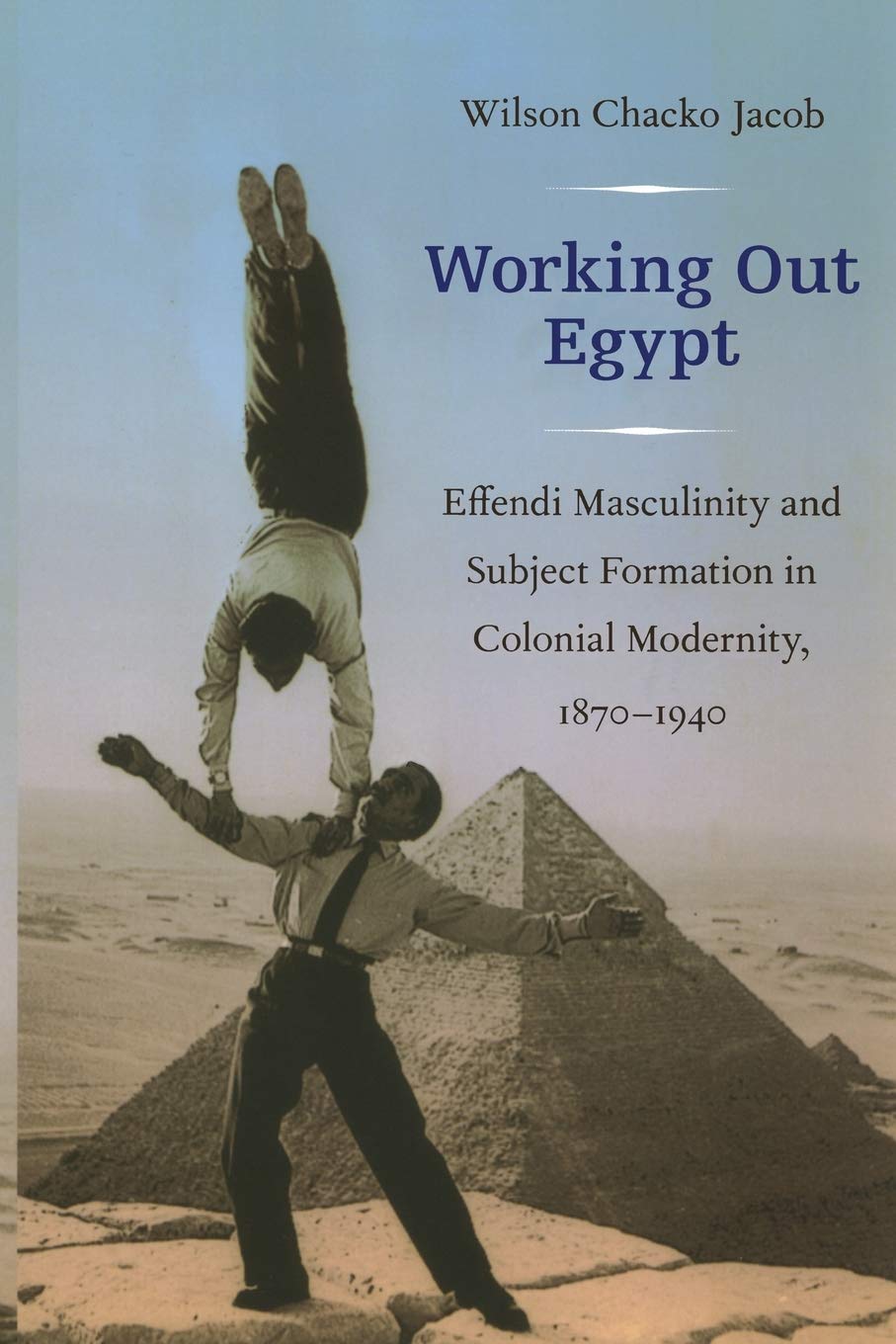
Working Out Egypt Is Both A Rich Cultural History Of The Formation Of An Egyptian National Subject In The Late Nineteenth Century And Early Twentieth And A Compelling Critique Of Modern Middle Eastern Historiography. Wilson Chacko Jacob Describes How Egyptian Men Of A Class Akin To The Cultural Bourgeoisie (The Effendiyya) Struggled To Escape From The Long Shadow Cast By Colonial Depictions Of The East As Degenerate, Feminine, And Temporally Behind An Active And Virile Europe. He Argues That During British Colonial Rule (18821936), Attempts To Create A Distinctively Modern And Egyptian Self Free From The Colonial Gaze Led To The Formation Of An Ambivalent, Performative Subjectivity That He Calls Effendi Masculinity. Jacob Traces Effendi Masculinity As It Took Hold During The Interwar Years, In Realms From Scouting And Competitive Sports To Sex Talk And Fashion, Considering Its Gendered Performativity In Relation To A Latenineteenthcentury British Discourse On Masculinity And Empire And An Explicitly Nationalist Discourse On Egyptian Masculinity. He Contends That As An Assemblage Of Colonial Modernity, Effendi Masculinity Was Simultaneously Local And Global, National And International, And Particular And Universal. Until Recently, Modern Egyptian History Has Not Allowed For Such Paradoxes; Instead, Egyptian Modernity Has Been Narrated In The Temporal And Spatial Terms Of A Separate Western Modernity.
⚠️ WARNING (California Proposition 65):
This product may contain chemicals known to the State of California to cause cancer, birth defects, or other reproductive harm.
For more information, please visit www.P65Warnings.ca.gov.
- Q: How many pages does the book have? A: The book has four hundred forty pages. It provides a comprehensive exploration of Egyptian masculinity during colonial modernity.
- Q: What size is this book? A: The book measures six point fourteen inches in length, one point eleven inches in width, and nine point twenty-five inches in height. This size makes it easy to handle and read.
- Q: What type of binding does this book have? A: This book features a paperback binding. This makes it flexible and lightweight, ideal for casual reading.
- Q: Who is the author of this book? A: The author of this book is Wilson Chacko Jacob. He presents a thorough analysis of masculinity in colonial Egypt.
- Q: What themes are explored in the book? A: The book explores themes of masculinity, colonialism, and national identity. It critiques modern Middle Eastern historiography through the lens of Egyptian men.
- Q: Is this book suitable for academic study? A: Yes, this book is suitable for academic study. It offers critical insights and historical context that are valuable for students and scholars alike.
- Q: How should I store this book? A: Store this book in a dry, cool place away from direct sunlight. This will help preserve its condition and prevent fading.
- Q: Can I clean the book if it gets dirty? A: Yes, you can clean the book gently with a soft, dry cloth. Avoid using water or cleaning solutions to prevent damage.
- Q: Is this book appropriate for all ages? A: This book is intended for adults and older students. It deals with complex themes that may not be suitable for younger readers.
- Q: What makes this book unique? A: The book uniquely combines cultural history with a critique of modern historiography. It highlights the complex identity of Egyptian masculinity during colonial rule.
- Q: What is the focus of the author’s critique? A: The author's critique focuses on the portrayal of the East in colonial narratives. He examines how these representations affected Egyptian identity.
- Q: How does the book relate to modern Egyptian history? A: The book connects historical narratives to contemporary understandings of Egyptian identity. It challenges traditional views of Egyptian modernity.
- Q: What audience is this book intended for? A: This book is intended for readers interested in historical studies, cultural identity, and Middle Eastern history. It appeals to both general readers and academics.
- Q: Does the book include illustrations? A: Yes, the book includes forty-seven illustrations. These visuals help to enhance the understanding of the text.
- Q: What type of historical perspective does the book offer? A: The book offers a cultural historical perspective on masculinity in colonial Egypt. It combines local and global viewpoints.
- Q: Can this book be used as a reference? A: Yes, this book can be used as a reference for research on colonialism and masculinity. It provides extensive insights and analyses.