
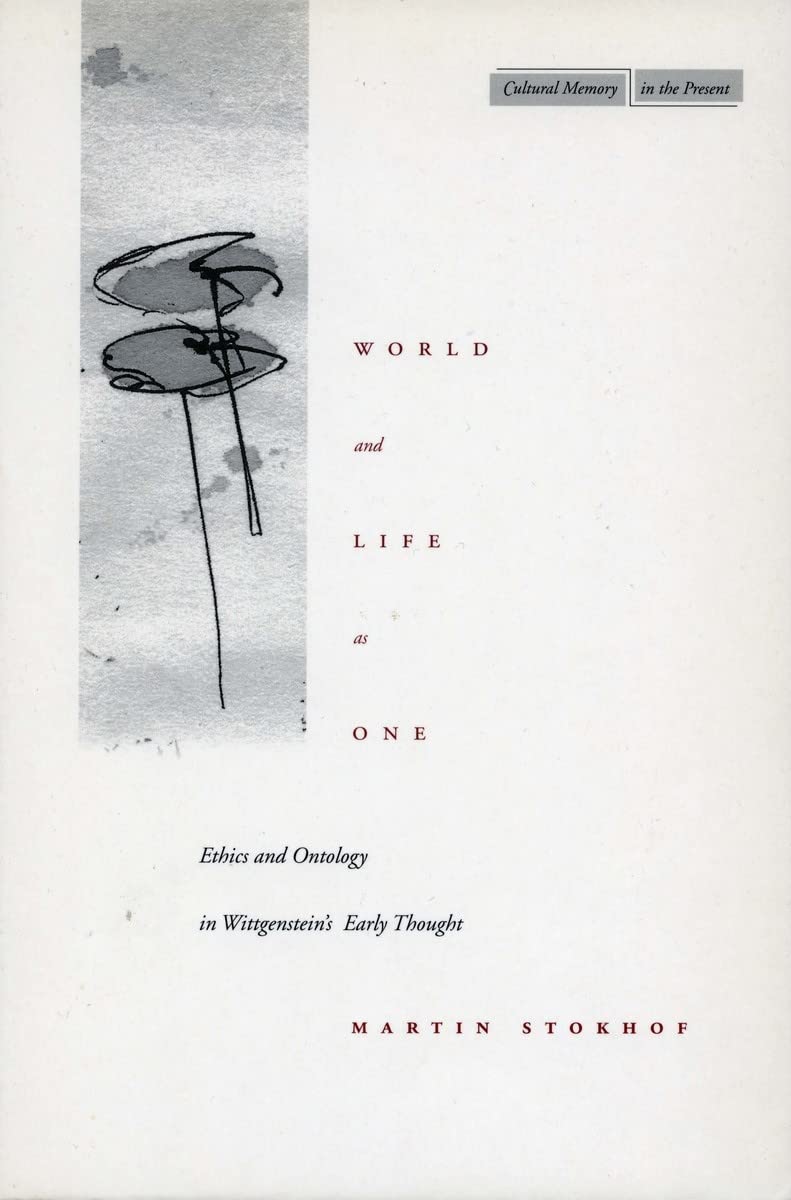
Title
World And Life As One: Ethics And Ontology In Wittgensteins Early Thought (Cultural Memory In The Present)
Sold by Ergodebooks, an authorized reseller.
Returns accepted within 30 days | support@ergodebooks.com
Shipping Information
- Free Standard Shipping — United States only
- Processing Time: 3–5 business days
- Estimated Delivery: 6–10 business days after dispatch
- Double-boxed, fully insured & discreetly packaged
- Tracking number sent via email once dispatched
Returns & Refund
Returns accepted within 30 days of delivery.
Damaged or Defective Item
Free return shipping + replacement or full refund
Wrong Item Received
Free return shipping + replacement or full refund
Change of Mind
Return shipping at customer's expense · 25% restocking fee applies
Payment Option

This Book Explores In Detail The Relation Between Ontology And Ethics In The Early Work Of Ludwig Wittgenstein, Notably The Tractatus Logicophilosophicus And, To A Lesser Extent, The Notebooks 19141916. Selfcontained And Requiring No Prior Knowledge Of Wittgenstein'S Thought, It Is The First Booklength Argument That His Views On Ethics Decisively Shaped His Ontological And Semantic Thought.The Book'S Main Thesis Is Twofold. It Argues That The Ontological Theory Of The Tractatus Is Fundamentally Dependent On Its Logical And Linguistic Doctrines: The Tractarian World Is The World As It Appears In Language And Thought. It Also Maintains That This Interpretation Of The Ontology Of The Tractatus Can Be Argued For Not Only On Systematic Grounds, But Also Via The Contents Of The Ethical Theory That It Offers. Wittgenstein'S Views On Ethics Presuppose That Language And Thought Are But One Way In Which We Interact With Reality.Although Detailed Studies Of Wittgenstein'S Ontology And Ethics Exist, This Book Is The First Thorough Investigation Of The Relationship Between Them. As An Introduction To Wittgenstein, It Sheds New Light On An Important Aspect Of His Early Thought.
⚠️ WARNING (California Proposition 65):
This product may contain chemicals known to the State of California to cause cancer, birth defects, or other reproductive harm.
For more information, please visit www.P65Warnings.ca.gov.
- Q: What is the page count of this book? A: This book has three hundred fifty-two pages. It provides a comprehensive exploration of ethics and ontology in Wittgenstein's early thought.
- Q: What are the dimensions of this book? A: The book measures six inches in length, zero point eight-eight inches in width, and nine point zero two inches in height. These dimensions make it a manageable size for reading and carrying.
- Q: What type of binding does this book have? A: This book is available in paperback binding. This type of binding is flexible and lightweight, making it easy to handle.
- Q: What topics does this book cover? A: This book covers the relationship between ontology and ethics in Wittgenstein's early philosophy. It specifically focuses on the Tractatus Logico-Philosophicus and the Notebooks from 1914 to 1916.
- Q: Is this book suitable for beginners? A: Yes, this book is suitable for beginners. It is self-contained and does not require prior knowledge of Wittgenstein's thought.
- Q: How does this book relate to Wittgenstein's ethical theory? A: This book argues that Wittgenstein's views on ethics significantly shape his ontological and semantic theories. It provides a detailed investigation into this relationship.
- Q: What is the main thesis of this book? A: The main thesis is that the ontological theory of the Tractatus relies on its logical and linguistic doctrines. It also shows how ethics and ontology are interconnected in Wittgenstein's thought.
- Q: Who is the author of this book? A: The author of this book is Martin Stokhof. He provides insightful analysis and interpretations of Wittgenstein's work.
- Q: Does this book provide a new perspective on Wittgenstein? A: Yes, it sheds new light on an important aspect of Wittgenstein's early thought. It is the first thorough investigation of the relationship between ontology and ethics.
- Q: Is this book part of a series? A: Yes, this book is part of the 'Cultural Memory in the Present' series. This series focuses on contemporary philosophical issues and cultural studies.
- Q: Can this book be used in academic settings? A: Yes, this book is suitable for academic settings. Its comprehensive analysis makes it a valuable resource for students and scholars of philosophy.
- Q: What philosophical movements does this book engage with? A: This book engages with analytic philosophy, particularly the early work of Ludwig Wittgenstein. It also explores ethical theories and ontological discussions.
- Q: Is there a bibliography or references in this book? A: Yes, the book includes a bibliography and references. This provides readers with sources for further research and validation of the arguments presented.
- Q: What makes this book unique compared to other studies on Wittgenstein? A: This book is unique because it is the first book-length argument that connects Wittgenstein's views on ethics with his ontological and semantic theories.
- Q: Is this book available in digital format? A: Availability may vary, but it is common for academic books to be offered in digital formats. Check with the publisher or retailers for options.