
Title
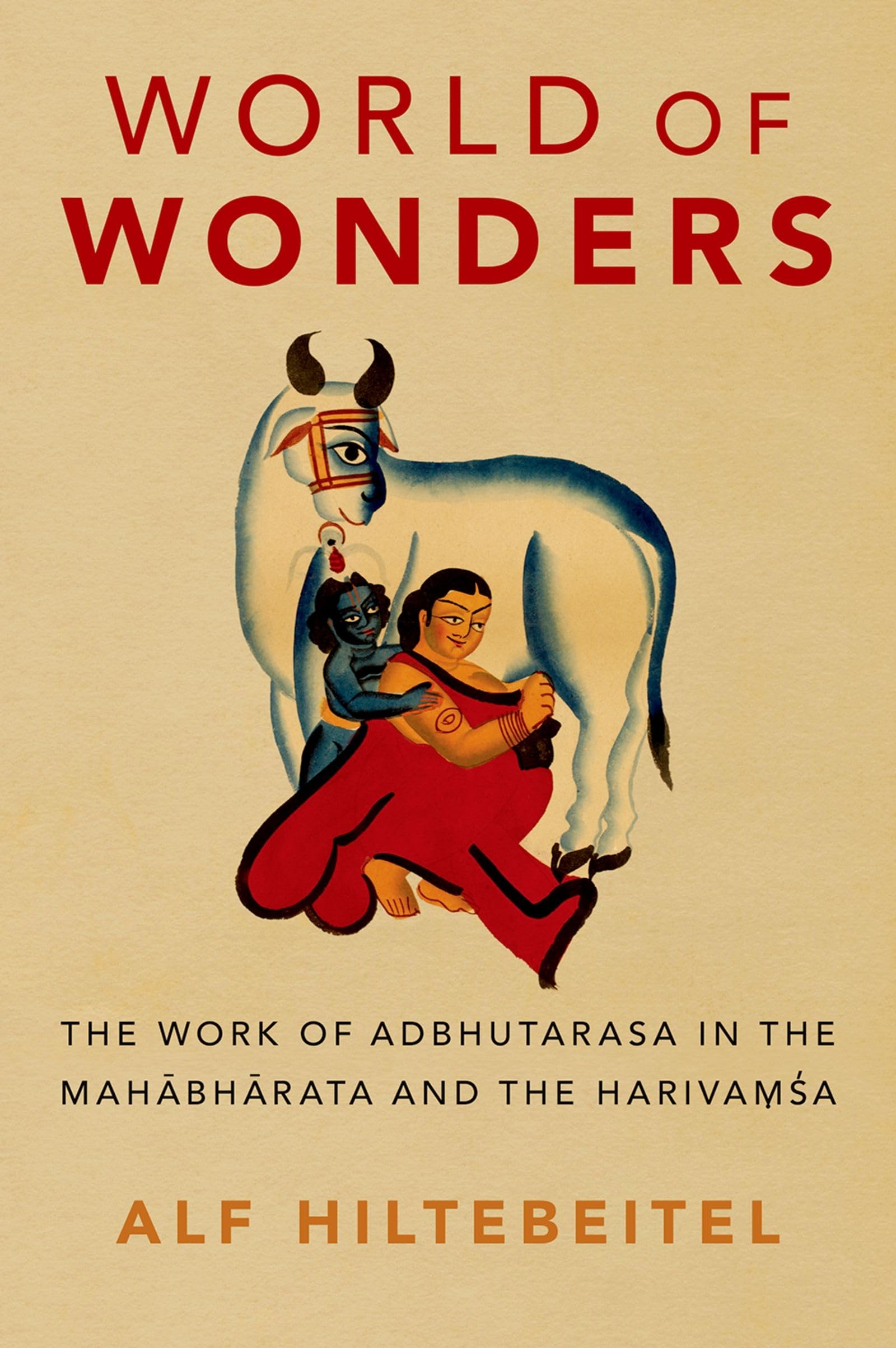
World of Wonders: The Work of Adbhutarasa in the Mahabharata and the Harivamsa,Used
Sold by Ergodebooks, an authorized reseller.
Returns accepted within 30 days | support@ergodebooks.com
Shipping Information
- Free Standard Shipping — United States only
- Processing Time: 3–5 business days
- Estimated Delivery: 6–10 business days after dispatch
- Double-boxed, fully insured & discreetly packaged
- Tracking number sent via email once dispatched
Returns & Refund
Returns accepted within 30 days of delivery.
Damaged or Defective Item
Free return shipping + replacement or full refund
Wrong Item Received
Free return shipping + replacement or full refund
Change of Mind
Return shipping at customer's expense · 25% restocking fee applies
Payment Option

In World of Wonders, Alf Hiltebeitel addresses the Mahabharata and its supplement, the Harivamsa, as a single literary composition. Looking at the work through the critical lens of the Indian aesthetic theory of rasa, "juice, essence, or taste," he argues that the dominant rasa of these two texts is adbhutarasa, the "mood of wonder." While the Mahabharata signposts whole units of the text as "wondrous" in its table of contents, the Harivamsa foregrounds a steppedup term for wonder (ascarya) that drives home the point that Vishnu and Krishna are one.Two scholars of the 9th and 10th centuries, Anandavardhana and Abhinavagupta, identified the Mahabharata's dominant rasa as santarasa, the "mood of peace." This has traditionally been received as the only serious contestant for a rasic interpretation of the epic. Hiltebeitel disputes both the positive claim that the santarasa interpretation is correct and the negative claim that adbhutarasa is a frivolous rasa that cannot sustain a major work. The heart of his argument is that the Mahabharata and Harivamsa both deploy the terms for "wonder" and "surprise" (vismaya) in significant numbers that extend into every facet of these heterogeneous texts, showing how adbhutarasa is at work in the rich and contrasting textual strategies which are integral to the structure of the two texts.
⚠️ WARNING (California Proposition 65):
This product may contain chemicals known to the State of California to cause cancer, birth defects, or other reproductive harm.
For more information, please visit www.P65Warnings.ca.gov.