If you have any questions, you are always welcome to contact us. We'll get back to you as soon as possible, withing 24 hours on weekdays.
Customer service
All questions about your order, return and delivery must be sent to our customer service team by e-mail at yourstore@yourdomain.com
Sale & Press
If you are interested in selling our products, need more information about our brand or wish to make a collaboration, please contact us at press@yourdomain.com
Help
If you have any questions, you are always welcome to contact us. We'll get back to you as soon as possible, withing 24 hours on weekdays.
Customer service
All questions about your order, return and delivery must be sent to our customer service team by e-mail at yourstore@yourdomain.com
Sale & Press
If you are interested in selling our products, need more information about our brand or wish to make a collaboration, please contact us at press@yourdomain.com
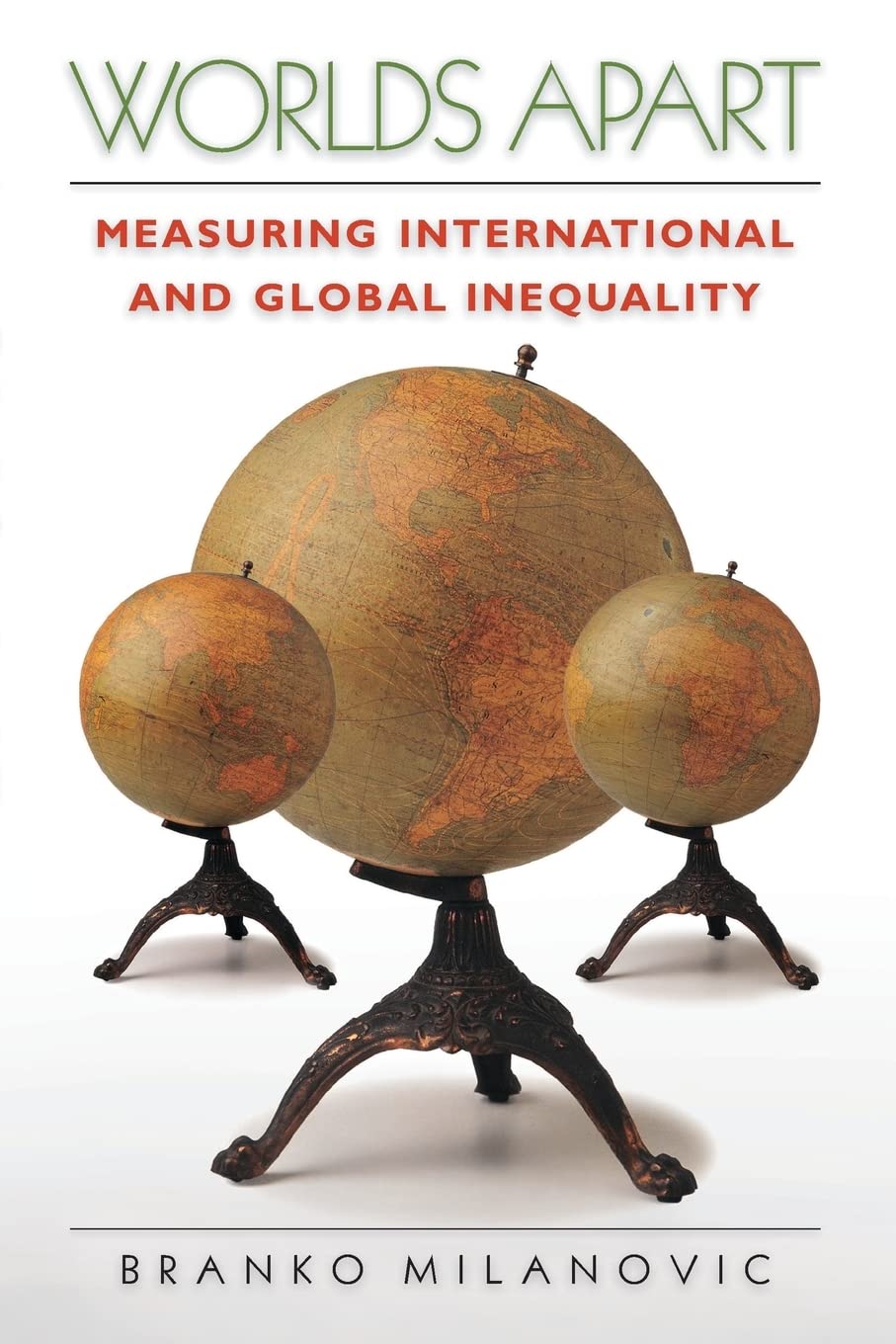
We are used to thinking about inequality within countriesabout rich Americans versus poor Americans, for instance. But what about inequality between all citizens of the world? Worlds Apart addresses just how to measure global inequality among individuals, and shows that inequality is shaped by complex forces often working in different directions. Branko Milanovic, a top World Bank economist, analyzes income distribution worldwide using, for the first time, household survey data from more than 100 countries. He evenhandedly explains the main approaches to the problem, offers a more accurate way of measuring inequality among individuals, and discusses the relevant policies of firstworld countries and nongovernmental organizations.Inequality has increased between nations over the last half century (richer countries have generally grown faster than poorer countries). And yet the two most populous nations, China and India, have also grown fast. But over the past two decades inequality within countries has increased. As complex as reconciling these three data trends may be, it is clear: the inequality between the world's individuals is staggering. At the turn of the twentyfirst century, the richest 5 percent of people receive onethird of total global income, as much as the poorest 80 percent. While a few poor countries are catching up with the rich world, the differences between the richest and poorest individuals around the globe are huge and likely growing.
⚠️ WARNING (California Proposition 65):
This product may contain chemicals known to the State of California to cause cancer,
birth defects, or other reproductive harm.
For MAP (Minimum Advertised Price) violations and Intellectual Property (IP) or Trademark concerns, please contact:
support@ergodebooks.com
⚠️ California Proposition 65 Warning: Some products sold on this website may expose you to chemicals known to the State of California to cause cancer, birth defects, or other reproductive harm. For more information, visit www.P65Warnings.ca.gov.