
Title
Worldview and Mind: Religious Thought and Psychological Development (Eric Voegelin Institute Series in Political Philosophy),Used
Sold by Ergodebooks, an authorized reseller.
Returns accepted within 30 days | support@ergodebooks.com
Shipping Information
- Free Standard Shipping — United States only
- Processing Time: 3–5 business days
- Estimated Delivery: 6–10 business days after dispatch
- Double-boxed, fully insured & discreetly packaged
- Tracking number sent via email once dispatched
Returns & Refund
Returns accepted within 30 days of delivery.
Damaged or Defective Item
Free return shipping + replacement or full refund
Wrong Item Received
Free return shipping + replacement or full refund
Change of Mind
Return shipping at customer's expense · 25% restocking fee applies
Payment Option

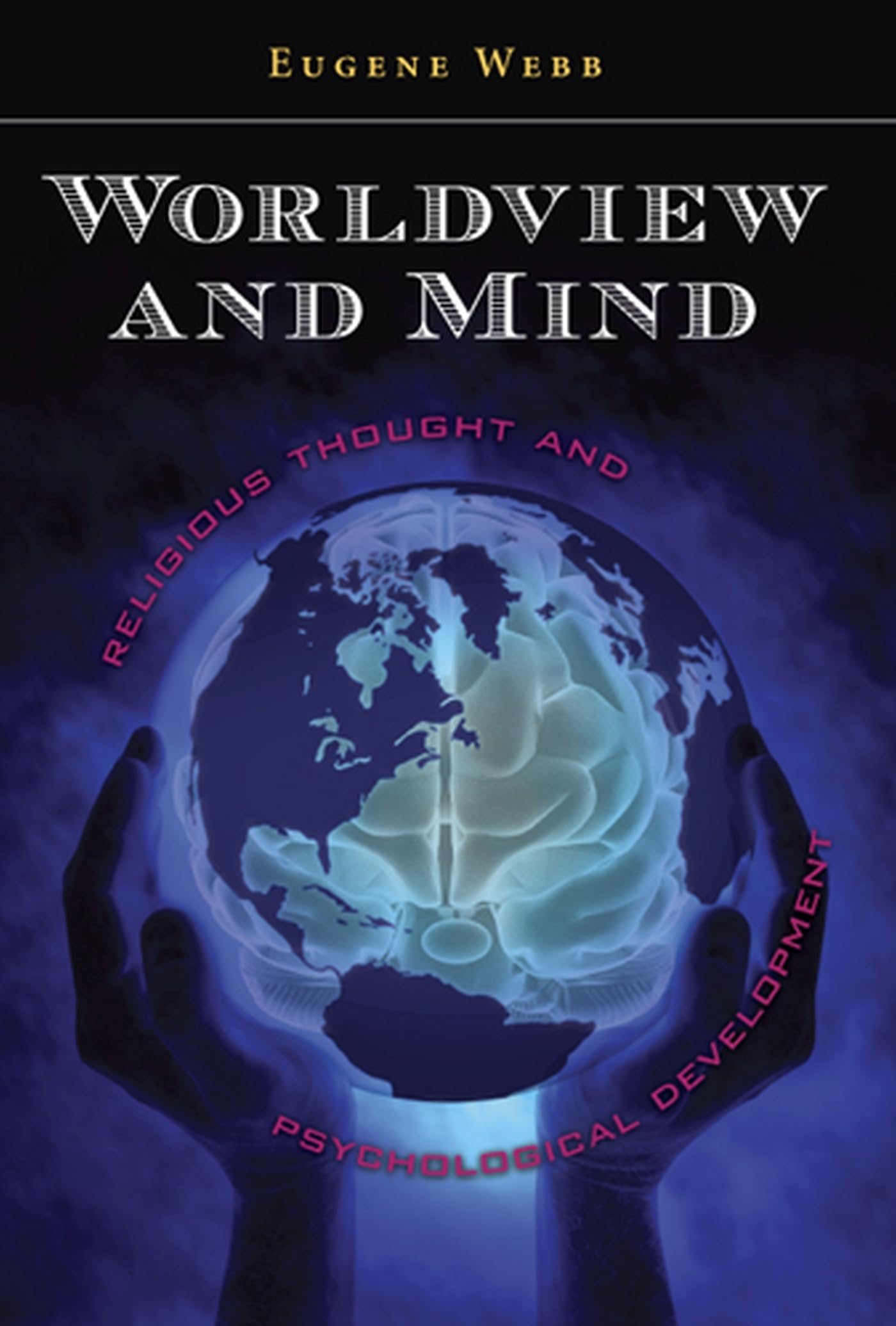
When worldviews clash, the world reverberates. Now a distinguished scholar who has written widely on thinkers ranging from Samuel Beckett to Eric Voegelin inquires into the sources of religious conflictand into ways of being religious that might diminish that conflict.Worldview and Mind covers a wide range of thinkers and movements to explore the relation between religion and modernity in all its complexity. Eugene Webb invokes a number of topical issues, including religious terrorism, as he unfolds the phenomenon of religion in all its complications, from the difference between faith and belief to the diversities amongand withinreligions.Building on Karl Jasperss psychology of worldviews and Jean Piagets developmental psychology, Webb looks at a broad spectrum of religionsespecially the history of Christianity, Judaism, and Islam in their various formsto explore the subjective factors that sometimes render religions conflictual and aggressive and to consider conditions that might foster more helpful and reconciling forms of religiousness. He explores what psychological analysis reveals about the relationship between stages of psychological development and ways of being religiousways that range from closedminded literalism to openminded tolerance. He also identifies unconscious and developmental obstacles to religious maturity and depicts the mature person as one who participates in the mystery of selftranscending love.Webb argues that authentic religion need not succumb to dogmatism, or support fanaticism, or be consigned to the stages of immature culture. Responding to critics of religion, from Sigmund Freud to Daniel Dennett, he demonstrates that religious traditions have more spiritual depth than these critics have granted and a greater potential for development than they believe, along lines they might even favor. His insightful book proposes that, if religious people can step back from their traditions and consider them as partial ways of relating to transcendent ultimacy, the worlds religions might manage to develop a way of living together with mutual appreciation and respect.
⚠️ WARNING (California Proposition 65):
This product may contain chemicals known to the State of California to cause cancer, birth defects, or other reproductive harm.
For more information, please visit www.P65Warnings.ca.gov.