
Title
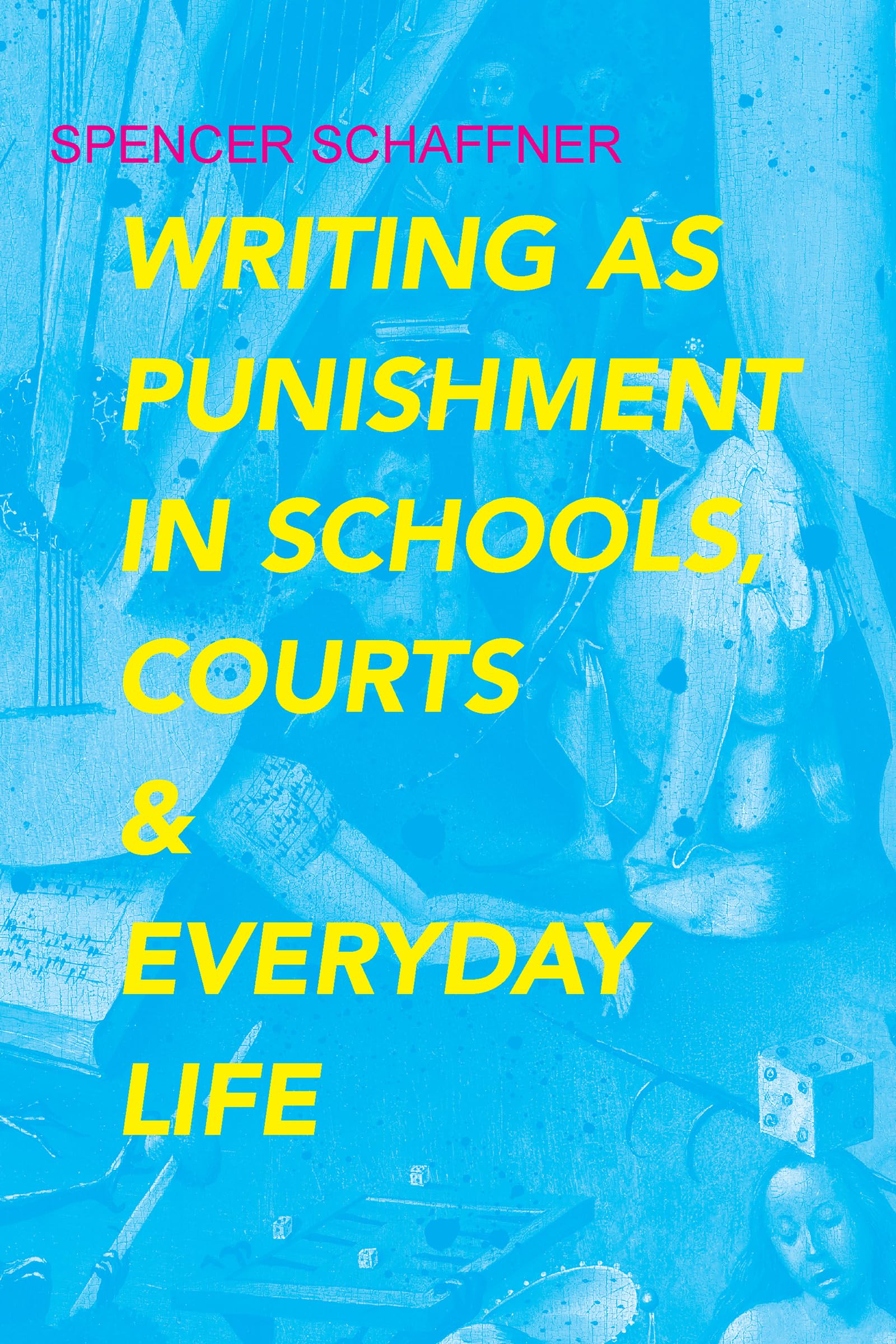
Writing As Punishment In Schools, Courts, And Everyday Life (Rhetoric, Culture, And Social Critique),New
Sold by Ergodebooks, an authorized reseller.
Returns accepted within 30 days | support@ergodebooks.com
Shipping Information
- Free Standard Shipping — United States only
- Processing Time: 3–5 business days
- Estimated Delivery: 6–10 business days after dispatch
- Double-boxed, fully insured & discreetly packaged
- Tracking number sent via email once dispatched
Returns & Refund
Returns accepted within 30 days of delivery.
Damaged or Defective Item
Free return shipping + replacement or full refund
Wrong Item Received
Free return shipping + replacement or full refund
Change of Mind
Return shipping at customer's expense · 25% restocking fee applies
Payment Option

A probing and prescient consideration of writing as an instrument of punishmentWriting tends to be characterized as a positive aspect of literacy that helps us to express our thoughts, to foster interpersonal communication, and to archive ideas. However, there is a vast array of evidence that emphasizes the counterbelief that writing has the power to punish, shame, humiliate, control, dehumanize, fetishize, and transform those who are subjected to it. In Writing as Punishment in Schools, Courts, and Everyday Life, Spencer Schaffner looks at many instances of writing as punishment, including forced tattooing, drunk shaming, courtordered letters of apology, and social media shaming, with the aim of bringing understanding and recognition to the coupling of literacy and subjection.Writing as Punishment in Schools, Courts, and Everyday Life is a fascinating inquiry into how sinister writing can truly be and directly questions the educational ideal that powerful writing is invariably a public good. While Schaffner does look at the darker side of writing, he neither vilifies nor supports the practice of writing as punishment. Rather, he investigates the question with humanistic inquiry and focuses on what can be learned from understanding the many strange ways that writing as punishment is used to accomplish fundamental objectives in everyday life.Through five succinct case studies, we meet teachers, judges, parents, sex traffickers, and drunken partiers who have turned to writing because of its presumed power over writers and readers. Schaffner provides careful analysis of familiar punishments, such as schoolchildren copying lines, and more bizarre public rituals that result in inkcovered bodies and individuals forced to hold signs in public.Schaffner argues that writingbased punishment should not be dismissed as benign or condemned as a misguided perversion of writing, but instead should be understood as an instrument capable of furthering both the aims of justice and degradation.
⚠️ WARNING (California Proposition 65):
This product may contain chemicals known to the State of California to cause cancer, birth defects, or other reproductive harm.
For more information, please visit www.P65Warnings.ca.gov.
- Q: What is the page count of this book? A: The book has one hundred thirty-six pages. This length provides a concise exploration of writing as punishment in various contexts.
- Q: What are the dimensions of this book? A: The book measures six inches in length, zero point six inches in width, and nine point zero two inches in height. This size makes it portable and easy to handle.
- Q: What type of binding does this book have? A: This book features a paperback binding. Paperback books are lightweight and flexible, making them convenient for reading.
- Q: Who is the author of this book? A: The author of this book is Spencer Schaffner. He offers a critical perspective on the role of writing in punishment.
- Q: What genre does this book belong to? A: The book falls under the genre of communication. It explores the intersection of writing and societal control.
- Q: How can I use the insights from this book? A: You can use the insights by reflecting on the implications of writing practices in various settings. The book encourages critical thinking about literacy.
- Q: Is this book suitable for students? A: Yes, this book is suitable for students, especially those studying communication or social critique. It provides valuable discussions on writing as a form of control.
- Q: Can this book be used in a classroom setting? A: Yes, this book can be effectively used in classroom discussions. It prompts critical analysis of writing and its societal implications.
- Q: What themes are explored in this book? A: The book explores themes of punishment, control, and the darker sides of writing. It challenges conventional views of writing as purely beneficial.
- Q: How should I care for this paperback book? A: To care for this paperback book, keep it in a dry place and avoid exposing it to direct sunlight. This will help preserve its condition.
- Q: Is there a specific way to store this book? A: Yes, store this book upright on a shelf or in a bookcase. This helps prevent bending or damage to the spine.
- Q: What if the book arrives damaged? A: If the book arrives damaged, you should contact the seller for a return or exchange. Most sellers offer policies for damaged items.
- Q: Are there any special instructions for handling this book? A: There are no special handling instructions, but avoid folding pages or writing in the book to maintain its quality.
- Q: How does this book compare to others in its genre? A: This book offers a unique perspective by focusing on the punitive aspects of writing, which is less commonly addressed in communication literature.
- Q: Is this book appropriate for all readers? A: Yes, this book is appropriate for adult readers and those interested in sociocultural critiques. It addresses complex themes relevant to many audiences.