
Title
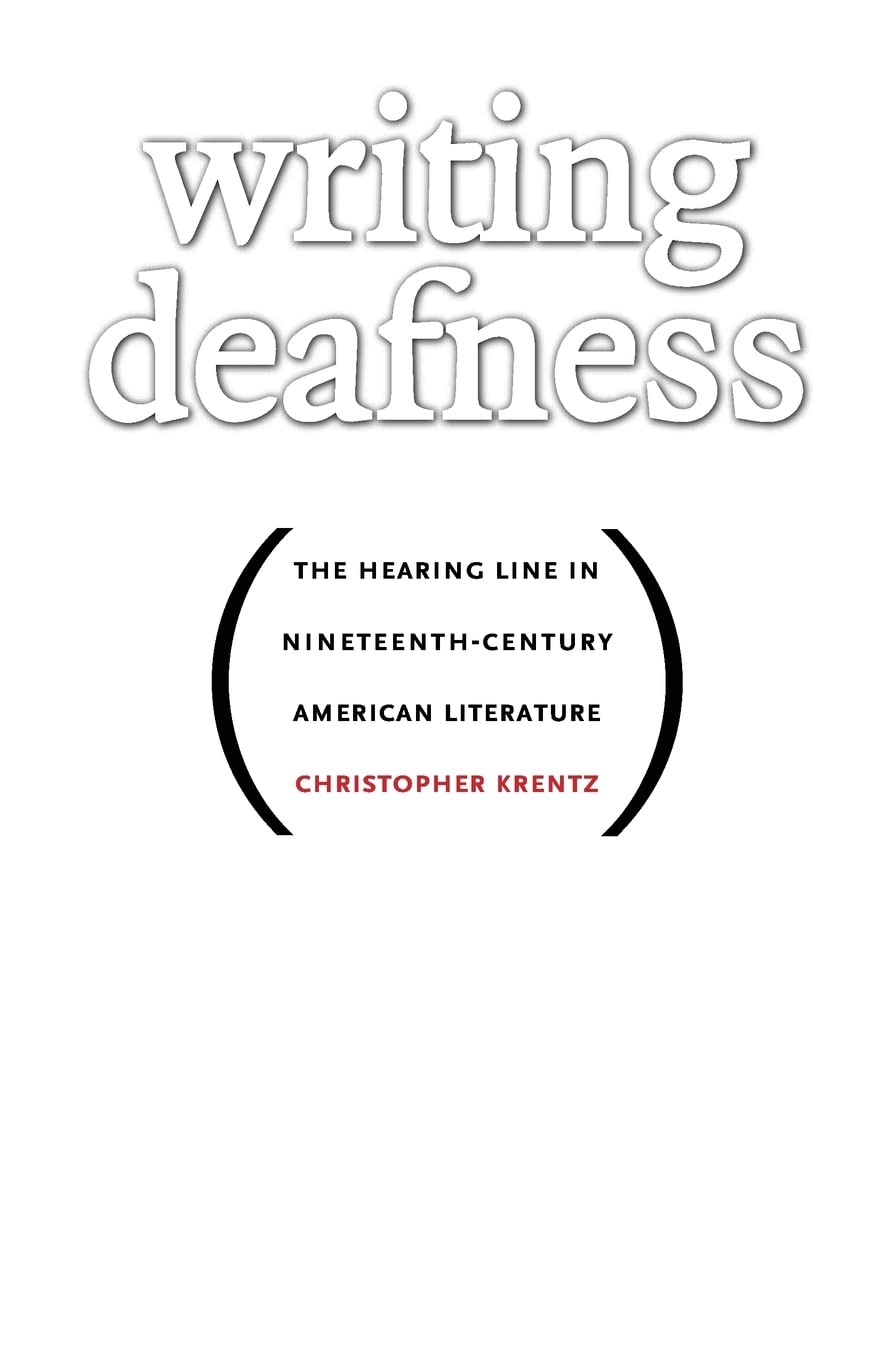
Writing Deafness: The Hearing Line In Nineteenthcentury American Literature,New
Sold by Ergodebooks, an authorized reseller.
Returns accepted within 30 days | support@ergodebooks.com
Shipping Information
- Free Standard Shipping — United States only
- Processing Time: 3–5 business days
- Estimated Delivery: 6–10 business days after dispatch
- Double-boxed, fully insured & discreetly packaged
- Tracking number sent via email once dispatched
Returns & Refund
Returns accepted within 30 days of delivery.
Damaged or Defective Item
Free return shipping + replacement or full refund
Wrong Item Received
Free return shipping + replacement or full refund
Change of Mind
Return shipping at customer's expense · 25% restocking fee applies
Payment Option

Taking an original approach to American literature, Christopher Krentz examines nineteenthcentury writing from a new angle: that of deafness, which he shows to have surprising importance in identity formation. The rise of deaf education during this period made deaf people much more visible in American society. Krentz demonstrates that deaf and hearing authors used writing to explore their similarities and differences, trying to work out the invisible boundary, analogous to Du Bois's color line, that Krentz calls the 'hearing line.'Writing Deafness examines previously overlooked literature by deaf authors, who turned to writing to find a voice in public discourse and to demonstrate their intelligence and humanity to the majority. Hearing authors such as James Fenimore Cooper, Lydia Huntley Sigourney, Herman Melville, and Mark Twain often subtly took on deafrelated issues, using deafness to define not just deaf others, but also themselves (as competent and rational), helping form a selfconsciously hearing identity. Offering insights for theories of identity, physical difference, minority writing, race, and postcolonialism, this compelling book makes essential reading for students of American literature and culture, deaf studies, and disability studies.
⚠️ WARNING (California Proposition 65):
This product may contain chemicals known to the State of California to cause cancer, birth defects, or other reproductive harm.
For more information, please visit www.P65Warnings.ca.gov.