
Title
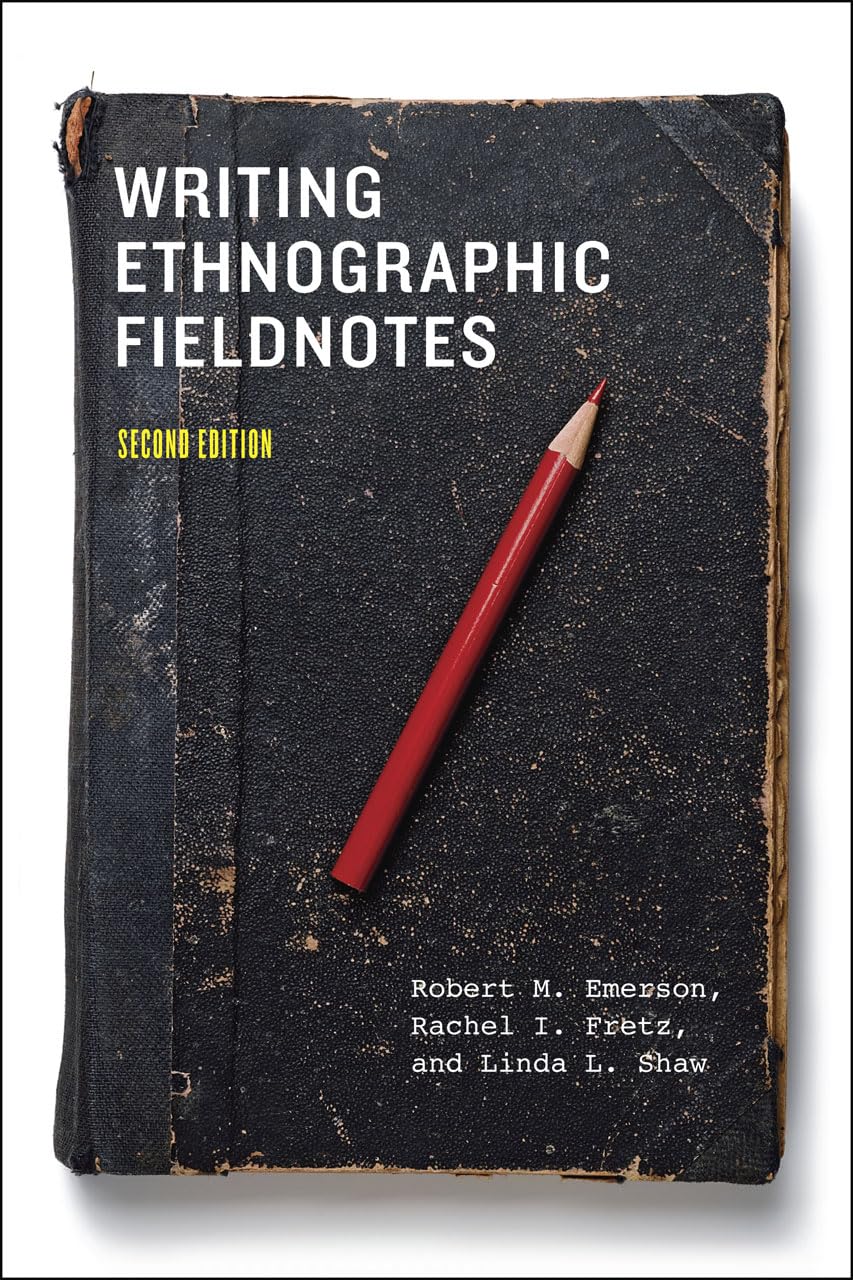
Writing Ethnographic Fieldnotes, Second Edition (Chicago Guides To Writing, Editing, And Publishing),Used
Sold by Ergodebooks, an authorized reseller.
Returns accepted within 30 days | support@ergodebooks.com
Shipping Information
- Free Standard Shipping — United States only
- Processing Time: 3–5 business days
- Estimated Delivery: 6–10 business days after dispatch
- Double-boxed, fully insured & discreetly packaged
- Tracking number sent via email once dispatched
Returns & Refund
Returns accepted within 30 days of delivery.
Damaged or Defective Item
Free return shipping + replacement or full refund
Wrong Item Received
Free return shipping + replacement or full refund
Change of Mind
Return shipping at customer's expense · 25% restocking fee applies
Payment Option

In Writing Ethnographic Fieldnotes, Robert M. Emerson, Rachel I. Fretz, And Linda L. Shaw Present A Series Of Guidelines, Suggestions, And Practical Advice For Creating Useful Fieldnotes In A Variety Of Settings, Demystifying A Process That Is Often Assumed To Be Intuitive And Impossible To Teach. Using Actual Unfinished Notes As Examples, The Authors Illustrate Options For Composing, Reviewing, And Working Fieldnotes Into Finished Texts. They Discuss Different Organizational And Descriptive Strategies And Show How Transforming Direct Observations Into Vivid Descriptions Results Not Simply From Good Memory But From Learning To Envision Scenes As Written. A Good Ethnographer, They Demonstrate, Must Learn To Remember Dialogue And Movement Like An Actor, To See Colors And Shapes Like A Painter, And To Sense Moods And Rhythms Like A Poet.This New Edition Reflects The Extensive Feedback The Authors Have Received From Students And Instructors Since The First Edition Was Published In 1995. As A Result, They Have Updated The Race, Class, And Gender Section, Created New Sections On Coding Programs And Revising First Drafts, And Provided New Examples Of Working Notes. An Essential Tool For Budding Social Scientists, The Second Edition Of Writing Ethnographic Fieldnotes Will Be Invaluable For A New Generation Of Researchers Entering The Field.
⚠️ WARNING (California Proposition 65):
This product may contain chemicals known to the State of California to cause cancer, birth defects, or other reproductive harm.
For more information, please visit www.P65Warnings.ca.gov.
- Q: How many pages does this book have? A: This book has two hundred eighty-nine pages. It provides comprehensive guidelines and practical advice for writing ethnographic fieldnotes.
- Q: What is the binding type of this book? A: The binding type is paperback. This makes it flexible and easy to carry for fieldwork.
- Q: What are the dimensions of this book? A: The dimensions are eight point ninety-nine inches in length, six point zero two inches in width, and zero point sixty-seven inches in height. These sizes make it portable for readers.
- Q: Who is the author of this book? A: The authors are Robert M. Emerson, Rachel I. Fretz, and Linda L. Shaw. They are experienced in the field of ethnography and social science.
- Q: What category does this book belong to? A: This book belongs to the category of Mythology & Folklore. It addresses the creation of fieldnotes in various settings.
- Q: Is this book suitable for beginners in ethnography? A: Yes, this book is suitable for beginners. It provides clear guidelines and practical advice that demystify the process of writing fieldnotes.
- Q: What is the main focus of this book? A: The main focus is on creating useful fieldnotes. It includes guidelines for composing, reviewing, and transforming observations into written descriptions.
- Q: Can this book help improve my note-taking skills? A: Yes, this book is designed to enhance note-taking skills. It teaches strategies for organizing and describing field observations effectively.
- Q: Is this book helpful for social science students? A: Yes, this book is invaluable for social science students. It serves as an essential tool for researchers entering the field.
- Q: How has this edition been updated from the first edition? A: This edition has been updated with feedback from instructors and students. It includes new sections on coding programs and revising drafts.
- Q: What should I do if I receive a damaged copy? A: If you receive a damaged copy, you should contact the seller for a return or exchange. Most sellers have policies in place for returns.
- Q: Are there any specific safety concerns with this book? A: No, there are no specific safety concerns with this book. It is printed material and does not contain hazardous materials.
- Q: Can I easily carry this book around? A: Yes, the paperback format and dimensions make it easy to carry around. It is designed for convenience, especially for field researchers.
- Q: Does this book offer examples of fieldnotes? A: Yes, the book includes actual unfinished notes as examples. These examples illustrate options for composing and reviewing fieldnotes.
- Q: How does this book address race, class, and gender? A: This book has updated its section on race, class, and gender based on extensive feedback. It provides relevant discussions for contemporary researchers.
- Q: Is there a warranty or guarantee for this book? A: Most books do not come with a warranty. However, check the seller's return policy for satisfaction guarantees.