
Title
Writing For Hire: Unions, Hollywood, And Madison Avenue,Used
Sold by Ergodebooks, an authorized reseller.
Returns accepted within 30 days | support@ergodebooks.com
Shipping Information
- Free Standard Shipping — United States only
- Processing Time: 3–5 business days
- Estimated Delivery: 6–10 business days after dispatch
- Double-boxed, fully insured & discreetly packaged
- Tracking number sent via email once dispatched
Returns & Refund
Returns accepted within 30 days of delivery.
Damaged or Defective Item
Free return shipping + replacement or full refund
Wrong Item Received
Free return shipping + replacement or full refund
Change of Mind
Return shipping at customer's expense · 25% restocking fee applies
Payment Option

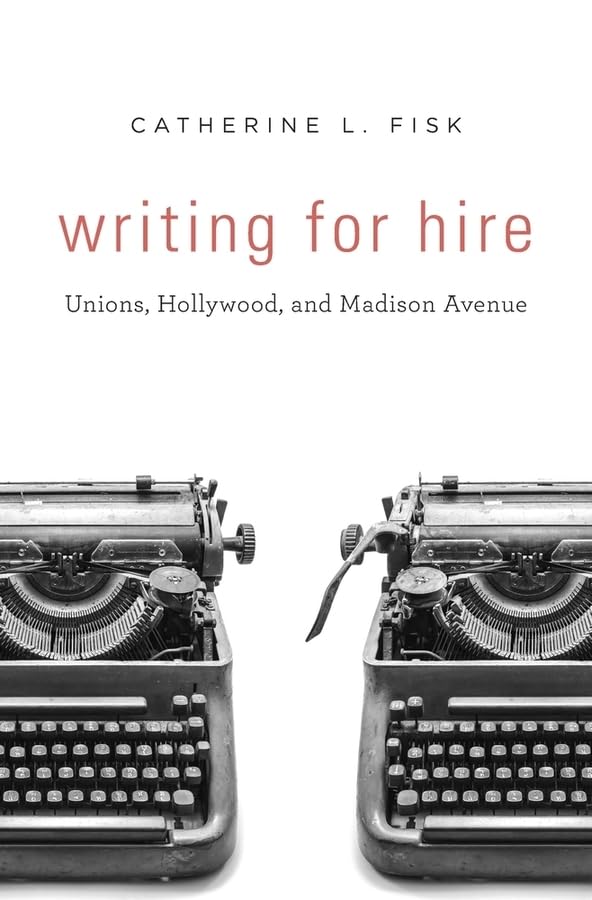
Required to sign away their legal rights as authors as a condition of employment, professional writers may earn a tidy living for their work, but they seldom own their writing. Writing for Hire traces the history of labor relations that defined authorship in film, TV, and advertising in the midtwentieth century. Catherine L. Fisk examines why strikingly different norms of attribution emerged in these overlapping industries, and she shows how unionizing enabled Hollywood writers to win many authorial rights, while Madison Avenue writers achieved no equivalent recognition.In the 1930s, the practice of employing teams of writers to create copyrighted works became widespread in film studios, radio networks, and ad agencies. Sometimes Hollywood and Madison Avenue employed the same people. Yet the two industries diverged in a crucial way in the 1930s, when screenwriters formed the Writers Guild to represent them in collective negotiations with media companies. Writers Guild members believed they shared the same status as literary authors and fought to have their names attached to their work. They gained binding legal norms relating to ownership and public recognitionnorms that eventually carried over into the professional culture of TV production.In advertising, by contrast, no formal norms of public attribution developed. Although some ad writers chafed at their anonymity, their nonunion workplace provided no institutional framework to channel their demands for change. Instead, many rationalized their invisibility as creative workers by embracing a selfconception as wellcompensated professionals devoted to the interests of clients.
⚠️ WARNING (California Proposition 65):
This product may contain chemicals known to the State of California to cause cancer, birth defects, or other reproductive harm.
For more information, please visit www.P65Warnings.ca.gov.