
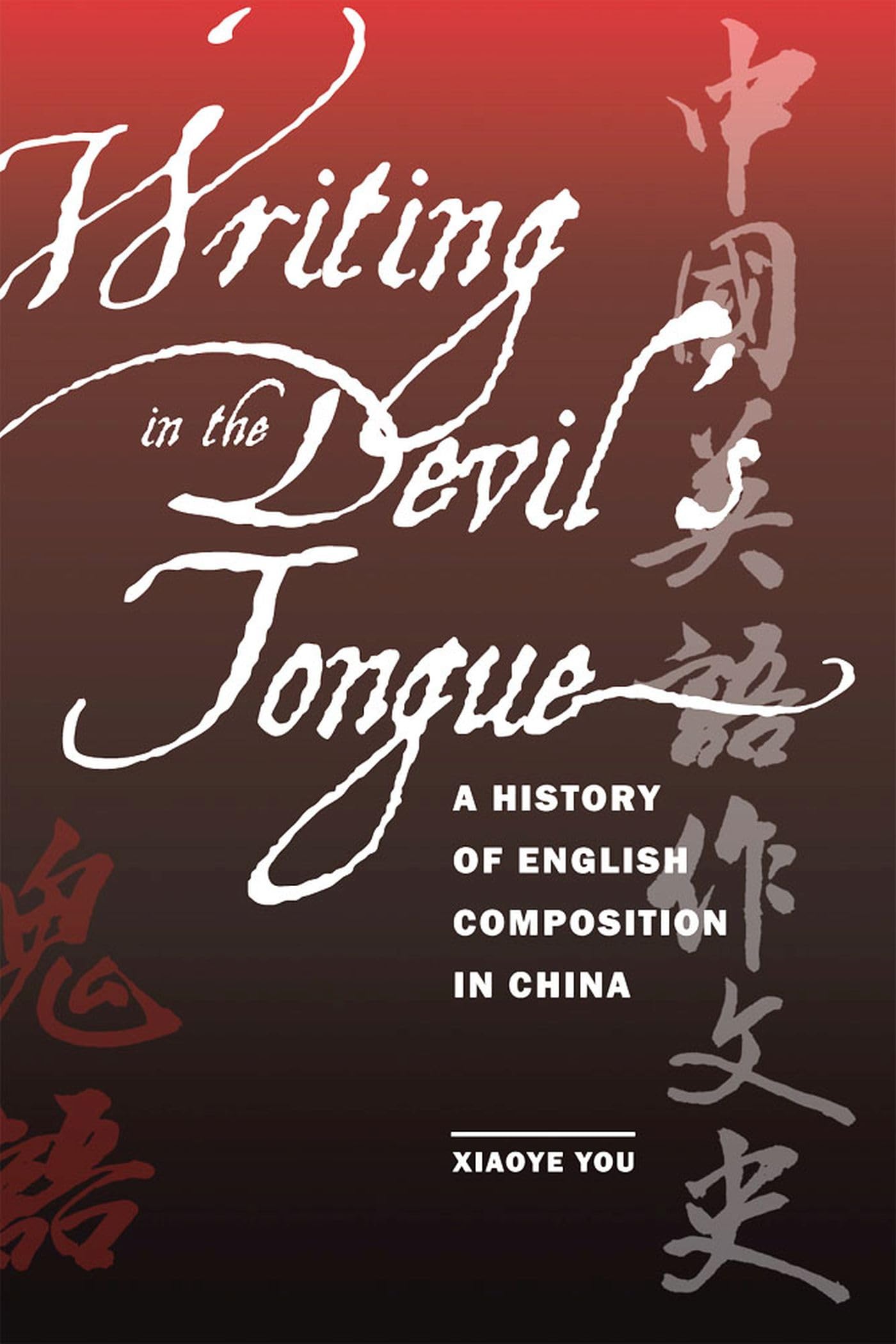
Title
Writing In The Devil'S Tongue: A History Of English Composition In China
Sold by Ergodebooks, an authorized reseller.
Returns accepted within 30 days | support@ergodebooks.com
Shipping Information
- Free Standard Shipping — United States only
- Processing Time: 3–5 business days
- Estimated Delivery: 6–10 business days after dispatch
- Double-boxed, fully insured & discreetly packaged
- Tracking number sent via email once dispatched
Returns & Refund
Returns accepted within 30 days of delivery.
Damaged or Defective Item
Free return shipping + replacement or full refund
Wrong Item Received
Free return shipping + replacement or full refund
Change of Mind
Return shipping at customer's expense · 25% restocking fee applies
Payment Option

Winner, Cccc Outstanding Book Awarduntil Recently, American Composition Scholars Have Studied Writing Instruction Mainly Within The Borders Of Their Own Nation, Rarely Considering English Composition In The Global Context In Which Writing In English Is Increasingly Taught. Writing In The Devils Tongue Challenges This Anachronistic Approach By Examining The History Of English Composition Instruction In An East Asian Country. Author Xiaoye You Offers Scholars A Chance To Observe How A Nation Changed From Monolingual Writing Practices To Bilingual Writing Instruction In A School Setting.You Makes Extensive Use Of Archival Sources To Help Trace Bilingual Writing Instruction In China Back To 1862, When English Was First Taught In Government Schools. Treating The Chinese Pursuit Of Modernity As The Overarching Theme, He Explores How The Entry Of Angloamerican Rhetoric And Composition Challenged And Altered The Traditional Monolithic Practice Of Teaching Chinese Writing In The Confucian Spirit. The Author Focuses On Four Aspects Of This History: The Chinese Negotiation With Angloamerican Rhetoric, Their Search For Innovative Approaches To Instruction, Students Situated Use Of English Writing, And Local Scholarship In English Composition.Unlike Previous Composition Histories, Which Have Tended To Focus On Institutional, Disciplinary, And Pedagogical Issues, Writing In The Devils Tongue Brings Students Back To Center Stage By Featuring Several Passages Written By Them In Each Chapter. These Passages Not Only Showcase Rhetorical And Linguistic Features Of Their Writings But Also Serve As Representative Anecdotes That Reveal The Complex Ways In Which Students, Responding To Their Situations, Performed Multivalent, Intercultural Discourses. In Addition, You Moves Out Of The Classroom And Into The Historical, Cultural, And Political Contexts That Shaped Both Chinese Writing And Composing Practices And The Pedagogies That Were Adopted To Teach English To Chinese In China. Teachers, Students, And Scholars Reading This Book Will Learn A Great Deal About The Political And Cultural Impact That Teaching English Composition Has Had In China And About The Ways In Which Chinese Writing And Composition Continues To Be Shaped By Rich And Diverse Cultural Traditions And Political Discourses.In Showcasing The Chinese Struggle With Teaching And Practicing Bilingual Composition, Writing In The Devils Tongue Alerts American Writing Scholars And Teachers To An Outdated English Monolingual Mentality And Urges Them To Modify Their Rhetorical Assumptions, Pedagogical Approaches, And Writing Practices In The Age Of Globalization.
⚠️ WARNING (California Proposition 65):
This product may contain chemicals known to the State of California to cause cancer, birth defects, or other reproductive harm.
For more information, please visit www.P65Warnings.ca.gov.
- Q: What is the page count of 'Writing in the Devil's Tongue'? A: This book has two hundred fifty-six pages. It provides a comprehensive exploration of English composition in China.
- Q: What is the binding type of this book? A: The binding of 'Writing in the Devil's Tongue' is paperback. This makes it lightweight and portable for readers.
- Q: What are the dimensions of this book? A: The dimensions are six inches in length, zero point seventy-one inches in width, and nine point zero two inches in height. This size is standard for paperback books.
- Q: How should I read 'Writing in the Devil's Tongue'? A: You can read this book at your own pace. It is suitable for anyone interested in writing instruction and English composition.
- Q: Is this book suitable for beginners in composition studies? A: Yes, it is suitable for beginners. The book provides insights into bilingual writing practices and the historical context of English composition.
- Q: What is the recommended audience for this book? A: The recommended audience includes teachers, students, and scholars. It addresses complex intercultural discourses in composition.
- Q: How should I care for this book? A: Keep 'Writing in the Devil's Tongue' in a dry place to avoid damage. Avoid exposing it to direct sunlight to preserve its condition.
- Q: Can this book be stored with other books? A: Yes, it can be stored with other books. Ensure it is placed upright or flat to prevent bending or creasing.
- Q: Is there a warranty for this book? A: No, there is typically no warranty for books. However, you can check the return policy from the retailer.
- Q: What if my copy of the book arrives damaged? A: If your book arrives damaged, contact the retailer for their return or exchange policy. Most retailers offer options for damaged items.
- Q: How does this book compare to other texts in composition studies? A: This book offers a unique perspective by focusing on Chinese bilingual writing practices, unlike many texts that focus solely on Western composition.
- Q: Is 'Writing in the Devil's Tongue' appropriate for advanced scholars? A: Yes, it is appropriate for advanced scholars. It provides in-depth analysis and historical context relevant to composition studies.
- Q: What themes are explored in this book? A: The book explores themes of bilingualism, cultural negotiation, and the impact of Anglo-American rhetoric on Chinese writing instruction.
- Q: Does this book include student writings? A: Yes, it features passages written by students. These showcase their rhetorical and linguistic skills within the context of their education.
- Q: Who is the author of 'Writing in the Devil's Tongue'? A: The author is Xiaoye You. He is recognized for his contributions to the field of composition studies.