
Title
Writing the Revolution: A French Woman's History in Letters,Used
Sold by Ergodebooks, an authorized reseller.
Returns accepted within 30 days | support@ergodebooks.com
Shipping Information
- Free Standard Shipping — United States only
- Processing Time: 3–5 business days
- Estimated Delivery: 6–10 business days after dispatch
- Double-boxed, fully insured & discreetly packaged
- Tracking number sent via email once dispatched
Returns & Refund
Returns accepted within 30 days of delivery.
Damaged or Defective Item
Free return shipping + replacement or full refund
Wrong Item Received
Free return shipping + replacement or full refund
Change of Mind
Return shipping at customer's expense · 25% restocking fee applies
Payment Option

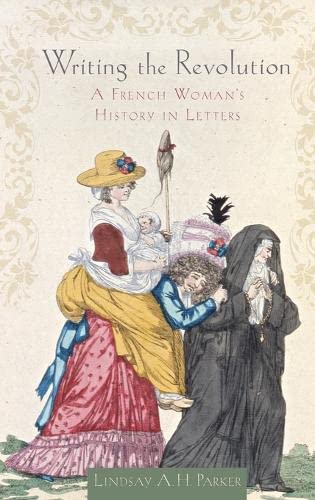
Writing the Revolution is a microhistory of a middleclass Parisian woman, Rosalie Jullien, whose nearly 1,000 familiar letters have never before been studied. The Jullien name is not new to histories of the French Revolution. Rosalie's son, MarcAntoine, known in the family as Jules, was closely connected to the Committee of Public Safety during the Reign of Terror. However, despite being the wife and mother of revolutionary elites, Rosalie led a private life. Connected to the Revolution in very personal ways, she was also distanced from the lime light because of her gender and her proclivity for modesty. Her correspondence allows readers to enter her private world and see the intellectual, emotional, and familial life of a revolutionary in all of its complexity.The prevailing thesis in the field holds that the revolutionary elite constructed the New Regime against women, effectively excluding them from the political sphere, although nearly every existing study of women has approached the subject through oblique sources and mostly male voices. Rosalie Jullien's long missives to her husband and son, however, document her relationship to politics as she explained it. Despite never seeking a public role, Rosalie developed a political identity that included a revolutionized understanding of womanhood. Writing the Revolution builds on the innovative scholarship on the history of the family during the Revolution and demonstrates how the family sphere was revolutionized even in cases where the wife maintained a traditional family role.Jullien's correspondence boasts many values as an artifact of the Revolutionary experience, of women's lives, and of epistolary culture. Rosalie demonstrates the individual's experience within the evolving structures of a modernizing state, family, and gender identity. The period covered spans from 1775 to 1810. A portrayal of Rosalie's early married life, and the decade she spent with her husband and children in a small town north of Grenoble, begins the book, and is followed by a chapter on the couple's reading practices and their views toward religion prior to the Revolution. The heart of the research focuses on Rosalie's life and experiences in Revolutionary Paris and her decision, in the aftermath of the Terror, to emphasize private, domestic life over politics.
⚠️ WARNING (California Proposition 65):
This product may contain chemicals known to the State of California to cause cancer, birth defects, or other reproductive harm.
For more information, please visit www.P65Warnings.ca.gov.