
Title
Written On The Water: British Romanticism And The Maritime Empire Of Culture,Used
Sold by Ergodebooks, an authorized reseller.
Returns accepted within 30 days | support@ergodebooks.com
Shipping Information
- Free Standard Shipping — United States only
- Processing Time: 3–5 business days
- Estimated Delivery: 6–10 business days after dispatch
- Double-boxed, fully insured & discreetly packaged
- Tracking number sent via email once dispatched
Returns & Refund
Returns accepted within 30 days of delivery.
Damaged or Defective Item
Free return shipping + replacement or full refund
Wrong Item Received
Free return shipping + replacement or full refund
Change of Mind
Return shipping at customer's expense · 25% restocking fee applies
Payment Option

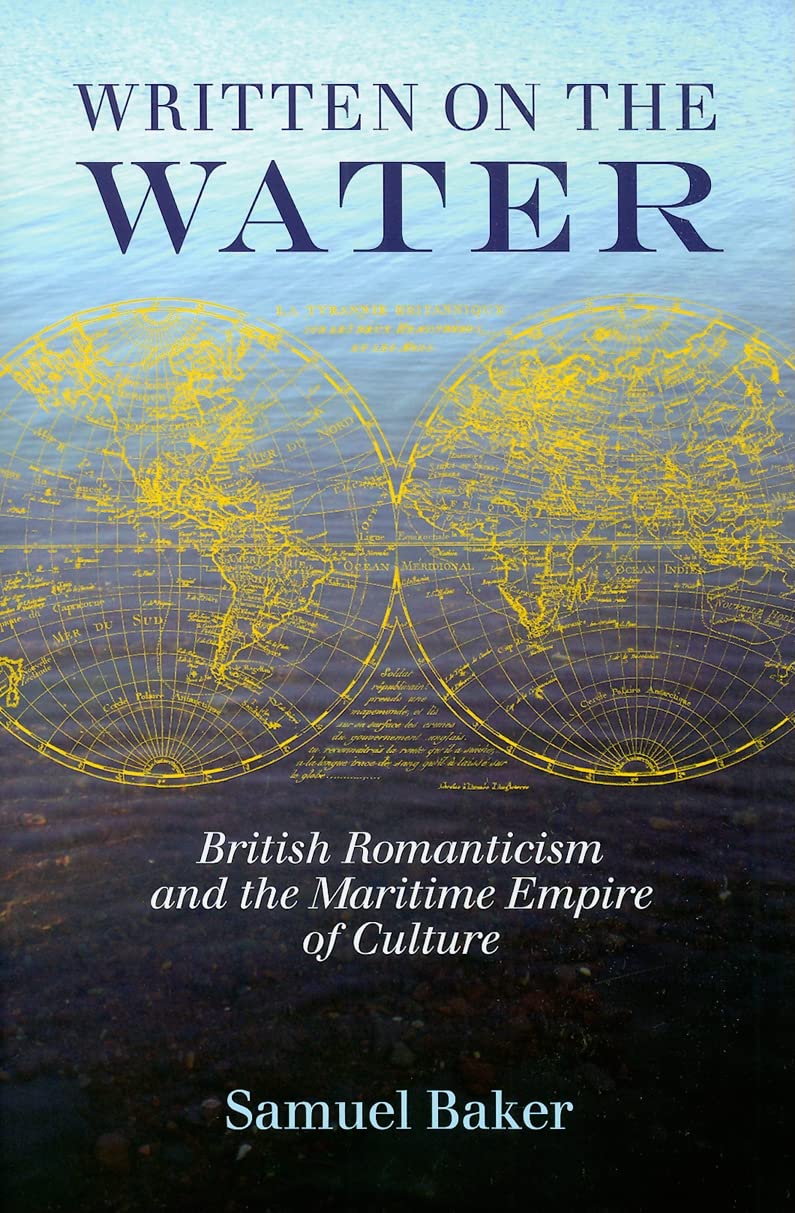
The very word 'culture' has traditionally evoked the land. But when such writers as William Wordsworth, Samuel Taylor Coleridge, Lord Byron, and, later, Matthew Arnold developed what would become the idea of modern culture, they modeled that idea on Britain's imperial command of the sea. Instead of locating the culture ideas beginnings in the dynamic between the country and the city, Samuel Baker insists on taking into account the significance of water for that ideas development. For the Romantics, figures of the island, the deluge, and the sundering tide often convey the insularity of cultures understood to stand apart from the whole; yet, Baker writes, the sea also stands in their poetry of culture as a reminder of the broader sphere of circulation in which the poet's work, if not the poet's subject, inheres.Although other books treat the history of the idea of culture, none synthesizes that history with the literary history of maritime empire. Written on the Water tracks an uncanny interrelationship between ocean imagery and culturalist rhetoric of culture forward from the late Augustans to the midVictorians. In so doing, it analyzes Wordsworth's pronounced ambivalence toward the sea, Coleridge's sojourn as an imperial functionary in Malta, Byron's cosmopolitan seafaring tales, and Arnold's dual identity as 'poet of water' and prose arbiter of 'culture.' It also considers Romanticism's classical inheritance, arguing that the Lake Poets dissolved into the idea of culture the Virgilian system of pastoral, georgic, and epic modes of literature and life.This compelling new study will engage any reader interested in the intellectual and literary history of Britain and the lived experience of British Romanticism.
⚠️ WARNING (California Proposition 65):
This product may contain chemicals known to the State of California to cause cancer, birth defects, or other reproductive harm.
For more information, please visit www.P65Warnings.ca.gov.