
Title
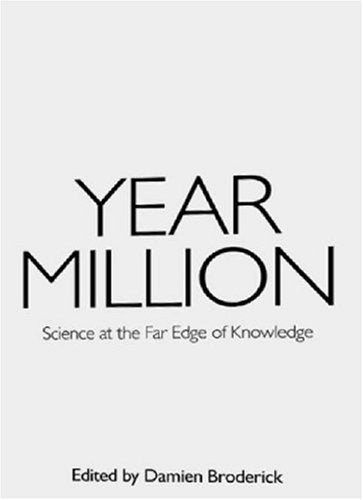
Year Million: Science at the Far Edge of Knowledge,Used
Sold by Ergodebooks, an authorized reseller.
Returns accepted within 30 days | support@ergodebooks.com
Shipping Information
- Free Standard Shipping — United States only
- Processing Time: 3–5 business days
- Estimated Delivery: 6–10 business days after dispatch
- Double-boxed, fully insured & discreetly packaged
- Tracking number sent via email once dispatched
Returns & Refund
Returns accepted within 30 days of delivery.
Damaged or Defective Item
Free return shipping + replacement or full refund
Wrong Item Received
Free return shipping + replacement or full refund
Change of Mind
Return shipping at customer's expense · 25% restocking fee applies
Payment Option

Leading and upandcoming scientists and science writers cast their minds one million years into the future to imagine the fate of the human and/or extraterrestrial galaxy.This volume of fifteen new, specially commissioned essays by notable journalists and scholars such as Rudy Rucker, Jim Holt, and Gregory Benford presents a series of speculations on the most radical but wellgrounded ideas they can conceive, projecting the universe as it might be in the year 1,000,000 C.E. Their collective effortfirst attempted by H. G. Wells in his 1893 essay "The Man of the Year Million"is an exploration into a barely conceivable distant future, where the authors confront farflung possibilities, at times bordering on philosophy of science. How would the galaxy look if it were redesigned for optimal energy use and maximized intelligence? What is a universe bereft of stars?Contributors include Amara D. Angelica, Catherine Asaro, Gregory Benford, Robert Bradbury, Sean M. Carroll, Anne Corwin, Dougal Dixon, Robin Hanson, Steven B. Harris, Jim Holt, Lisa Kaltenegger, Wil McCarthy, Rudy Rucker, Pamela Sargent, and George Zebrowski.
⚠️ WARNING (California Proposition 65):
This product may contain chemicals known to the State of California to cause cancer, birth defects, or other reproductive harm.
For more information, please visit www.P65Warnings.ca.gov.
- Q: What is the page count of the book? A: The book has three hundred thirty pages. This length provides a comprehensive exploration of speculative science and future possibilities.
- Q: What are the dimensions of the book? A: The book measures five inches in length, one point twenty-six inches in width, and seven point twenty-five inches in height. These dimensions make it a handy size for reading and storage.
- Q: What type of binding does the book have? A: The book is available in paperback binding. This choice offers flexibility and durability for regular reading.
- Q: How do I read this book? A: You can read this book like any standard paperback. It is suitable for readers interested in speculative science and futurism.
- Q: Is this book suitable for all ages? A: Yes, the book can be read by a wide range of ages. However, it may be more appreciated by adults and older teens due to its complex themes.
- Q: How should I store the book? A: Store the book in a cool, dry place, away from direct sunlight. This will help preserve its condition and prevent damage.
- Q: What if the book arrives damaged? A: If the book arrives damaged, you should contact customer service for a return or exchange. Most retailers have a policy in place for damaged items.
- Q: Can I return the book if I don't like it? A: Yes, you can typically return the book if you are unsatisfied. Check the retailer's return policy for specific details.
- Q: Is this book a good choice for someone new to cosmology? A: Yes, this book is a great introduction to cosmology. It presents complex ideas in an accessible format for curious readers.
- Q: Who are the authors contributing to this book? A: The book features notable contributors including Rudy Rucker, Jim Holt, and Gregory Benford. Their expertise enhances the depth of the themes explored.
- Q: Does this book include illustrations or images? A: No, the book does not include illustrations. It focuses on text-based essays exploring speculative ideas.
- Q: What themes are explored in this book? A: The book explores speculative themes related to the future of humanity and the universe, addressing concepts like energy use and intelligence.
- Q: Is there a specific author of the book? A: Yes, the book is authored by Damien Broderick. He is known for his work in science fiction and speculative topics.
- Q: What genre does this book belong to? A: The book belongs to the cosmology genre. It combines elements of science fiction and speculative science.
- Q: How many essays are included in the book? A: The book includes fifteen essays. Each essay presents unique perspectives on the future of science and humanity.