
Title
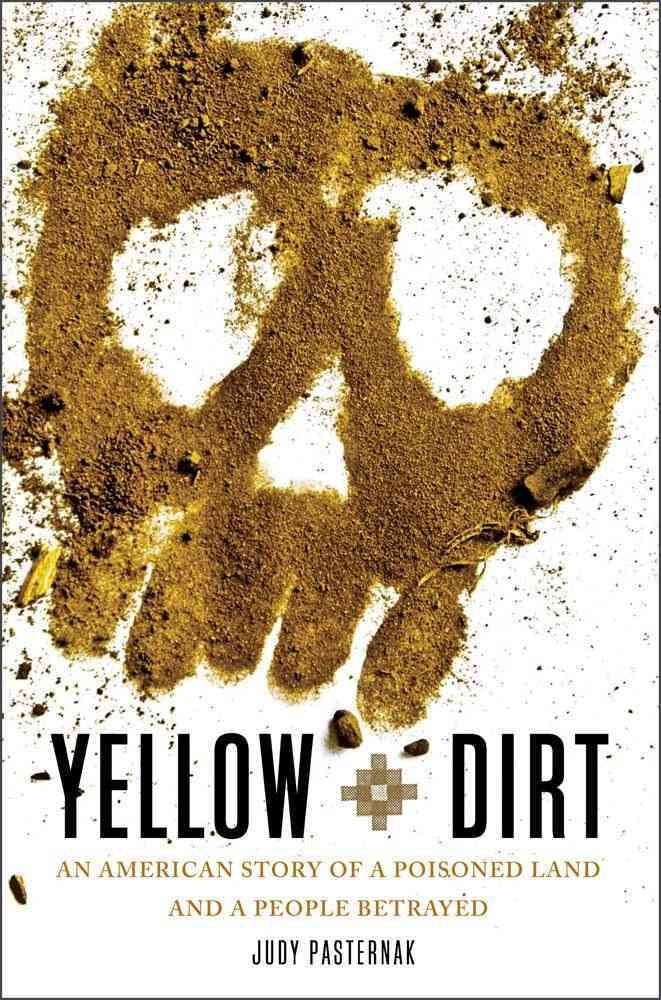
Yellow Dirt: An American Story of a Poisoned Land and a People Betrayed,Used
Sold by Ergodebooks, an authorized reseller.
Returns accepted within 30 days | support@ergodebooks.com
Shipping Information
- Free Standard Shipping — United States only
- Processing Time: 3–5 business days
- Estimated Delivery: 6–10 business days after dispatch
- Double-boxed, fully insured & discreetly packaged
- Tracking number sent via email once dispatched
Returns & Refund
Returns accepted within 30 days of delivery.
Damaged or Defective Item
Free return shipping + replacement or full refund
Wrong Item Received
Free return shipping + replacement or full refund
Change of Mind
Return shipping at customer's expense · 25% restocking fee applies
Payment Option

WINNER OF THE J. ANTHONY LUKAS WORKINPROGRESS AWARDAtop a craggy mesa in the northern reaches of the Navajo reservation lies what was once a worldclass uranium mine called Monument No. 2. Discovered in the 1940sduring the government? desperate press to build nuclear weaponsthe mesa? tremendous lode would forever change the lives of the hundreds of Native Americans who labored there and of their families, including many who dwelled in the valley below for generations afterward.Yellow Dirt offers readers a window into a dark chapter of modern history that still reverberates today. From the 1940s into the early twentyfirst century, the United States knowingly used and discarded an entire tribe for the sake of atomic bombs. Secretly, during the days of the Manhattan Project and then in a frenzy during the Cold War, the government bought up all the uranium that could be mined from the hundreds of rich deposits entombed under the sagebrush plains and sandstone cliffs. Despite warnings from physicians and scientists that longterm exposure could be harmful, even fatal, thousands of miners would work there unprotected. A second set of warnings emerged about the environmental impact. Yet even now, long after the uranium boom ended, and long after national security could be cited as a consideration, many residents are still surrounded by contaminated air, water, and soil. The radioactive "yellow dirt" has ended up in their drinking supplies, in their walls and floors, in their playgrounds, in their bread ovens, in their churches, and even in their garbage dumps. And they are still dying.Transporting readers into a littleknown countrywithinacountry, awardwinning journalist Judy Pasternak gives rare voice to Navajo perceptions of the world, their own complicated involvement with uranium mining, and their political comingofage. Along the way, their fates intertwine with decisions made in Washington, D.C., in the Navajo capital of Window Rock, and in the Western border towns where swashbuckling mining men trained their sights on the fortunes they could wrest from tribal land, successfully pressuring the government into letting them do it their way.Yellow Dirt powerfully chronicles both a scandal of neglect and the Navajos?long fight for justice. Few had heard of this shameful legacy until Pasternak revealed it in a prizewinning Los Angeles Times series that galvanized a powerful congressman and a famous prosecutor to press for redress and repair of the grievous damage. In this expanded account, she provides gripping new details, weaving the personal and the political into a tale of betrayal, of willful negligence, and, ultimately, of reckoning.
⚠️ WARNING (California Proposition 65):
This product may contain chemicals known to the State of California to cause cancer, birth defects, or other reproductive harm.
For more information, please visit www.P65Warnings.ca.gov.
- Q: What is the page count of 'Yellow Dirt'? A: This book contains three hundred thirty-six pages. It provides a comprehensive look into the history of uranium mining and its impact on Native Americans.
- Q: What type of binding does 'Yellow Dirt' have? A: This book is a hardcover edition. The hardcover binding enhances durability, making it suitable for frequent use.
- Q: Who is the author of 'Yellow Dirt'? A: The author of this book is Judy Pasternak. She is an award-winning journalist known for her in-depth reporting.
- Q: What is the reading level for 'Yellow Dirt'? A: This book is suitable for adult readers. Its complex themes and historical context require a mature understanding.
- Q: Is 'Yellow Dirt' suitable for young readers? A: No, this book is not suitable for young readers. It deals with serious themes, including environmental and social justice issues.
- Q: How should I store 'Yellow Dirt' to preserve it? A: Store this book in a cool, dry place away from direct sunlight. Proper storage will help maintain its condition over time.
- Q: Can I clean the cover of 'Yellow Dirt'? A: Yes, you can clean the cover with a damp cloth. Avoid using harsh chemicals to prevent damage.
- Q: What should I do if 'Yellow Dirt' arrives damaged? A: If the book arrives damaged, you should contact the seller for a return or exchange. Most sellers offer a return policy for such issues.
- Q: Is there a warranty for 'Yellow Dirt'? A: No, there is typically no warranty for books like 'Yellow Dirt'. However, check with the retailer for their specific return policy.
- Q: How does 'Yellow Dirt' compare to other books on Native American history? A: This book provides a unique perspective on Native American experiences related to uranium mining. It stands out for its investigative approach and focus on environmental issues.
- Q: Is 'Yellow Dirt' a good choice for someone interested in environmental justice? A: Yes, this book is an excellent choice for those interested in environmental justice. It highlights the ongoing struggles faced by the Navajo people.
- Q: What themes are explored in 'Yellow Dirt'? A: Themes of betrayal, environmental neglect, and social justice are explored in this book. It examines the historical context of uranium mining and its lasting effects.
- Q: What historical events does 'Yellow Dirt' discuss? A: The book discusses events from the 1940s through the early twenty-first century, focusing on uranium mining in the Navajo Nation.
- Q: Does 'Yellow Dirt' include personal stories from individuals? A: Yes, the book includes personal stories from Navajo individuals affected by uranium mining. These narratives provide a human element to the historical account.
- Q: What is the main focus of 'Yellow Dirt'? A: The main focus of this book is the impact of uranium mining on the Navajo people and their land. It critically examines government actions and their consequences.