If you have any questions, you are always welcome to contact us. We'll get back to you as soon as possible, withing 24 hours on weekdays.
Customer service
All questions about your order, return and delivery must be sent to our customer service team by e-mail at yourstore@yourdomain.com
Sale & Press
If you are interested in selling our products, need more information about our brand or wish to make a collaboration, please contact us at press@yourdomain.com
Help
If you have any questions, you are always welcome to contact us. We'll get back to you as soon as possible, withing 24 hours on weekdays.
Customer service
All questions about your order, return and delivery must be sent to our customer service team by e-mail at yourstore@yourdomain.com
Sale & Press
If you are interested in selling our products, need more information about our brand or wish to make a collaboration, please contact us at press@yourdomain.com
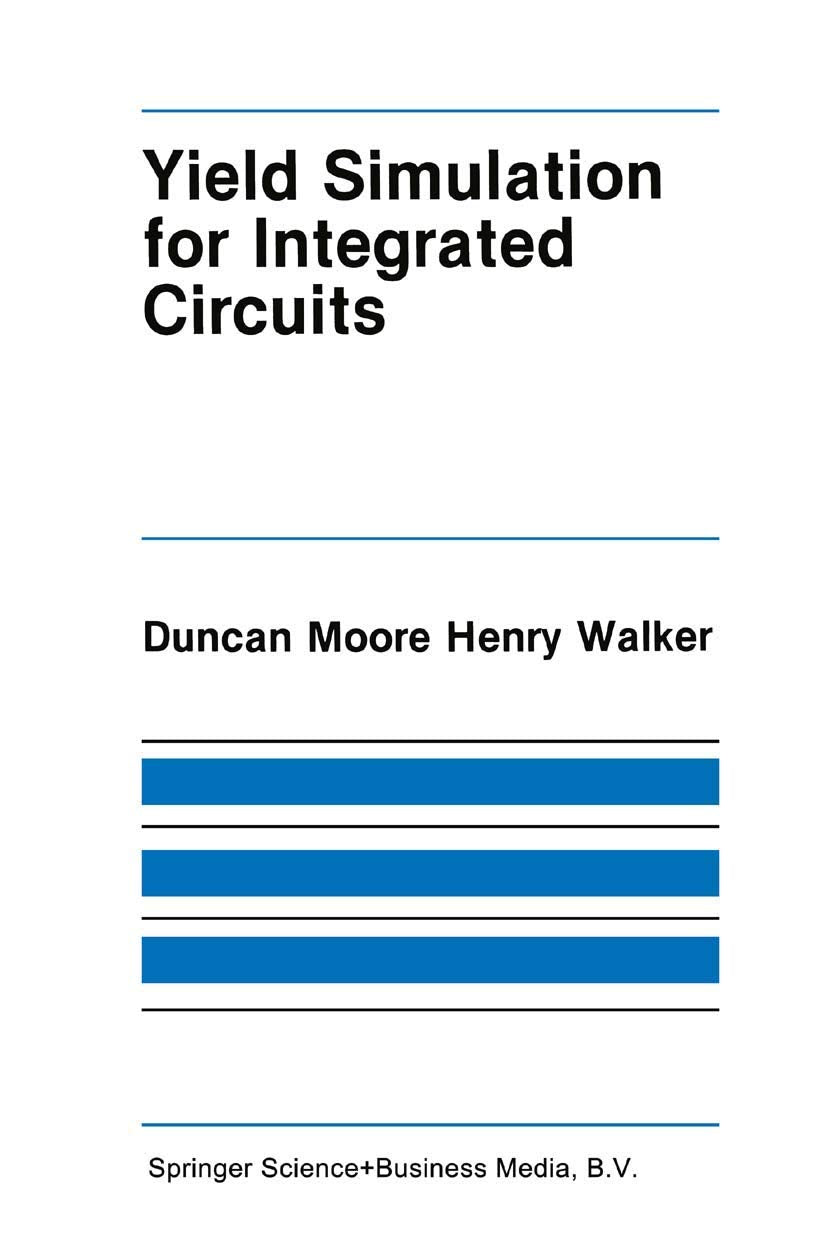
In the summer of 1981 I was asked to consider the possibility of manufacturing a 600,000 transistor microprocessor in 1985. It was clear that the technology would only be capable of manufacturing 100,000200,000 transistor chips with acceptable yields. The control store ROM occupied approximately half of the chip area, so I considered adding spare rows and columns to increase ROM yield. Laserprogrammed polysilicon fuses would be used to switch between good and bad circuits. Since only half the chip area would have redundancy, I was concerned that the increase in yield would not outweigh the increased costs of testing and redundancy programming. The fabrication technology did not yet exist, so I was unable to experimentally verify the benefits of redundancy. When the technology did become available, it would be too late in the development schedule to spend time running test chips. The yield analysis had to be done analytically or by simulation. Analytic yield analysis techniques did not offer sufficient accuracy for dealing with complex structures. The simulation techniques then available were very laborintensive and seemed more suitable for redundant memories and other very regular structures [Stapper 80J. I wanted a simulator that would allow me to evaluate the yield of arbitrary redundant layouts, hence I termed such a simulator a layout or yield simulator. Since I was unable to convince anyone to build such a simulator for me, I embarked on the research myself.
⚠️ WARNING (California Proposition 65):
This product may contain chemicals known to the State of California to cause cancer,
birth defects, or other reproductive harm.
For MAP (Minimum Advertised Price) violations and Intellectual Property (IP) or Trademark concerns, please contact:
support@ergodebooks.com
⚠️ California Proposition 65 Warning: Some products sold on this website may expose you to chemicals known to the State of California to cause cancer, birth defects, or other reproductive harm. For more information, visit www.P65Warnings.ca.gov.