
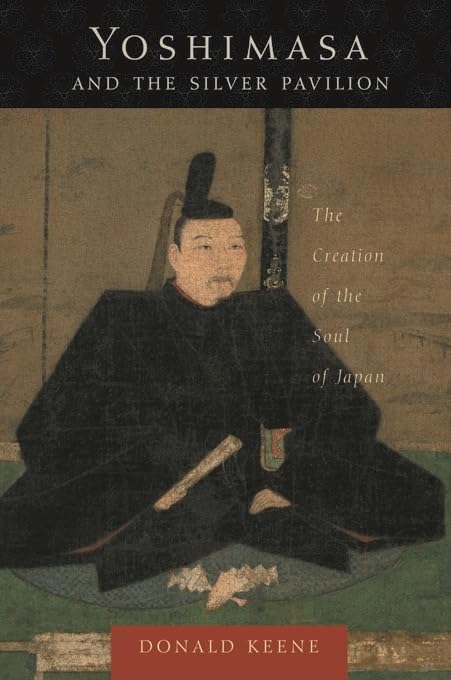
Title
Yoshimasa and the Silver Pavilion: The Creation of the Soul of Japan (Asia Perspectives: History, Society, and Culture),New
Sold by Ergodebooks, an authorized reseller.
Returns accepted within 30 days | support@ergodebooks.com
Shipping Information
- Free Standard Shipping — United States only
- Processing Time: 3–5 business days
- Estimated Delivery: 6–10 business days after dispatch
- Double-boxed, fully insured & discreetly packaged
- Tracking number sent via email once dispatched
Returns & Refund
Returns accepted within 30 days of delivery.
Damaged or Defective Item
Free return shipping + replacement or full refund
Wrong Item Received
Free return shipping + replacement or full refund
Change of Mind
Return shipping at customer's expense · 25% restocking fee applies
Payment Option

Yoshimasa may have been the worst shogun ever to rule Japan. He was a failure as a soldier, incompetent at dealing with state business, and dominated by his wife. But his influence on the cultural life of Japan was unparalleled. According to Donald Keene, Yoshimasa was the only shogun to leave a lasting heritage for the entire Japanese people.Today Yoshimasa is remembered primarily as the builder of the Temple of the Silver Pavilion and as the ruler at the time of the Onin War (14671477), after which the authority of the shogun all but disappeared. Unable to control the daimyosprovincial military governorshe abandoned politics and devoted himself to the quest for beauty. It was then, after Yoshimasa resigned as shogun and made his home in the mountain retreat now known as the Silver Pavilion, that his aesthetic taste came to define that of the Japanese: the no theater flourished, Japanese gardens were developed, and the tea ceremony had its origins in a small room at the Silver Pavilion. Flower arrangement, ink painting, and shoinzukuri architecture began or became of major importance under Yoshimasa. Poets introduced their often barely literate warlordhosts to the literary masterpieces of the past and taught them how to compose poetry. Even the most barbarous warlord came to want the trappings of culture that would enable him to feel like a civilized man.Yoshimasa and the Silver Pavilion gives this longneglected but critical period in Japanese history the thorough treatment it deserves.
⚠️ WARNING (California Proposition 65):
This product may contain chemicals known to the State of California to cause cancer, birth defects, or other reproductive harm.
For more information, please visit www.P65Warnings.ca.gov.
- Q: How many pages does this book have? A: This book has two hundred eight pages. It provides an in-depth exploration of Yoshimasa's influence on Japanese culture.
- Q: What is the binding type of this book? A: The book features a paperback binding. This makes it lightweight and easy to handle for readers.
- Q: What are the dimensions of this book? A: The book measures eight point one one inches in length, five point three five inches in width, and zero point five one inches in height. These dimensions make it portable for reading.
- Q: What genre does this book belong to? A: This book is categorized under history and culture. It focuses on Japan's historical context through the life of Yoshimasa.
- Q: Who is the author of this book? A: The author is Donald Keene. He is a renowned scholar on Japanese literature and culture.
- Q: Is this book suitable for beginners in Japanese history? A: Yes, it is suitable for beginners. The book provides accessible insights into a complex period of Japanese history.
- Q: What is the main theme of the book? A: The main theme revolves around Yoshimasa's cultural contributions during his rule. It highlights his impact on aesthetics and the arts in Japan.
- Q: How can I read this book effectively? A: You can read this book by focusing on its chapters that discuss specific cultural aspects. Engaging with the context will enhance your understanding.
- Q: Is this book appropriate for young readers? A: Yes, it is appropriate for young readers with an interest in history. However, parental guidance is recommended for younger age groups.
- Q: How should I store this book? A: Store this book in a cool, dry place. Keeping it away from direct sunlight will help preserve its condition.
- Q: Can I clean this book if it gets dirty? A: Yes, you can clean it gently. Use a soft cloth to wipe the cover, but avoid using any liquids directly on the pages.
- Q: What if the book arrives damaged? A: If the book arrives damaged, you should contact the seller for a return or exchange. Most sellers have a customer service policy for such issues.
- Q: What is the return policy for this book? A: The return policy typically allows returns within a specified period. Check with the retailer for specific details regarding returns.
- Q: Is there a warranty for this book? A: No, books generally do not come with a warranty. However, you can inquire about return policies for damaged items.
- Q: How does this book compare to other historical books about Japan? A: This book offers a unique perspective on Yoshimasa's cultural influence, unlike many other historical texts that might focus solely on political events.
- Q: What are the key highlights of this book? A: Key highlights include Yoshimasa's role in the Onin War and his contributions to Japanese aesthetics, including no theater and tea ceremonies.