
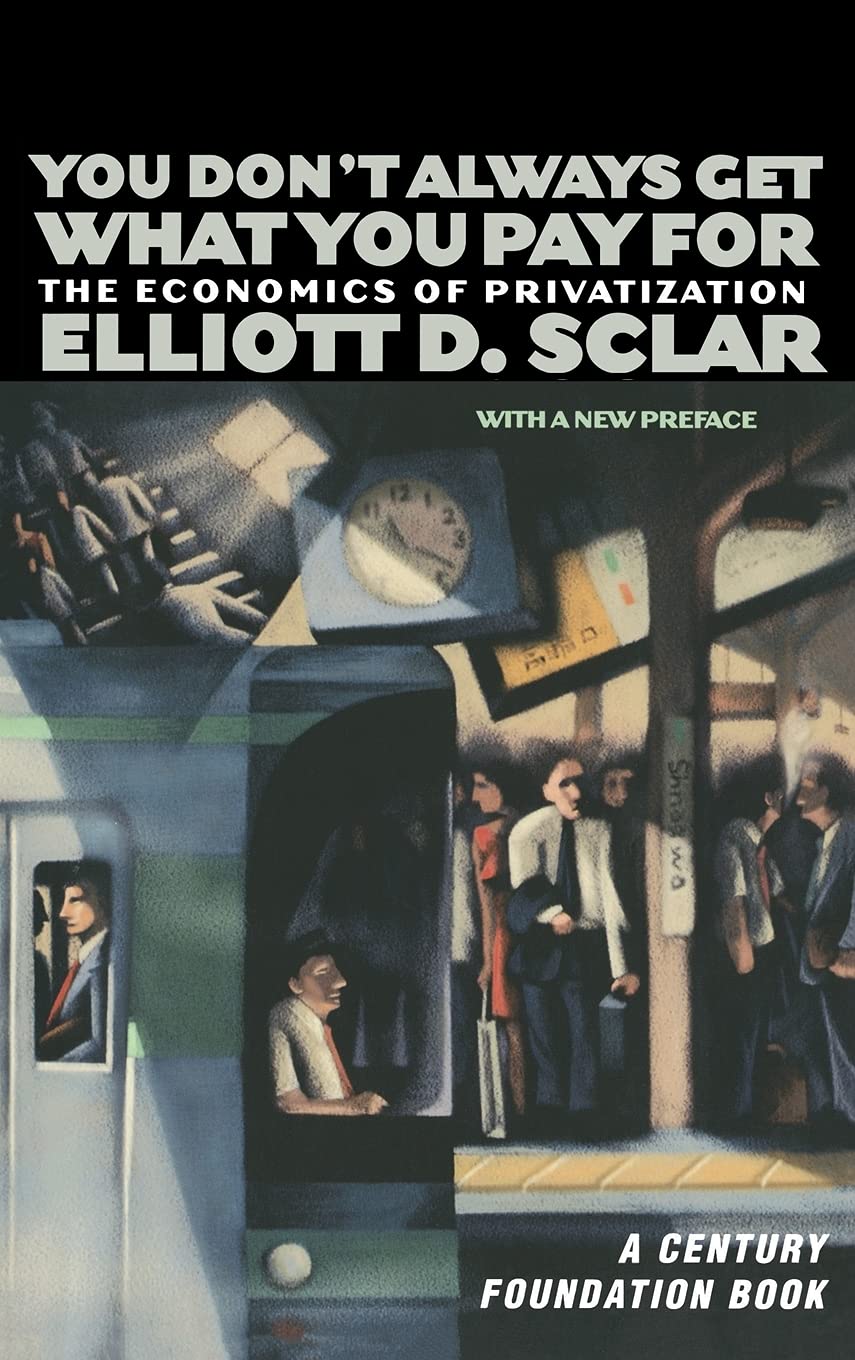
Title
You Don't Always Get What You Pay For: The Economics of Privatization (A Century Foundation Book),Used
Sold by Ergodebooks, an authorized reseller.
Returns accepted within 30 days | support@ergodebooks.com
Shipping Information
- Free Standard Shipping — United States only
- Processing Time: 1–3 business days
- Estimated Delivery: 3–5 business days after dispatch
- Double-boxed, fully insured & discreetly packaged
- Tracking number sent via email once dispatched
- Orders over $250 require signature upon delivery. Taxes calculated at checkout.
Returns & Refund
Returns accepted within 30 days of delivery.
Damaged or Defective Item
Free return shipping + replacement or full refund
Wrong Item Received
Free return shipping + replacement or full refund
Change of Mind
Return shipping at customer's expense · 25% restocking fee applies
Payment Option

Today, nearly all public servicesschools, hospitals, prisons, fire departments, sanitationare considered fair game for privatization. Proponents of privatization argue that private firms will respond to competitive market pressures and provide better service at lower cost. While this assertion has caused much controversy, the debate between both sides has consisted mainly of impassioned defenses of entrenched positions.In You Don't Always Get What You Pay For, Elliott D. Sclar offers a balanced look at the pitfalls and promises of public sector privatization in the United States. By describing the underlying economic dynamics of how public agencies and private organizations actually work together, he provides a rigorous analysis of the assumptions behind the case for privatization.The competitivemarket model may seem appealing, but Sclar warns that it does not address the complex reality of contracting for government services. Using specific examples, such as mail service and urban transportation, he shows that ironically privatization does not shrink governmentthe broader goal of many of its own champions. He also demonstrates that there is more to consider in providing public services than trying to achieve efficiency; there are issues of equity and access that cannot be ignored.Sclar believes that public officials and voters will soon realize the limitations of "contracting out" just as private corporations have come to understand the drawbacks of outsourcing. After examining the effectiveness of alternatives to privatization, he offers suggestions for improving public sector performanceadvice he hopes will be heeded before it is too late.
⚠️ WARNING (California Proposition 65):
This product may contain chemicals known to the State of California to cause cancer, birth defects, or other reproductive harm.
For more information, please visit www.P65Warnings.ca.gov.